

If you or an older parent has diabetes, one of the most useful health appointments of the year takes only a few minutes: diabetic retinopathy screening. It is a simple eye photo check that can pick up damage long before your eyesight changes. In Singapore, it is widely available at polyclinics and many family doctor (GP) clinics, and it is usually recommended once a year for people with diabetes.
This guide explains what diabetic retinopathy is, how the yearly screening works, what it may cost and what happens after your results. It is general information, not medical advice. Your doctor will tell you how often you need screening and what your results mean for you.
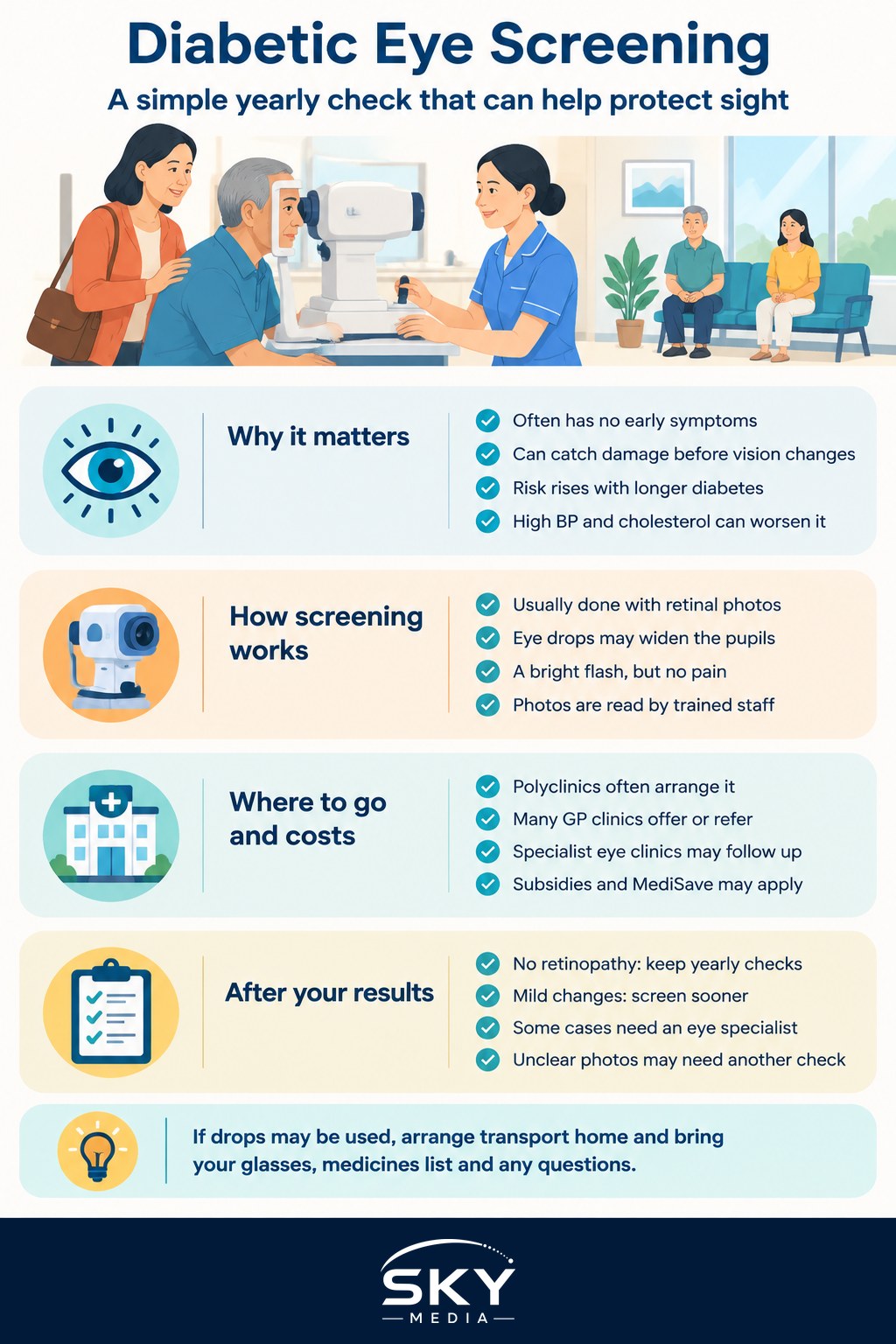
What Diabetic Retinopathy Is
The retina is the thin, light-sensitive layer at the back of your eye. It works like the film in an old camera, turning light into signals for the brain. It is fed by tiny blood vessels.
Over time, high blood sugar can damage these small vessels. They may leak fluid or blood, become blocked, or trigger the growth of fragile new vessels. This is diabetic retinopathy. In some people, fluid builds up in the central part of the retina, called the macula, which handles reading and fine detail. This is known as diabetic macular oedema.
Why it matters for seniors:
- It is often silent. In the early stages, there are usually no symptoms at all. You can see clearly and still have changes in your retina.
- Risk grows with time. The longer someone has had diabetes, the higher the chance of eye changes.
- Other conditions add up. High blood pressure and high cholesterol, common in older age, can make things worse.
- Early treatment protects sight. When problems are found early, eye specialists have effective treatments that can help prevent serious vision loss.
This is different from cataracts, which cloud the lens at the front of the eye, and from glaucoma, which affects the optic nerve. People with diabetes can have any of these, so regular checks matter.
How the Yearly Screening Works
In Singapore, diabetic eye screening is commonly done through retinal photography under a national programme known as the Singapore Integrated Diabetic Retinopathy Programme (SiDRP). The steps are simple:
- Check-in and eye chart. A nurse or trained staff member may test how well you see on a chart.
- Eye drops, sometimes. Some clinics use drops to widen (dilate) your pupils so the camera gets a clearer view. Not every visit needs them.
- Photos of the retina. You rest your chin on a machine and look at a light. A camera takes pictures of the back of each eye. There is a bright flash, but no contact with your eye and no pain.
- Reading the images. Trained graders and doctors review the photos for signs of retinopathy and other problems.
- Getting results. Your doctor or clinic will tell you the outcome, often at your next diabetes review or by follow-up message.
The whole photo step usually takes only a few minutes per eye, though you should allow more time for waiting and any drops to work.
Before and After Your Appointment
- Bring your glasses and a list of your medicines.
- Do not drive yourself if your pupils might be dilated. Vision can be blurry and sensitive to light for a few hours. Take public transport, a taxi or ask a family member to accompany you.
- Bring sunglasses for the journey home if drops are used.
- Ask questions. If you have had eye surgery, laser treatment or recent changes in your vision, tell the staff.
Where to Get Screened and What It Costs
| Where | How it usually works | Things to check |
|---|---|---|
| Polyclinics | Screening often arranged as part of your regular diabetes follow-up | Ask your polyclinic doctor to schedule it with your next review |
| GP clinics under CHAS or Healthier SG | Many family doctors offer retinal photography or refer you to a partner clinic | Ask your GP whether they provide it and what subsidies apply |
| Specialist eye clinics in hospitals | For those already found to have retinopathy or other eye problems | Usually by referral, with follow-up schedules set by the specialist |
| Private eye clinics | Direct appointments, sometimes more detailed tests | Fees are typically higher; check what is covered by insurance |
On cost, Singapore citizens and Permanent Residents generally receive government subsidies at polyclinics and participating GP clinics. CHAS (the Community Health Assist Scheme), which helps eligible residents with outpatient costs at GPs, and Healthier SG, which encourages residents to enrol with one family doctor for chronic care, may both affect what you pay. Under MOH’s chronic disease rules, MediSave can often be used for some diabetes-related care and screening. Pioneer Generation and Merdeka Generation seniors may have extra benefits.
Fees and subsidy rules change, so do not rely on figures you hear from friends. Ask your clinic for the current charge before the appointment, and check HealthHub, MOH or the CHAS website for the latest scheme details.
Understanding Your Results
Results are usually grouped into a few broad outcomes:
- No retinopathy seen. Keep managing your diabetes and come back at the interval your doctor advises, usually in a year.
- Mild changes. You may be asked to screen again sooner, and to work harder on blood sugar, blood pressure and cholesterol control.
- Changes needing a specialist. You will be referred to an eye specialist for a fuller examination. This might include scans and, if needed, treatments such as laser or eye injections.
- Photos not clear enough. Cataracts or small pupils can make photos hard to read. You may be asked to return or be referred for a direct examination.
A referral is not a reason to panic. It means the system is doing its job and catching problems early. Keep the appointment, even if your eyesight feels fine.
When Not to Wait for Your Yearly Check
Yearly screening is for routine monitoring. See a doctor promptly, or go to an emergency department, if you notice:
- Sudden blurring or loss of vision in one or both eyes.
- A shower of new floaters, flashes of light, or a curtain-like shadow over your vision. Our guide to eye floaters and retinal detachment explains these warning signs.
- Distorted vision, where straight lines look wavy.
- Eye pain or redness with vision changes.
Helping an Older Parent Keep Up With Screening
Many seniors miss their eye check simply because it slips through the cracks. You can help by:
- Adding the appointment to a shared calendar and setting a reminder a week before.
- Going along if drops are likely, so they do not travel home with blurry vision.
- Keeping a simple health record of screening dates and results.
- Supporting daily control through regular meals, medicine routines and diabetes-friendly eating.
Eye screening is one part of a wider health routine. For an overview of other checks worth asking about, see our guide to health screening for seniors. Then talk to your doctor at the polyclinic or GP clinic about booking your next diabetic retinopathy screening, and make it a yearly habit.
Frequently Asked Questions
How often should someone with diabetes have the eye screening? Screening is usually recommended once a year for people with diabetes, but your doctor will tell you the interval that suits you. If results are normal, you return at the advised interval. If changes are found, you may be asked to screen sooner.
Will my eyes be dilated during the screening, and can I travel home alone? Some clinics use drops to widen the pupils, though not every visit needs them. If drops are used, vision can be blurry and light-sensitive for a few hours, so avoid driving, bring sunglasses and consider taking a taxi or having a family member accompany you.
Does a normal eye test with glasses cover diabetic retinopathy screening? Not necessarily. Diabetic retinopathy can be silent, so you can see clearly and still have retinal changes. Screening uses photographs of the back of the eye, which an ordinary vision check may not include. Ask your doctor to schedule the screening as part of your diabetes review.
What happens if the photos cannot be read clearly? Cataracts or small pupils can make the images hard to read. You may be asked to return or be referred for a direct eye examination. It is no cause for alarm, but keep the appointment even if your eyesight feels fine.
Can my parent use MediSave for diabetic eye screening? Under MOH’s chronic disease rules, MediSave can often be used for some diabetes-related care and screening, and CHAS and Healthier SG may also affect what you pay. Fees and rules change, so ask the clinic for the current charge and check HealthHub or MOH.
Official sources: HealthHub
Further reading: Project Silver Screen: Free Vision, Hearing and Oral Screening for Seniors