

Small in size but enormous in energy, the Jack Russell terrier is a plucky, intelligent, and endlessly busy little dog. If you are considering a Jack Russell in Singapore, or you already have one bouncing around your flat, the key to a happy life together is understanding just how much stimulation this breed needs. Every dog is an individual, so use these notes as general guidance and get to know your own dog, but a bored or under-exercised terrier is a recipe for mischief.
Bred to work, chase, and dig, Jack Russells are confident, quick-thinking, and fearless. They form strong bonds with their people and are wonderfully affectionate, but that working drive means they are not a low-effort lapdog. Go in with the right expectations and you will have a fantastic companion.
Energy, exercise, and mental work
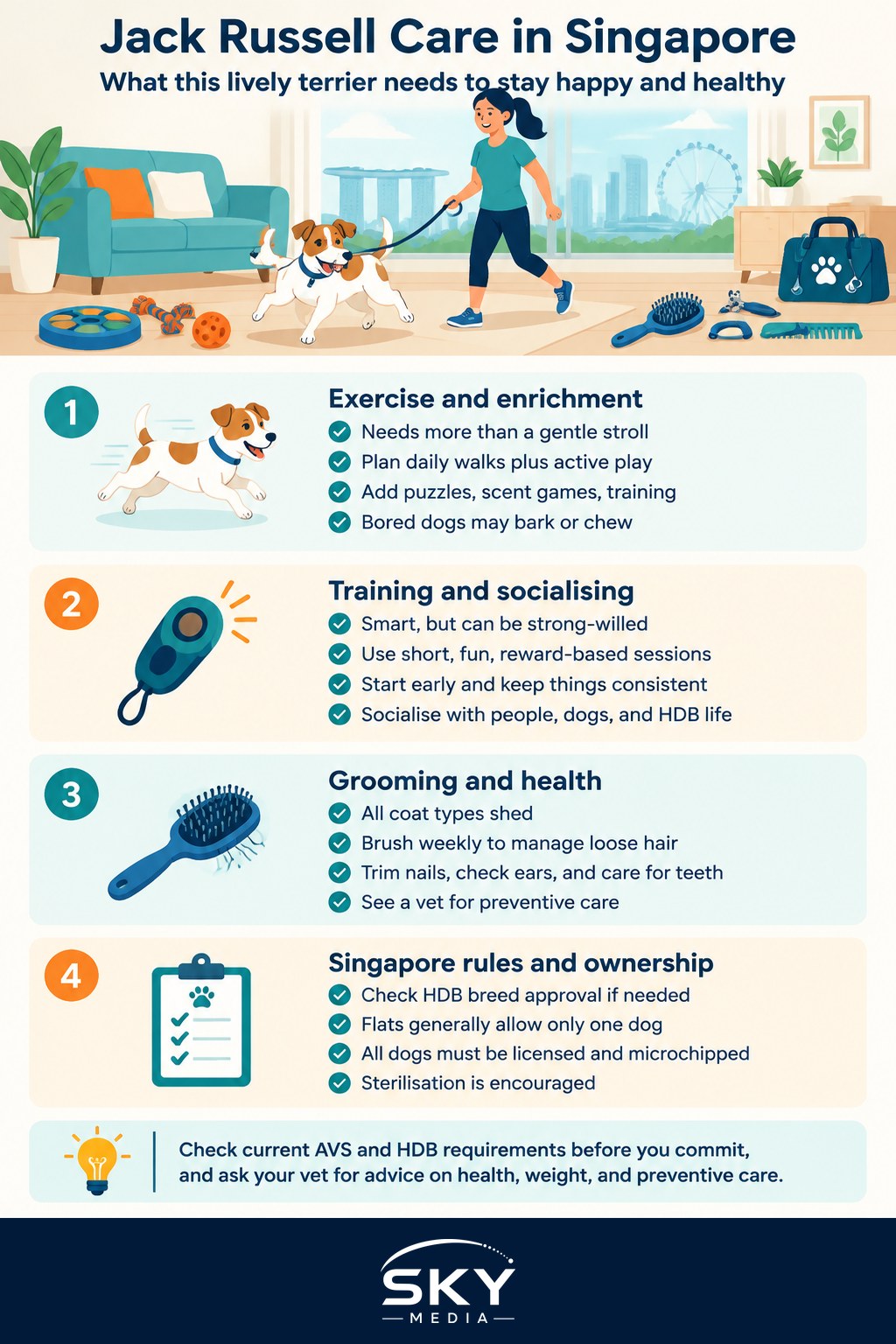
A Jack Russell needs a lot more than a gentle stroll. Plan for a good daily walk or two, plus active play and games that let them run, chase, and problem-solve. Without enough outlet, that pent-up energy turns into barking, digging, and destructive chewing. Because they are so smart, mental exercise matters as much as physical exercise, so rotate food puzzles, scent games, and short training sessions through the day. Our guide to tiring out a high-energy dog in Singapore is tailor-made for breeds like this.
Singapore’s climate means timing your activity well. Exercise in the cool of early morning or the evening, avoid the midday sun, bring water, and watch for heavy panting, drooling, or slowing down, which can signal overheating. Terriers will keep going even when they are too hot, so you have to be the sensible one and call time. Their strong prey drive also means a secure harness and lead are wise, as a Jack Russell that spots a cat or bird may bolt.
Training a clever, independent terrier
Jack Russells are highly trainable but also strong-willed, so consistency and positive, reward-based methods work far better than force. Keep sessions short, fun, and frequent, and start early. Recall is especially important given that prey drive, and teaching a reliable come is well worth the effort, as covered in our piece on teaching your dog recall in Singapore. Early socialisation with people, other dogs, and the everyday sights and sounds of HDB life helps them grow into a confident, well-mannered adult rather than a reactive one. If digging becomes a problem, redirect rather than punish, since it is a natural terrier behaviour.
Grooming and coat care
Jack Russells come in smooth, broken, and rough coats. All of them shed, sometimes more than you would expect for such a small dog, so a weekly brush keeps loose hair down and the coat healthy. Rough and broken coats may need occasional hand-stripping. Bathe only when needed, keep the nails trimmed, check the ears, and keep up dental care, as small breeds are prone to dental disease. Grooming is also a lovely bonding moment and a chance to check the body over for lumps, ticks, or sore spots.
Diet, weight, and routine health
Feed a good complete food in measured portions, and keep treats modest, especially since these active dogs can still gain weight if the sums do not add up. Ask your vet what a healthy weight looks like for your individual dog and weigh in regularly. Jack Russells are generally a hardy, long-lived breed, but like all dogs they benefit from routine preventive care: vaccinations, parasite prevention, dental checks, and regular examinations. Everything here is general information rather than veterinary advice, so see a licensed vet for diagnosis, treatment, and any medication, which should only be given as prescribed. Never give human medicines, as many are toxic to dogs, and for any emergency such as collapse, difficulty breathing, or suspected poisoning, go to an emergency or 24-hour vet immediately. Keeping up preventive care is easier with a plan, and our guide to pet vaccinations and preventive care in Singapore walks through the basics.
Life in Singapore: rules and responsible ownership
If you live in an HDB flat, check that the breed is approved and note that flats generally allow only one dog. All dogs must be licensed and microchipped, and sterilisation is encouraged. Because rules can change, confirm the current AVS (Animal & Veterinary Service) and HDB requirements before you commit. If you decide a Jack Russell is right for you, buy only from responsible, licensed sources and please consider adoption too, as terriers and terrier mixes do turn up in local shelters. Our guide on adopting versus buying a pet in Singapore can help you think it through.
A Jack Russell is a joyful, loyal, and hilarious companion for the right household. Give them plenty of exercise, real mental challenges, consistent training, and regular vet care, and you will have a spirited little friend who keeps you laughing for many years.
Frequently Asked Questions
Is a Jack Russell suitable for first-time dog owners? Usually it is a challenging first dog. Jack Russells are clever, strong-willed and full of drive, so they reward owners who can commit to daily exercise, consistent training and firm but kind routines. If you are new to dogs, talk to a trainer or an experienced owner of the breed before deciding.
Can a Jack Russell be left alone while I work? Short, planned periods alone are manageable, but long empty days often lead to barking, digging and chewing. Exercise your dog well before you leave, leave food puzzles or chews, and consider a sitter or daycare for long hours. Build up alone time gradually.
Why does my Jack Russell dig and bark so much? Both come from the breed’s working-terrier instincts, made worse by boredom or pent-up energy. More exercise, scent games and short training sessions usually help. Redirect digging to an allowed activity rather than punishing it, and see a trainer if the barking is constant.
How do Jack Russells get along with cats and other pets? Their strong prey drive means small animals, cats and birds can trigger chasing, so careful introductions matter. Some terriers live happily with other pets if socialised early, but never leave them unsupervised together. A secure lead and harness help outdoors.
Is a Jack Russell a good family dog with young children? They can be playful and loyal with children, but their high energy and sharp reactions suit older, dog-savvy kids better than toddlers. Teach children to handle the dog gently, give the dog a quiet retreat, and always supervise play.
Official sources: Animal & Veterinary Service
Further reading: Caring for a Cairn Terrier in Singapore · Caring for a Fox Terrier in Singapore · Caring for a Bull Terrier in Singapore