

A fox terrier singapore households take on is a small, spirited and endlessly energetic dog with a huge personality packed into a compact frame. Originally bred to hunt, the Fox Terrier, whether the Smooth or Wire variety, is bold, clever, alert and full of terrier drive. That energy makes them brilliant, entertaining companions for active people, but they are far from a low-effort lap dog. This guide gives an honest picture of the breed’s temperament, exercise and grooming needs, its suitability for local flats and heat, and the health signs that mean a vet visit. It is general information, not veterinary or licensing advice.
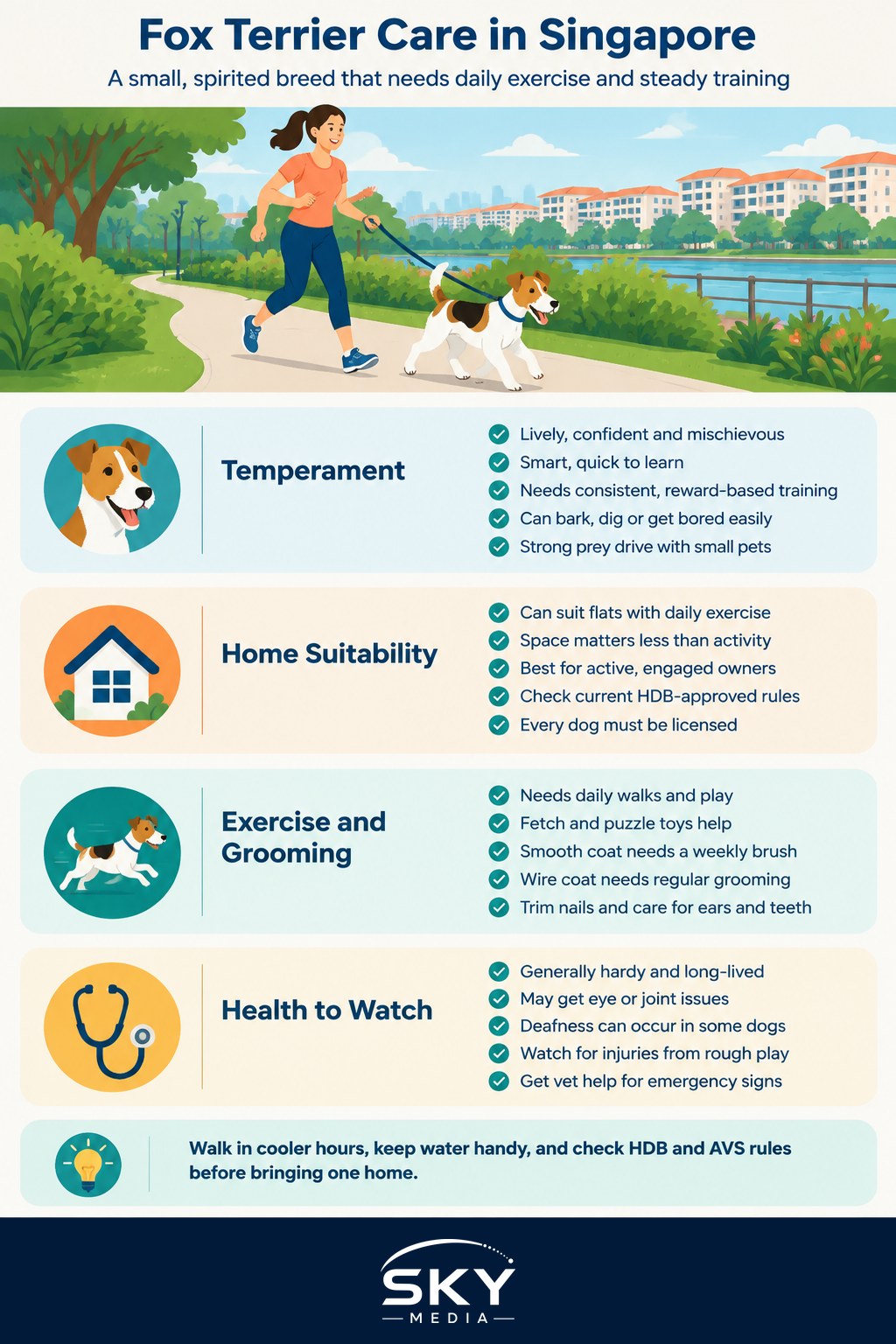
Temperament and Training
Fox Terriers are lively, confident and mischievous. They are highly intelligent and quick to learn, but they also have a strong independent streak and plenty of terrier stubbornness, so training needs to be consistent, fun and reward-based to hold their attention. A bored Fox Terrier will happily invent its own entertainment, which usually means digging, barking or getting into things.
They tend to be alert and vocal, often making keen little watchdogs, so early training to manage barking is worthwhile in a flat. Their strong prey drive means they may chase small animals and should be introduced carefully to cats and other pets. Early and ongoing socialisation helps them grow into well-mannered adults, and steady dog training and obedience channels that busy terrier brain into good habits rather than trouble.
For an owner who enjoys an interactive, spirited dog and can commit to daily engagement, the Fox Terrier is enormously rewarding. For someone wanting a calm, quiet companion, it may be a mismatch.
Suitability for Singapore Homes
Here is welcome news after the giant breeds. As a small dog, the Fox Terrier can adapt well to flat and apartment living, provided its considerable energy is met with real daily exercise and mental stimulation. Space indoors matters less than the effort you put into walks and play.
That said, you still need to check the rules. Whether a specific breed is on the HDB-approved list and any limits on numbers can change, so always confirm the current HDB-approved list and the rules from the Animal and Veterinary Service (AVS, under NParks), and remember every dog in Singapore must be licensed. Our guides to keeping pets in HDB flats and licensing your dog walk you through it. The bigger question with this breed is not space but whether your lifestyle can keep up with its energy.
| At a glance | Fox Terrier |
|---|---|
| Size | Small and compact |
| Energy level | High, needs daily exercise and play |
| Coat and grooming | Smooth is easy, Wire needs regular grooming |
| Temperament | Bold, smart, lively, alert, can be vocal |
| Best home here | Flat or house with an active owner |
| Heat tolerance | Fair, walk in cooler hours and keep hydrated |
Exercise, Grooming and Heat
Do not be fooled by the small size. Fox Terriers need a good amount of daily exercise, along with games and training to tire the mind as much as the body. Walks, fetch, puzzle toys and short training sessions all help burn off that terrier energy. A well-exercised Fox Terrier is a much calmer, better-behaved housemate.
Grooming depends on the variety. The Smooth Fox Terrier has an easy short coat that needs only a weekly brush. The Wire Fox Terrier has a harsh, dense coat that needs regular brushing and periodic grooming, sometimes hand-stripping or clipping, to stay in good condition, which many owners have done professionally. Keep nails trimmed and ears and teeth cared for in both types.
Even a small, active dog feels our heat, so walk in the cooler morning and evening hours, carry water, and rest in the shade. Watch for heavy panting, weakness or collapse, which can signal heatstroke and are an emergency, and never leave a dog in a parked car.
Health Signs to Watch
Fox Terriers are generally a hardy, long-lived breed, which is one of their attractions, but no dog is free of risk. The breed can be prone to certain eye conditions, some joint issues such as luxating patella, and occasionally deafness, particularly in mostly white dogs. Choosing a responsible source that screens for health helps reduce these risks.
Because they are curious and driven by prey instinct, they can also get themselves into scrapes, so supervise play and keep an eye out for injuries. This is general information only and no substitute for professional care, so build a relationship with a vet and go for regular checks. Our guide to common dog health issues is a helpful starting point.
Seek an emergency vet at once if your dog has trouble breathing, collapses, will not eat or drink, has seizures or shows signs of heatstroke. For anything else that worries you, a licensed vet is the right person to diagnose and treat.
A Caring Wrap-Up
A Fox Terrier can be a joyful, funny and devoted little companion, well suited to flat life here as long as you meet its need for daily exercise and mental stimulation. It rewards an active, engaged owner and frustrates a sedentary one, so match the breed honestly to your lifestyle. Consider adopting rather than shopping, choose a responsible source if you buy, and be ready for years of spirited, entertaining company from one of the liveliest small dogs around.
Frequently Asked Questions
Should I get a Smooth or a Wire Fox Terrier? Choose Smooth if you want easy grooming, since a weekly brush is enough. Pick Wire if you like the look and can budget for regular coat work, sometimes done professionally. Temperament is similar, so grooming time and cost are the main difference.
How do I stop a Fox Terrier barking all the time in a flat? Start training early and give the dog enough exercise, because boredom drives much of the barking. Reward quiet behaviour, teach a calm command and avoid shouting, which can encourage more noise. Consistency matters if neighbours are close.
Can a Fox Terrier live with cats or other small pets? It can, but with caution. Their strong prey drive means they may chase small animals, so introduce them slowly, supervise early meetings and give small pets a safe escape space. Puppies raised with other pets often settle more easily.
Why do some Fox Terriers have hearing problems? Deafness is more common in dogs with mostly white coats, which is the case for many Fox Terriers. A responsible source should know of any hearing issues in the line. A vet can test a puppy’s hearing if you are unsure.
How is a Fox Terrier different from a Jack Russell? They are related terriers with a similar bold, busy temperament, but Fox Terriers are the older, more established breed. Fox Terriers are usually taller and more refined in build. Both need plenty of exercise, so energy matters more than the name.
Further reading: Caring for a Cairn Terrier in Singapore · Caring for an Airedale Terrier in Singapore · Caring for a West Highland Terrier in Singapore