
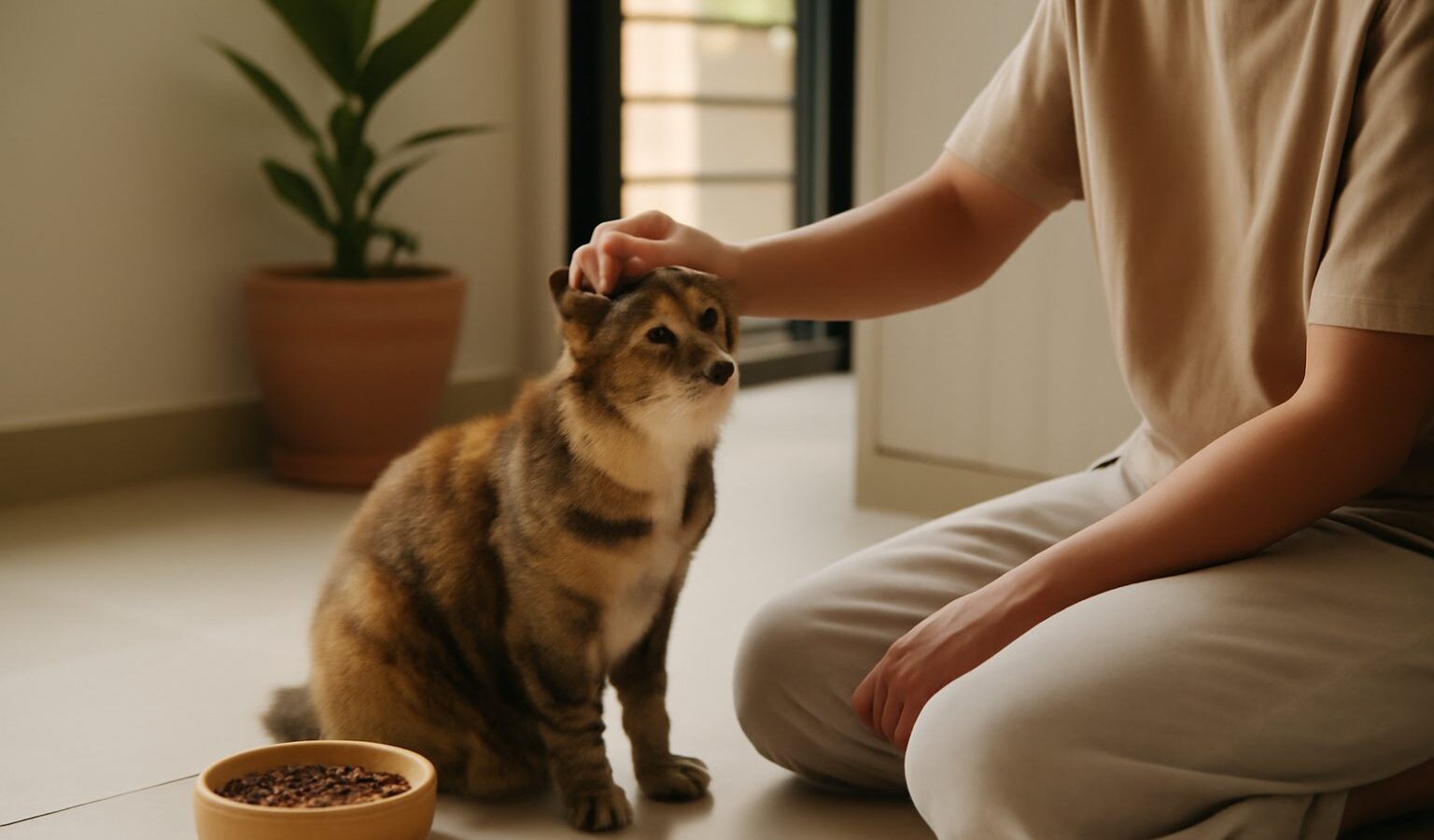
The manx is instantly recognisable for one thing: little or no tail. Rounded, sturdy and famously friendly, it is a breed with a big personality. If you are researching a manx cat Singapore homes can care for well, it is important to go in with clear eyes. The same gene that produces the tailless look is linked to potential spinal problems, so this guide covers that honestly alongside the everyday care of grooming, heat, diet and health.
The Tailless Trait and Spinal Health
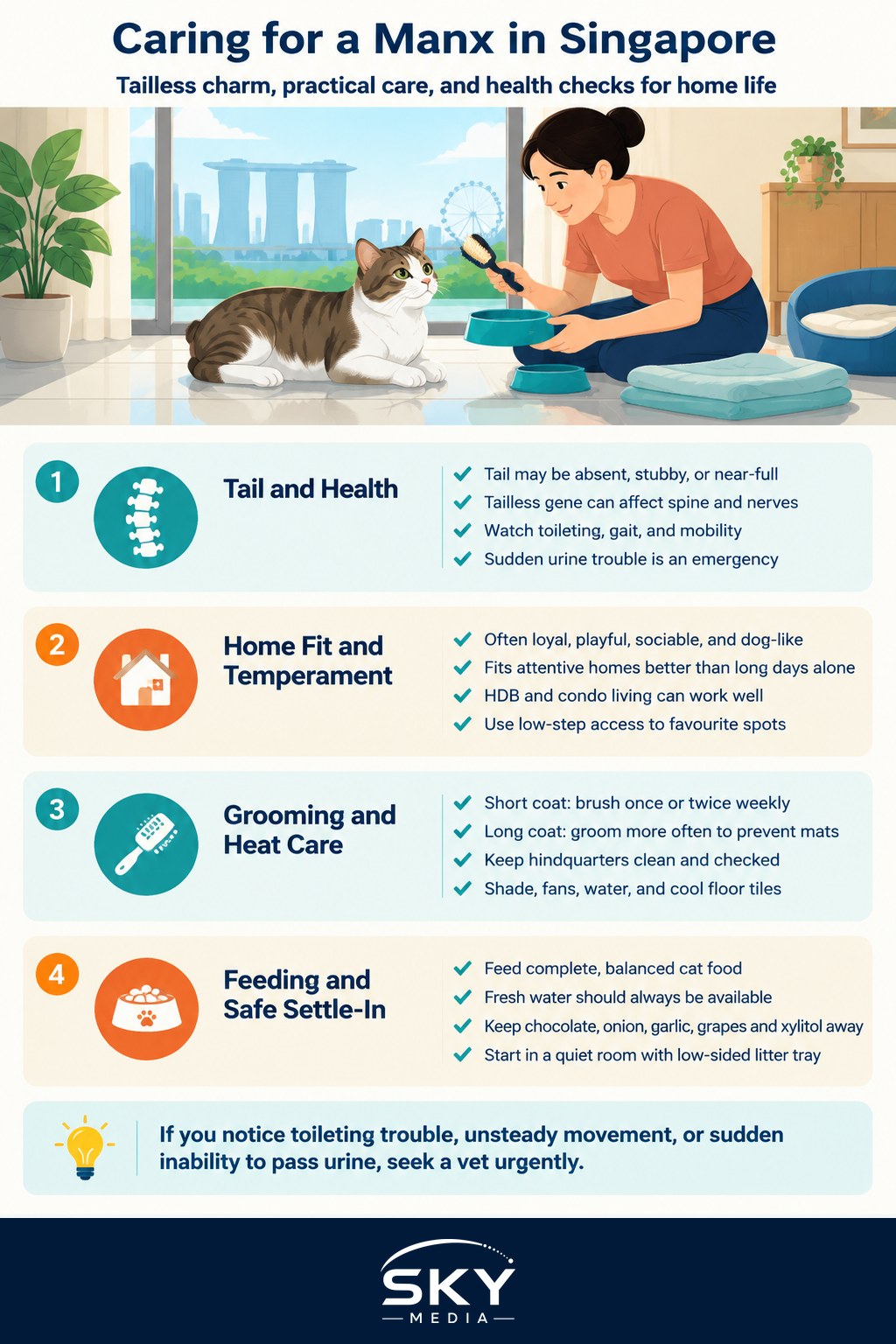
The manx tail comes in a range, from completely absent to a short stub or a near-full tail. The gene responsible for taillessness can also affect the spine and the nerves at the base of the spine. In some cats this leads to a group of issues sometimes called manx syndrome, which can involve problems with the spinal cord and with bladder and bowel control, and in some cases mobility. Signs may appear in kittenhood or later.
This is not meant to alarm you, but to help you make an informed, responsible choice. It is why reputable, ethical breeding matters, and why adopting where possible is a kind option. If you take on a manx or a manx-type cat, watch for signs such as difficulty toileting, straining, incontinence, an unsteady or hopping gait, or reluctance to jump. These warrant a vet visit. Anything sudden, such as an inability to pass urine, is a medical emergency, so seek an emergency vet now.
Everything here is general information and not veterinary advice. Please build a relationship with a licensed vet who can examine your specific cat, discuss its individual health and guide you on monitoring and care.
Temperament and Home Fit
Manx cats are often described as dog-like. They tend to be loyal, playful, sociable and even willing to learn games of fetch. Many enjoy following their people around and being part of family life. This makes them well suited to attentive households rather than homes where the cat would be alone for long days.
They are generally adaptable to apartment living, which fits HDB and condo homes, provided the cat has room to play and climb. Because some manx cats may have mobility or balance quirks linked to the spine, it helps to provide easy, low-step access to favourite resting spots rather than relying only on high leaps. Whatever the breed, please consider adopting rather than shopping, and match a cat’s energy and needs to your home.
Grooming and Coping With Singapore’s Heat
Manx cats come in shorthaired and longhaired versions. Shorthaired manx cats have a dense double coat that benefits from a brush once or twice a week, while longhaired ones need more frequent grooming to prevent mats, especially around the rear where a shorter tail can make self-cleaning harder. Keep the hindquarters clean and check regularly, particularly if your cat has any toileting difficulty.
Singapore’s heat and humidity are demanding for any cat, and a dense double coat traps warmth. Help your manx stay cool with shaded, breezy resting spots, access to cool floor tiles, fresh water in several places and air conditioning or fans during the hottest hours. Do not shave a double coat, as it protects against heat and sun and does not regrow properly. Watch for overheating signs such as panting, drooling, lethargy or wobbliness, and treat severe heat distress as an emergency.
High-rise living adds another duty. Fit secure mesh or grilles on all windows and balconies. This is essential for every cat and doubly so for a curious, agile breed.
Feeding and Everyday Care Table
Feed a complete, balanced cat food suited to your cat’s life stage, portioned to keep it at a healthy weight, with fresh water always available. Keep toxic foods out of reach, including chocolate, onion and garlic, grapes and raisins, caffeine and xylitol. If you think your cat has eaten something toxic, call a vet urgently.
| Care area | What to aim for |
|---|---|
| Tail trait | Ranges from none to a stub; linked to spinal risk |
| Health watch | Toileting, gait and mobility; vet promptly |
| Grooming | Weekly for shorthair; more often for longhair |
| Heat care | Shade, cool floors, fans or aircon; never shave |
| Home fit | HDB or condo friendly; provide low-step access |
| Diet | Complete cat food, portioned; fresh water |
| Safety | Secure all high-rise windows and balconies |
Settling In and Final Thoughts
Introduce a new manx to a quiet room first, with its litter tray, food, water and a cosy hideaway, then widen its space slowly. Keep an easy-access litter tray with low sides, and note its toileting habits from day one so you have a baseline. Provide play, scratching posts and gentle enrichment for that clever, sociable nature.
A manx can be a wonderfully affectionate companion. The key is honesty about the spinal health link, close partnership with a vet, sensible heat and high-rise safety, and good daily care. For more, read our guides on choosing a cat or kitten in Singapore, common cat health issues in Singapore and choosing a vet in Singapore.
Frequently Asked Questions
Are all Manx cats tailless? No. The tail ranges from completely absent to a short stub or a near-full tail. The gene behind taillessness is also linked to spinal problems, so a vet exam matters whatever tail your cat has.
What are the warning signs of manx syndrome? Watch for difficulty toileting, straining, incontinence, an unsteady or hopping gait, or reluctance to jump. These need a vet visit. A cat that cannot pass urine at all is an emergency and should see an emergency vet immediately.
How can I make my home easier for a Manx with mobility quirks? Provide low-step access to favourite resting spots instead of relying only on big leaps, and use a litter tray with low sides. Note its toileting habits from day one so any change stands out.
Why do Manx cats need extra hygiene care? A shorter tail can make self-cleaning around the rear harder, especially in longhaired cats. Keep the hindquarters clean, check them regularly, and mention any toileting difficulty to your vet.
Should I adopt or buy a Manx if I am worried about spinal issues? Adoption is a kind option, and a vet check for any manx-type cat is wise. If buying, look for a reputable, ethical breeder who is open about spinal health. Keep in mind that no breeder can promise a cat will never have problems.
Further reading: Caring for a Somali Cat in Singapore · Caring for a Korat Cat in Singapore · Caring for a Chartreux Cat in Singapore