
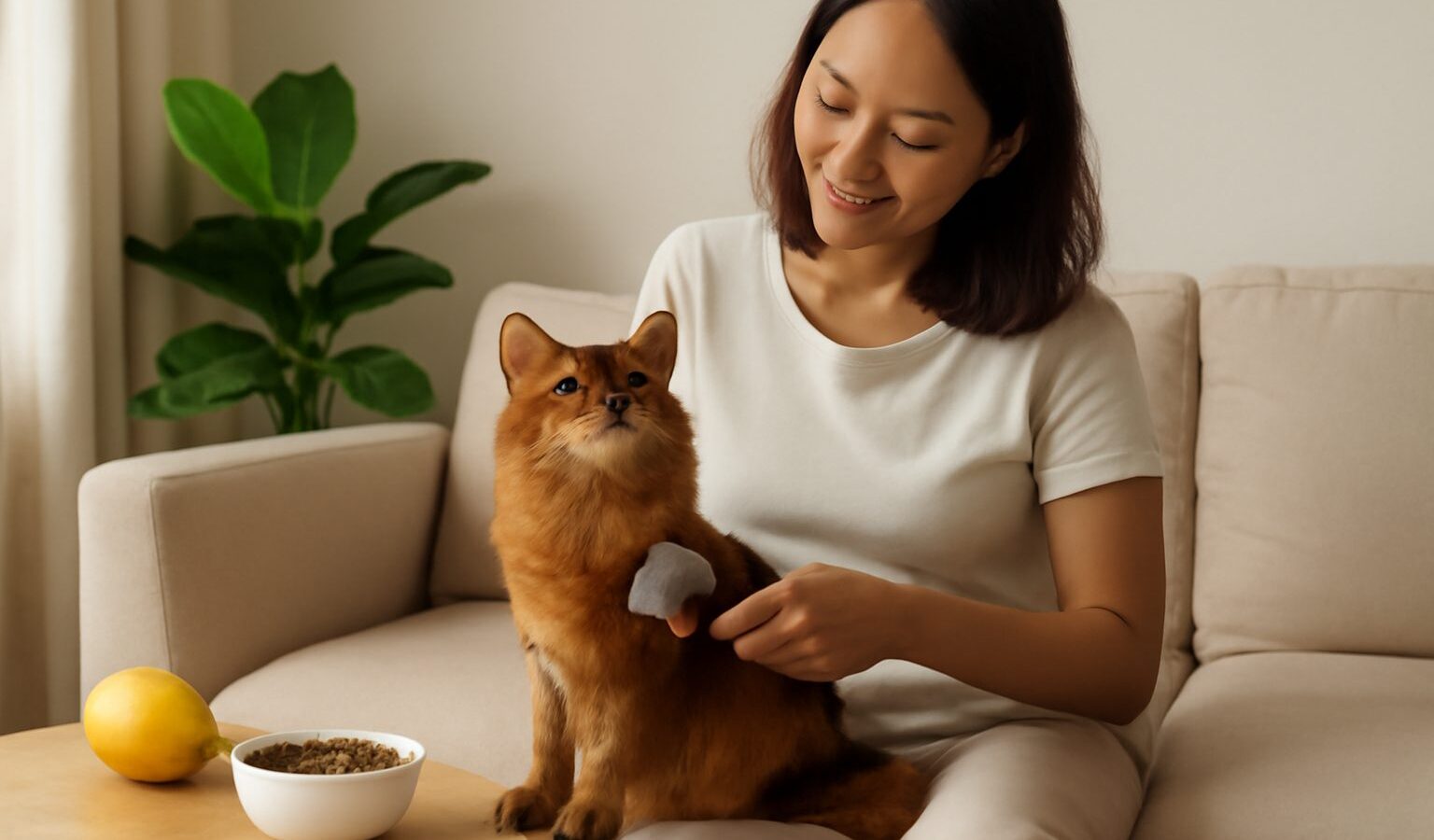
The Somali is often described as a longhaired Abyssinian, and the comparison is apt: same lithe, athletic build and warm ticked coat, but with a fuller, flowing coat and a plume of a tail. Bright, busy and endlessly curious, it is a cat that loves to be involved. If you are considering a somali cat Singapore homes can care for well, this guide covers grooming, heat, feeding, health and how to settle this energetic beauty into a local flat or condo.
Temperament and Whether the Somali Suits Your Home
Somalis are playful, clever and highly social. They tend to stay kitten-like well into adulthood, enjoying games, climbing and problem-solving toys. Many are known for their agile paws and habit of investigating everything, including cupboards, taps and anything left open. They usually bond strongly with their people and thrive on interaction.
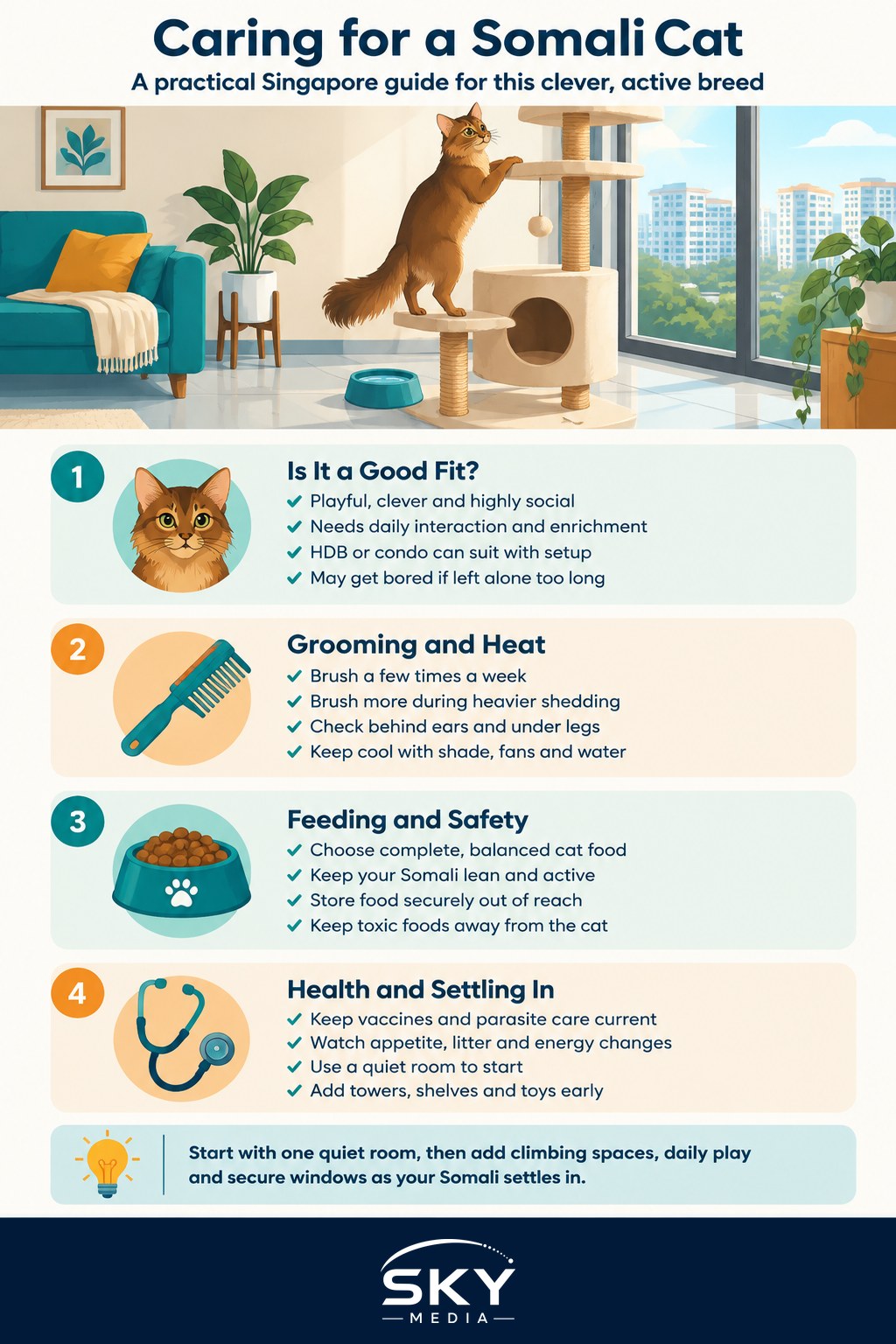
This liveliness means a Somali does best in a home that offers engagement and enrichment. An HDB or condo can suit the breed well if you provide vertical space, scratching posts, puzzle feeders and daily play. A Somali left alone for long days with nothing to do may become bored or mischievous, so consider company, enrichment or a compatible feline friend.
As with any breed, temperament varies between individuals. Whatever coat you admire, please consider adopting rather than shopping. Rescues and shelters have playful, affectionate cats of every type, and adoption gives a deserving cat a home.
Grooming the Long Coat and Coping With the Heat
The Somali’s semi-long coat is softer and less prone to matting than some longhaired breeds, but it still needs regular grooming. Aim to brush a few times a week, and more often during heavier shedding periods, paying attention to the ruff, the britches on the hind legs and the tail. Regular brushing prevents tangles, reduces hairballs and keeps that ticked coat looking its best. Check the coat for mats behind the ears and under the legs.
Singapore’s heat and humidity are challenging for any cat, and a fuller coat holds warmth. Help your Somali stay cool with shaded, breezy resting places, access to cool floor tiles, fresh water in several spots and air conditioning or fans during the hottest hours. Do not shave the coat as a shortcut, since it offers some protection and may not regrow evenly; instead keep it well brushed. Watch for heat stress signs such as panting, drooling, lethargy or wobbliness, move an affected cat to a cool area and offer water, and treat collapse or breathing trouble as an emergency by seeking an emergency vet now.
Somalis are superb climbers and jumpers, so high-rise safety is essential. Fit sturdy mesh or grilles on every window and balcony to prevent falls.
Feeding and Everyday Health
Feed a complete, balanced cat food appropriate to your Somali’s life stage and activity, portioned to keep it lean and athletic. Fresh water should always be available, and many active cats drink more readily from a fountain. Because the breed is agile and curious, store food securely so your cat cannot help itself.
Keep toxic foods out of reach, including chocolate, onion and garlic, grapes and raisins, caffeine and anything containing xylitol. If you suspect your cat has eaten something toxic, treat it as urgent and call a vet.
The information here is general and is not veterinary advice. Register with a vet, keep vaccinations, parasite prevention and dental care current, and book regular check-ups. Long-coated, active cats benefit from routine dental and weight monitoring. Watch for changes in appetite, thirst, litter habits, grooming, weight or energy, and see a licensed vet for anything concerning. Go straight to an emergency vet now for red flags such as trouble breathing, collapse, repeated vomiting, not eating or drinking, seizures or a bloated, hard abdomen.
Quick-Reference Care Table
| Care area | What to aim for |
|---|---|
| Coat type | Semi-long, ticked; plumed tail |
| Grooming | Brush several times a week; do not shave |
| Energy level | High; playful and curious into adulthood |
| Heat care | Shade, cool floors, fresh water, fans or aircon |
| Home fit | HDB or condo if enriched; secure all windows |
| Diet | Complete cat food, portioned; fresh water |
| Vet care | Routine check-ups; act fast on red-flag signs |
Settling In and Final Thoughts
Begin with a quiet room containing the litter tray, food, water and a cosy hideaway, then expand your Somali’s world gradually. Offer climbing towers, shelves and interactive toys early so its clever, active nature has healthy outlets. A daily play session helps burn energy and strengthens your bond.
A Somali can be a joyful, engaging companion for an owner who enjoys an interactive cat. Keep the coat groomed, the cat cool and safe indoors, the diet measured and the vet care regular. For more, read our guides on grooming and brushing long-haired cats in Singapore, indoor cat enrichment and play in Singapore and keeping pets cool in Singapore’s heat.
Frequently Asked Questions
What is the difference between a Somali and an Abyssinian? The Somali is essentially a longhaired Abyssinian, sharing the lithe build and warm ticked coat but with a fuller, flowing coat and a plumed tail. The fuller coat means more grooming and more heat care than the shorthaired version.
How can I keep a clever Somali from getting into mischief? Give its busy mind jobs: puzzle feeders, rotating toys, climbing towers and daily play. Somalis investigate cupboards, taps and anything left open, so store food securely and check what is within reach before leaving the flat.
Does a Somali’s long coat mat easily? Less than some longhaired breeds, since the semi-long coat is softer, but it still needs regular brushing. Focus on the ruff, the britches on the hind legs and the tail, and check behind the ears and under the legs for mats.
Is a Somali okay with other pets? It is highly social and often does well with company, including a compatible feline friend. Introduce new pets slowly, give each animal its own food and litter spots, and watch early interactions.
How do I settle a new Somali into a flat? Begin in a quiet room with litter tray, food, water and a cosy hideaway, then widen its space gradually. Add climbing towers, shelves and interactive toys early, plus a daily play session to burn energy and build your bond.
Further reading: Caring for a Snowshoe Cat in Singapore · Caring for an Egyptian Mau Cat in Singapore · Caring for a Balinese Cat in Singapore · Caring for an Abyssinian Cat in Singapore