

Calm, easygoing, and beautifully plush, the British Longhair is the long-coated cousin of the British Shorthair, with a round face, dense fur, and a laid-back nature. If you are considering a british longhair cat singapore home, the honest picture is that this is an affectionate but undemanding companion that enjoys company on its own terms, tends toward a stocky build, and carries a thick, dense coat that needs regular grooming in our warm, humid climate. In a relaxed household it makes a steady, loving indoor cat.
Every British Longhair is an individual, so temperament and coat vary from cat to cat. Please avoid impulse buying, consider adoption where you can, and match this breed’s needs to your actual home and lifestyle rather than to a pretty photo.
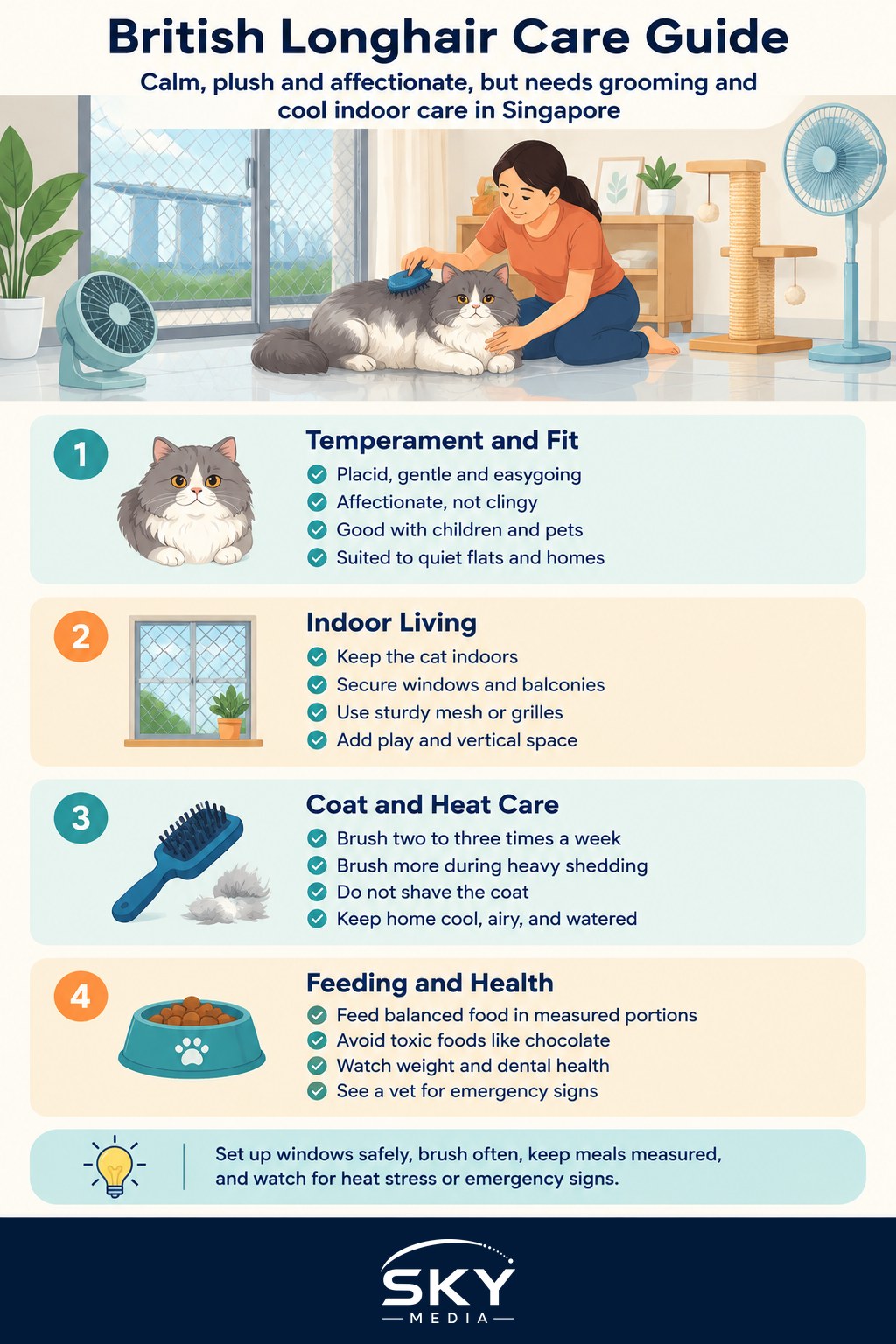
Temperament And Home Suitability
The British Longhair is known for being placid, gentle, and tolerant. It is usually affectionate without being clingy, is happy to sit near you rather than always on you, and often gets along well with children and other pets when introduced properly. That even temperament makes it a good match for many Singapore homes, including quieter flats and families who want a low-drama cat. It is not a highly athletic breed, so it copes well with apartment living, though it still needs daily play to stay fit and engaged.
A British Longhair should be kept indoors, which suits both its calm nature and its safety here. In an HDB flat or condo, indoor living protects it from traffic, disease, and theft. The most important safety step in any high-rise home is to secure your windows and any balcony or open areas. A cat can slip, misjudge a ledge, or chase a bird and fall, so fit sturdy mesh or grilles and never leave windows open without a barrier. Because this breed can be a little lazy and prone to weight gain, build in vertical space, scratching posts, and daily play. For ideas, see indoor cat enrichment and play in Singapore.
Coat, Grooming And Heat Care
The British Longhair’s dense, plush double coat is its signature feature and its main grooming commitment. Brush it two or three times a week, and more during heavier shedding, to prevent mats and tangles, particularly around the neck, under the legs, and along the belly. Regular brushing also cuts down on hairballs and keeps that plush look. Round out the routine with nail trims, ear checks, and tooth care. For method and tools, grooming and brushing long-haired cats in Singapore is a good reference.
Singapore’s heat and humidity are a real consideration for a thick-coated cat. Keep your home cool and airy with fans or air-conditioning, offer shade and cool tiled floors to lie on, and always provide fresh water. Do not shave the coat as a quick fix, because a well-maintained coat helps regulate temperature and protects the skin; brushing out the loose undercoat is the better approach. Watch for signs of overheating such as heavy panting, drooling, or unusual lethargy, and cool your cat and seek help if they appear. The suggestions in keeping pets cool in Singapore’s heat apply well here.
Feed a good quality, balanced cat food in measured portions, since the British Longhair’s love of lounging can easily lead to excess weight. Keep foods that are toxic to cats out of reach, including chocolate, grapes and raisins, onion and garlic, xylitol, and caffeine.
British Longhair Care At A Glance
| Area | What to expect | Owner action |
|---|---|---|
| Temperament | Calm, gentle, easygoing | Relaxed home, gentle daily play |
| Housing | Indoor cat, HDB or condo friendly | Secure windows and balconies |
| Coat | Dense plush double coat | Brush two to three times weekly |
| Heat tolerance | Feels our heat and humidity | Cool airy home, fresh water, no shaving |
| Diet | Prone to weight gain | Measured meals, avoid toxic foods |
For health, this is general information and not veterinary advice, so build a relationship with a licensed vet and keep up with regular check-ups. British Longhairs can be prone to dental disease, weight-related problems, and, as with the British lines generally, heart conditions such as hypertrophic cardiomyopathy, so ask a responsible source about the parent cats’ health and screening. Learn the emergency signs and act immediately: trouble breathing, collapse, seizures, not eating or drinking, straining in the litter tray, or signs of heatstroke. Any of these means an emergency vet now, so set up with a trusted clinic early. See common cat health issues in Singapore for more.
A British Longhair rewards a relaxed, caring owner with steady affection and a lovely plush coat. Keep windows secured, brush regularly, keep your cat cool and at a healthy weight, and keep emergency vet details handy so this gentle breed can thrive here.
Frequently Asked Questions
What is hypertrophic cardiomyopathy, and can British Longhairs be screened for it? Hypertrophic cardiomyopathy is a thickening of the heart muscle that can reduce the heart’s efficiency. Some British lines are affected, so ask a responsible source about heart screening of the parent cats. A vet can listen to your cat’s heart and advise on further tests.
How is a British Longhair different from a British Shorthair? The main difference is the coat. A British Longhair has long, dense, plush fur that needs regular brushing, while the Shorthair’s coat is easier. Both are calm, round-faced and easygoing, and share health concerns.
How do I keep a British Longhair fit when it prefers to lounge? Use short, frequent play sessions with wand toys, add climbing spots and puzzle feeders to make it move, and measure its meals. Even a lazy cat can be nudged into activity. Check its weight at vet visits.
Can I leave a British Longhair alone while I am at work? Usually better than most breeds, as it is undemanding and tolerant of its own company. Give it fresh water, a cool resting spot, toys and a good play session on your return. Very long absences, or a lonely cat, may need a companion.
Does a British Longhair shed a lot in Singapore? It sheds steadily, with heavier periods, because of its dense double coat. Brush two or three times a week, and expect fur around the home. Brushing out loose undercoat is more helpful than shaving.
Further reading: Caring for a Burmilla Cat in Singapore · Caring for a Nebelung Cat in Singapore · Caring for a Ragamuffin Cat in Singapore