

Sleek, silver-grey, and full of drive, the Weimaraner is a striking sporting dog bred to work all day in the field. Anyone considering a weimaraner singapore home should understand up front that this is a large, high-energy breed with big exercise and companionship needs. Given to the right active household with the right housing, it can be a devoted, athletic companion, but it is not a dog that thrives in a small, quiet home.
Every Weimaraner is an individual, so temperament and energy vary. Please avoid impulse buying, consider adoption where you can, and be honest about the time, space, and stimulation this breed demands. Matching the dog to your lifestyle is the most important step you will take.
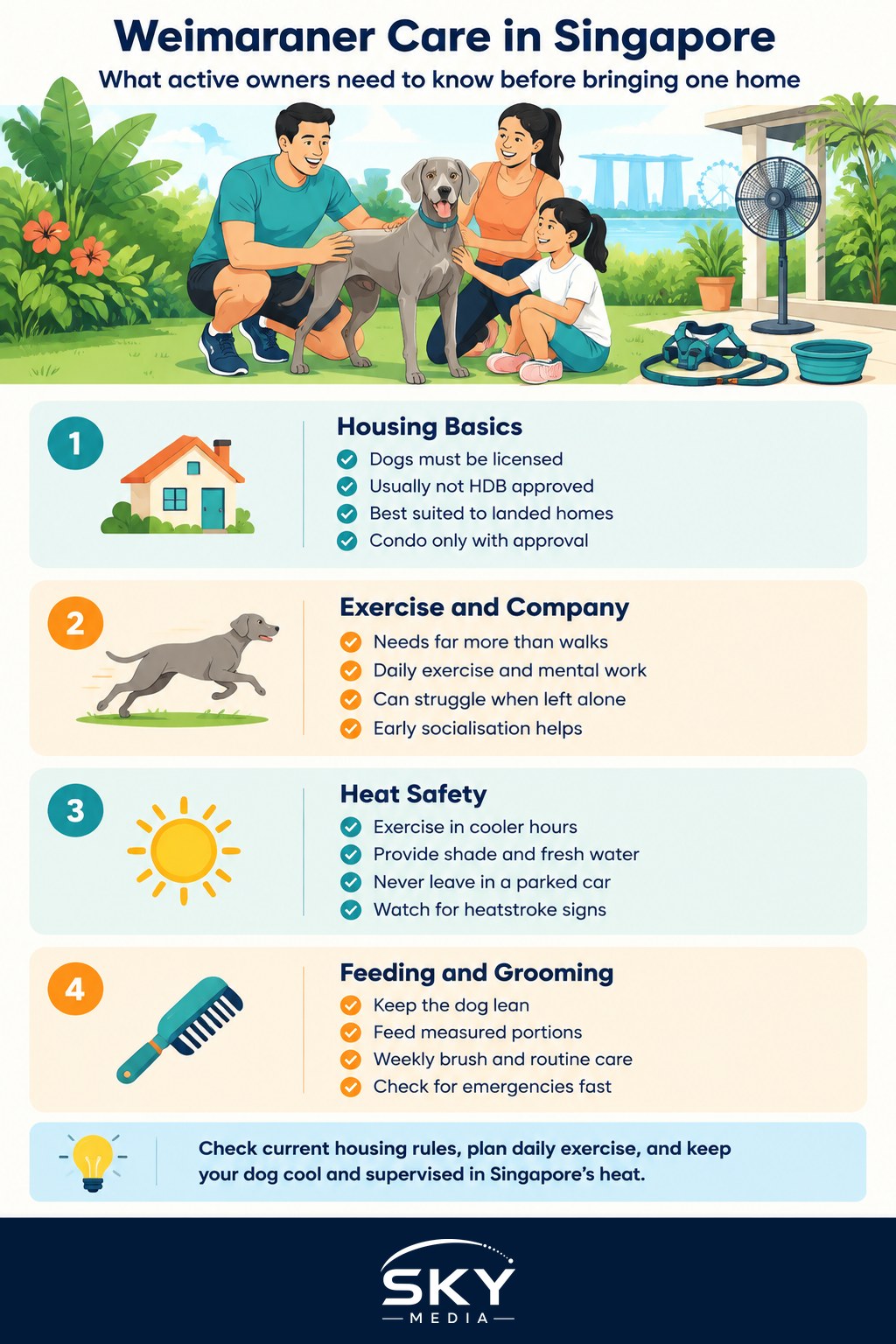
Housing And Legal Basics In Singapore
Dogs in Singapore must be licensed, and housing rules are especially relevant for a large working breed. Bigger and guard-type breeds are generally not on the HDB approved list, and some carry extra requirements as scheduled dogs, such as muzzling in public and third-party insurance. In practice, a Weimaraner usually suits a landed home or a condominium where management approval has been given, rather than an HDB flat.
Because rules change and your exact situation matters, check the current HDB approved breed list and the guidance from the Animal and Veterinary Service before committing to this breed. Never try to keep a dog where it is not permitted. Useful starting points include:
- HDB approved dog breeds in Singapore
- Choosing a dog breed for Singapore
- Licensing your dog in Singapore
Exercise, Training And Mental Stimulation
The Weimaraner is a genuine athlete that needs far more than a stroll around the block. Plan for substantial daily exercise plus mental work, or you may end up with a bored, frustrated dog that chews, digs, or barks. Long walks, structured play, scent games, and training all help burn that energy. Because the breed is intelligent and eager, short and positive training sessions pay off quickly and strengthen your bond.
This breed can also form very strong attachments and may struggle when left alone for long stretches, so it fits a household that is around and involved. Early socialisation helps a confident dog grow into a calm, well-mannered adult. Read more with dog walking and exercise in Singapore.
Given our climate, time that exercise for the cooler morning and evening hours. Even a fit dog can overheat in the midday sun and humidity, so provide shade, cool floors, fans or air-conditioning, and constant fresh water. Never leave a Weimaraner in a parked car, as the heat inside rises fast and can be fatal. Watch for heatstroke signs such as heavy frantic panting, drooling, and wobbliness, and act at once if they appear.
Health, Feeding And Everyday Care
Keep your Weimaraner lean with a suitable diet in measured portions, since extra weight strains a large, active frame. Keep foods that are toxic to dogs out of reach, including chocolate, grapes and raisins, onion and garlic, xylitol, and caffeine. Grooming is simple thanks to the short coat, needing only a weekly brush plus routine nail trims, ear checks, and tooth brushing.
For health, this is general information and not veterinary advice, so build a relationship with a licensed vet and keep up with regular check-ups. Learn the emergency signs and act immediately: trouble breathing, collapse, seizures, a bloated hard abdomen, not eating or drinking, or signs of heatstroke. Any of these means an emergency vet now. As a deep-chested breed, discuss bloat awareness with your vet as part of routine care.
Weimaraner Care At A Glance
| Area | What to expect | Owner action |
|---|---|---|
| Housing | Generally not HDB approved | Landed or condo with approval, check current rules |
| Energy | Very high, working breed | Long daily exercise plus mental work |
| Company | Bonds strongly, dislikes isolation | Involved household, avoid long alone time |
| Heat tolerance | Fair but overheats in midday | Cooler-hour exercise, no parked cars |
| Grooming | Short coat, low maintenance | Weekly brush, nails, ears, teeth |
A Weimaraner rewards an active, present family with loyalty, athleticism, and affection, but only if its exercise, company, and housing needs are truly met. Confirm the rules, commit to the daily effort, keep your dog cool, and keep emergency vet details handy so this handsome breed can thrive in Singapore.
Frequently Asked Questions
How much exercise does a Weimaraner need? A great deal, since it is a high-energy working breed. Expect long daily walks, structured play, scent games and training, ideally in the cooler hours. Without enough, a Weimaraner can become bored and destructive.
Can a Weimaraner be left alone while I am at work? For long stretches it is usually a poor fit. Weimaraners bond strongly and may become anxious, noisy or destructive when isolated. If your hours are long, plan for a walker, daycare or someone at home, and build up alone time gradually.
Is a Weimaraner suited to a first-time owner? It is a challenge for a beginner, because the energy, intelligence and attachment need a lot of time and consistent training. A first-time owner with an active routine and good guidance may cope. Be honest about your lifestyle before deciding.
What is bloat and how do I know if my Weimaraner has it? Bloat is a sudden, life-threatening swelling and twisting of the stomach, to which deep-chested breeds are prone. Signs include a hard swollen belly, restlessness, drooling and unproductive retching. It is an emergency vet situation, so go immediately.
How can I tire out a Weimaraner in the heat? Use cooler hours for physical exercise and add mental work such as scent games, food puzzles and training indoors. Provide shade, water and cool floors, and avoid midday exertion. Stop at the first sign of heavy panting or unsteadiness.
Further reading: Caring for a Vizsla in Singapore · Caring for a Doberman in Singapore · Caring for a Dalmatian in Singapore