
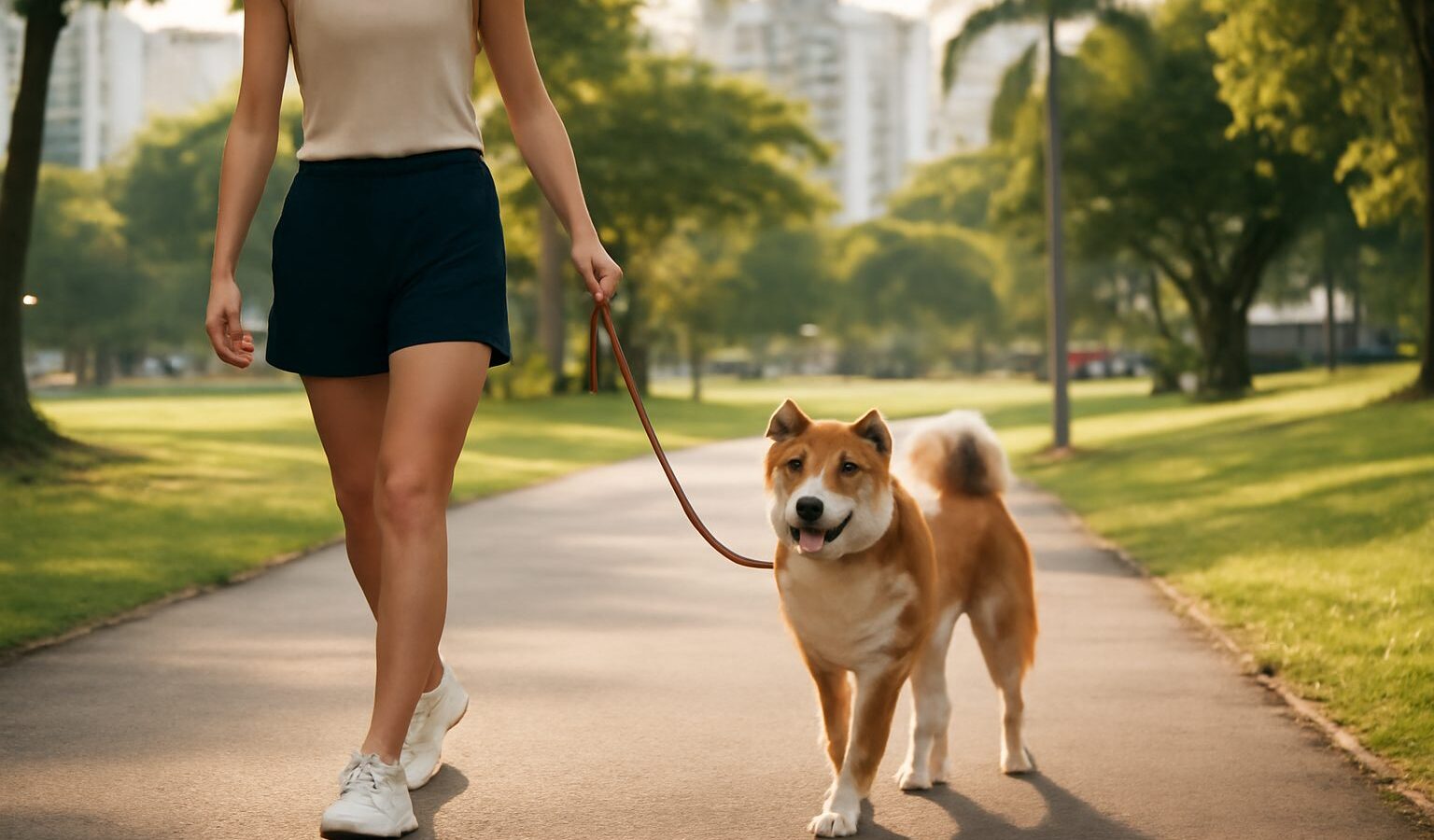
A good walk is the highlight of most dogs’ days, and it does far more than burn energy. It gives your dog fresh sights and smells, keeps joints and muscles working, and heads off the boredom that turns into chewing, barking and restlessness at home. The challenge with dog walking in Singapore is our tropical heat, which shapes when, where and how long you go out. Get the timing and preparation right, and daily exercise becomes safe and enjoyable for both of you. This guide covers walking in the heat, where to go, leashing and courtesy, and what to do when the weather keeps you indoors.
One note before we start: the notes here on heat stress and safety are general information, not veterinary advice. Every dog is different, and older dogs, very young ones, flat-faced breeds and those with health conditions cope with heat differently. If your dog ever seems unwell, consult a licensed vet.
Walking in the Tropical Heat
Our climate is warm and humid all year, so heat management is the single most important part of walking a dog here. Dogs cool themselves mainly by panting rather than sweating, which makes them far less efficient at shedding heat than we are. The midday sun is the biggest risk.
- Time it well. Walk in the early morning or after sunset when the ground and air are cooler. Avoid the hottest stretch of the afternoon.
- Check the pavement. Press the back of your hand to the ground for a few seconds. If it is too hot for your hand, it is too hot for paw pads, which can burn on baking concrete and tarmac.
- Bring water. Carry water and a collapsible bowl, and offer small drinks along the way, especially on longer outings.
- Seek shade. Stick to tree-lined paths and covered walkways, and keep sunny stretches short.
- Adjust for your dog. Shorten walks for puppies, senior dogs, overweight dogs and flat-faced breeds, which struggle more in the heat.
Learn the red-flag signs of heat stress, which can escalate quickly and become an emergency. These include heavy or frantic panting, drooling, bright red gums, weakness, stumbling, vomiting or collapse. If you see them, move your dog to shade or a cool place, offer small sips of water, wet the coat with cool (not ice-cold) water, and contact a vet urgently. Never leave a dog in a parked car, even for a minute.
Where to Walk and Exercise
Singapore is well set up for walking, with a network of green spaces threaded through the island. The Park Connector Network links parks and neighbourhoods with sheltered, tree-lined routes that are ideal for steady on-leash walks. Many are flat and shaded, which suits dogs of all ages.
For dogs who love to run off-leash, dedicated dog runs let them sprint and socialise within a fenced area. There are dog runs at several parks around the island, and they are a good way to add bursts of harder exercise that a normal walk cannot. Some parks are dog-friendly for on-leash walks too, offering wide open lawns and greenery. Always check the signage at each location, as rules differ between spaces, and not every park or nature area allows dogs.
Beyond formal parks, your own neighbourhood offers plenty. HDB estates have sheltered void decks and covered linkways that help on drizzly days, and quiet residential streets can work for a short evening loop. Vary your routes when you can, since new smells give your dog valuable mental stimulation on top of the physical exercise.
Leashing, Rules and Being a Considerate Owner
Responsible walking keeps your dog safe and keeps shared spaces pleasant for everyone, including people who are nervous around dogs. In public areas, dogs should generally be kept on a leash, with off-leash freedom reserved for designated dog runs. A secure leash and a well-fitted harness or collar give you control near roads, cyclists and other dogs. Licensing and pet rules are set by the Animal & Veterinary Service (AVS) under NParks, and HDB has its own rules for flats, so check the current requirements with them directly, as these can change.
Good manners matter as much as the rules:
- Always scoop the poop. Carry bags on every walk and clean up fully. Dispose of waste in a bin, not the bushes.
- Mind lifts and corridors. In HDB blocks, keep your dog close in lifts and lobbies, give space to neighbours who would rather not share the lift, and keep common corridors clear.
- Ask before greetings. Not every dog or person wants to say hello. Check with the other owner before letting dogs meet, and keep greetings calm.
- Watch the traffic. Keep your dog on the inside of paths away from roads, and stay alert around cyclists and joggers on shared park connectors.
A considerate owner protects the reputation of dog owners everywhere and helps keep more spaces welcoming to pets.
Exercise on Haze, Rain and Extreme Heat Days
Some days the weather simply does not cooperate. Heavy rain, a bout of haze or a fierce afternoon can all make outdoor walking a bad idea. On hazy days in particular, poor air quality can affect dogs as well as people, so it is sensible to keep outings short or stay in until conditions improve. The goal is to keep your dog physically and mentally tired without going outside.
Indoor options work surprisingly well:
- Tug and fetch along a hallway or in a cleared living room.
- Food puzzles and snuffle mats that make your dog work for treats, which tire the brain fast.
- Training games like recall between family members, or practising sit, stay and tricks.
- Hide and seek with toys or people, letting your dog use their nose.
- A slow chew on a suitable long-lasting chew toy to settle nervous energy.
Ten to twenty minutes of focused mental work can tire a dog as much as a longer walk, so these are genuine substitutes on a washout day, not just fillers.
Dog Walkers and Sharing the Load
Not everyone can walk their dog every single day. Long work hours, injury or travel can leave gaps. Professional dog walkers and pet care services can step in, taking your dog out while you are busy. If you use one, choose someone calm and experienced, and do a trial walk first to see how they manage leashing, other dogs and the heat. Share your dog’s routine, quirks and any health notes, and make sure they have your vet’s details in case of emergency.
Matching Walk Timing to the Weather
The table below is a general guide to help you plan around our climate. Conditions vary day to day, so use your own judgement and always prioritise your dog’s comfort.
| Time of day | General conditions | Walking tips |
|---|---|---|
| Early morning | Coolest, ground not yet baked | Best window for longer or more active walks |
| Midday to mid-afternoon | Hottest, harsh sun, hot pavements | Avoid; opt for indoor exercise instead |
| Late afternoon | Still warm, pavements may hold heat | Keep it short and shaded; check the ground first |
| Evening after sunset | Cooler air, calmer | Good for a relaxed main walk of the day |
| Haze or heavy rain | Poor air or wet, slippery ground | Stay in; use indoor games and puzzles |
Making Exercise a Happy Habit
Daily movement keeps your dog healthier in body and mind, and it deepens the bond between you. The trick in our climate is to work with the heat rather than against it, choosing cooler hours, carrying water, watching the pavement and having an indoor plan for bad-weather days. Add courteous habits, from scooping poop to being mindful in the lift, and you become the kind of owner who makes life better for dogs and neighbours alike. Keep it consistent and kind, and both of you will look forward to every outing.
Explore More
Looking for the best spots to let your dog run? See our guide to dog runs and parks in Singapore. And because our heat needs year-round care, read keeping pets cool in Singapore’s heat for more on hydration, shade and spotting heat stress early.