
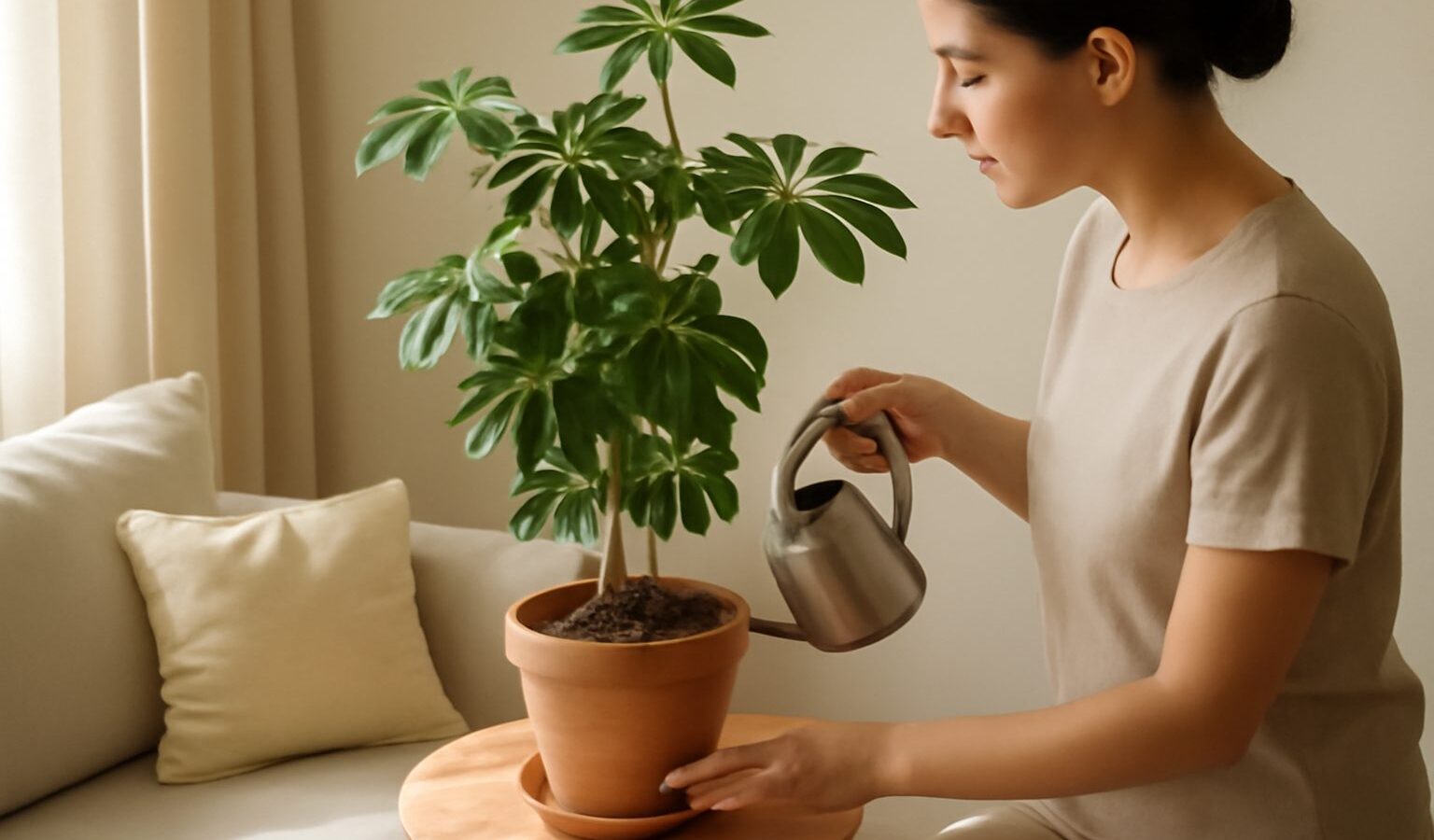
The umbrella plant schefflera is one of those forgiving green companions that make a home feel established without demanding much back. Its glossy leaflets fan out from a central point like the spokes of an umbrella, which is exactly how it earned the name. It comes as a large-leaved tree type and a smaller, daintier dwarf form, and both take happily to Singapore’s warm, humid indoors. Hardy, quick to bounce back from a trim, and tolerant of the average flat, it is a great pick for anyone who wants a leafy plant that grows into a real feature over time.
This is general information for home gardeners, not professional horticultural or veterinary advice.
Why Schefflera Suits Singapore Homes
Schefflera hails from the tropics, so our year-round warmth and humidity are close to its natural comfort zone. There is no cold season to check its growth, and given decent light it will keep pushing out fresh umbrellas of leaves through the year. Indoors it makes a fine floor plant for a bright corner, while the dwarf form sits neatly on a shelf or table. On a sheltered, shaded balcony it can grow lush and tall.
Two things make it beginner-friendly. First, it is genuinely hardy and shrugs off the odd missed watering better than fussier plants. Second, it responds so well to pruning that you can shape it almost like a hedge, keeping it full and at whatever height suits your space. That resilience makes it a confidence-builder for black thumbs. If you like easy-going leafy plants, you might also enjoy caring for a cast iron plant, another famously tough indoor grower.
One safety note worth flagging: schefflera sap can irritate the skin, and the plant is mildly toxic if chewed, so keep it away from pets and small children who might nibble the leaves, and wash your hands after pruning.
Light and Watering
Schefflera is adaptable about light but has clear preferences. Bright, indirect light gives you the fullest, healthiest plant. It tolerates a moderately lit indoor spot, but in genuine gloom it grows leggy and sparse, reaching for the window with long gaps between leaves. Avoid harsh, direct midday sun through glass, which can scorch the foliage. A position near a bright window, out of the fiercest rays, is the sweet spot.
Watering follows the familiar tropical-houseplant rule: thorough, then a chance to dry. Let the top few centimetres of the mix dry out before you water again, then water well and let the excess drain away. The most common mistake is keeping the plant too wet.
- Always use a pot with drainage holes and a free-draining mix.
- Test the soil with a finger rather than watering on a fixed day. Frequency changes with the weather and the spot.
- Empty the saucer after watering so roots never sit in standing water, which invites root rot and can breed mosquitoes.
- If the aircon dries the air, mist occasionally or stand the pot on a tray of damp pebbles to lift humidity.
Feed with a balanced liquid fertiliser at the strength on the label, roughly monthly during active growth, and ease off when growth slows. That light, regular feeding keeps the leaves green and the plant vigorous.
Pruning and Shaping
Pruning is where schefflera really shines, and it is the fix for the plant’s one common failing: legginess. Because it responds so willingly to cutting back, you have a lot of control over its shape.
- To encourage bushiness, cut back the tallest stems just above a leaf node, the point where a leaf joins the stem. New shoots break from below the cut, filling the plant out.
- To control height, simply prune the top down to your preferred level. The plant recovers quickly in our warm climate.
- To tidy up, remove any yellowed, damaged or crossing stems, and wipe dust off the glossy leaves with a damp cloth so they can breathe and shine.
Do your major pruning during a period of active growth so the plant recovers fast. Wear gloves if your skin is sensitive to the sap, and wash your hands and tools afterwards. The stems you remove can sometimes be rooted as cuttings in moist mix if you want another plant, though schefflera roots less readily than something like coleus.
Common Problems and Fixes
Most schefflera troubles are easy to read once you know the signs. The table below pairs the symptom with its usual cause and the fix.
| Symptom | Likely cause | What to do |
|---|---|---|
| Leggy, sparse growth | Too little light | Move to a brighter indirect spot, prune to force branching |
| Yellowing leaves, soft base | Overwatering or poor drainage | Let the mix dry more, check the pot drains freely |
| Dropping leaves | Sudden change, draught or dryness | Steady the conditions, keep watering consistent |
| Brown, crispy leaf tips | Dry aircon air or under-watering | Raise humidity, water a touch more often |
| Sticky leaves or webbing | Scale, mealybugs or spider mites | Wipe off pests, rinse the foliage, treat gently |
Schefflera is prone to a few sap-sucking pests such as scale, mealybugs and spider mites, especially in the dry air near an aircon. Catch them early by checking leaf undersides and stem joints during your regular dusting, and deal with them before they spread. Leaf drop after you move the plant or change its watering is usually just a settling reaction; keep conditions steady and it recovers.
A Hardy, Shapeable Feature Plant
The umbrella plant schefflera rewards very little care with a great deal of presence. Give it bright indirect light, water only when the top of the mix has dried, feed lightly through the growing months, and prune whenever it stretches or outgrows its spot. Keep it away from nibbling pets and children, and stay alert for the usual sap-sucking pests. Manage those few basics and you have a lush, adaptable plant that grows with you and takes happily to Singapore living.
Explore more: caring for a cast iron plant, growing coleus for colourful foliage and the best plants for your bathroom.