
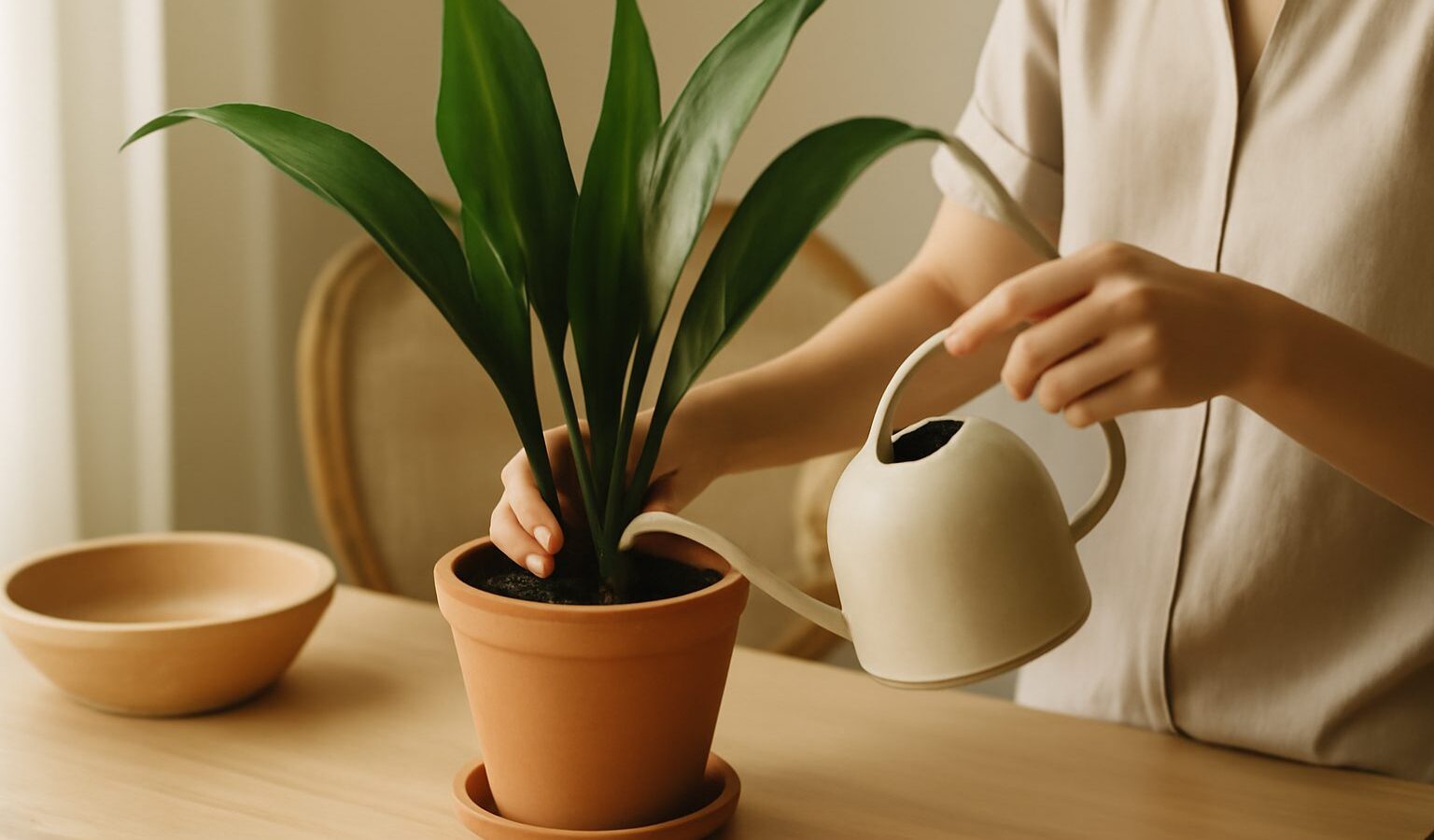
If you have killed more houseplants than you care to admit, the cast iron plant might be the one that finally survives you. Known botanically as Aspidistra elatior, it earned its common name honestly, because it shrugs off the kind of neglect that would flatten a fussier plant. It tolerates deep shade, patchy watering and stale corners where nothing else will grow, which makes it a genuinely forgiving choice for a busy HDB or condo household. This guide walks total beginners and black thumbs through keeping a cast iron plant healthy in Singapore’s hot, humid climate, from light and watering to the handful of things that can actually go wrong. It is general guidance for home growers, not professional horticultural advice.
Why the Cast Iron Plant Suits Singapore Homes
Many popular houseplants sulk indoors because our flats can be surprisingly dim once you step away from the window, especially in a north-facing unit or along a sheltered corridor. The cast iron plant was practically made for those spots. Its broad, dark green leaves are built to gather what little light reaches the forest floor in the wild, so a shady living room corner suits it far better than a blazing balcony.
It also copes well with the two things that trip up new growers most: irregular watering and warm, still air. You do not need to hover over it, mist it daily or move it around chasing sun. For anyone who travels for work, forgets to water, or simply wants a green presence that asks for little, it is one of the most low-maintenance leafy plants you can keep. If you are building a small indoor collection, it pairs nicely with other tolerant choices, and you can read more about matching plants to tricky spots in our guide to the best plants for your work desk in Singapore.
The main trade-off is speed. This is a slow grower. A new leaf every few weeks is normal, and a plant that fills out its pot can take a year or more. Buy the size you want to live with, and enjoy the plant you have rather than waiting for a jungle.
Light, Position and Temperature
The golden rule is simple: bright shade good, direct sun bad. Cast iron plants are happiest in low to moderate indirect light, such as a few metres back from a window, in a corridor with borrowed daylight, or in a bathroom with a frosted pane. They will survive genuinely dim spots too, though growth slows further.
What they will not forgive is harsh, direct tropical sun. Our midday sun is strong enough to scorch those dark leaves within days, leaving bleached, crispy patches that never recover. If your only free spot is a bright balcony, set the plant back under an overhang or behind a sheer curtain rather than in the full glare.
Temperature is rarely a problem here, since the plant is comfortable across the warm range our homes sit at all year. The one thing to watch is aircon. A leaf pressed against a cold vent, or constant dry blasts of conditioned air, can brown the edges. Keep it out of the direct draught and it will be fine.
Watering, Soil and Feeding
Overwatering, not underwatering, is what usually kills a cast iron plant, so err on the dry side. Let the top few centimetres of soil dry out before you water again, then water thoroughly until it runs from the drainage holes, and tip away anything that collects in the saucer. Never leave the pot standing in water.
Standing water is not only bad for the roots, it is a public-health issue here. Stagnant water in saucers and outer pots breeds Aedes mosquitoes, so empty saucers after watering and after rain, in line with NEA guidance and the Mozzie Wipeout habits.
A few practical pointers for soil and feeding:
- Use a free-draining mix. A standard potting mix loosened with some perlite or coarse sand keeps roots aerated and prevents soggy conditions.
- Choose a pot with drainage holes. Decorative pots without holes trap water; if you use one as a cover pot, lift the inner pot out to water and let it drain.
- Feed lightly. A balanced liquid fertiliser at half strength once a month or so during active growth is plenty. This is a slow plant with modest needs, and overfeeding does more harm than good.
- Water less in the monsoon. During long wet, humid spells the soil dries slowly, so stretch the gap between waterings and always check the soil first.
Common Problems and How to Fix Them
Cast iron plants have few enemies, but the ones they do have are easy to read once you know the signs. Use the table below to match a symptom to its likely cause and fix.
| Symptom | Likely cause | What to do |
|---|---|---|
| Yellowing lower leaves | Overwatering or soggy soil | Let soil dry out more; check drainage; reduce watering |
| Bleached or brown crispy patches | Too much direct sun | Move to bright shade, away from harsh glare |
| Brown leaf edges or tips | Dry aircon draught or salt build-up | Shift away from vents; flush the soil occasionally |
| Fine webbing under leaves | Spider mites, common in dry aircon air | Wipe leaves, rinse the plant, improve airflow |
| No new growth for months | Very low light or cold draught | Move to brighter shade; be patient, it is slow |
Wiping the leaves with a damp cloth every couple of weeks keeps them glossy and lets the plant breathe, and it gives you a chance to spot pests early. Dust builds up fast on those broad leaves indoors.
If your plant outgrows its pot, which takes a while, repot into the next size up at the start of a growth spurt, and divide a large clump by gently teasing the rootball apart to make new plants. This is the easiest way to multiply your collection for free.
A Reliable Green Anchor for Any Room
The cast iron plant will never be the showiest thing in your home, and that is exactly its charm. It gives you calm, dark green foliage in the spots where other plants fail, and it does so with almost no fuss. Give it bright shade, water it only when the topsoil dries, keep it out of direct sun and cold draughts, and it will quietly outlast fads and forgetfulness alike. For a beginner rebuilding confidence, or a busy household that wants greenery without guilt, it is hard to beat.
Explore more: if you are choosing plants for specific spots, see our guides to growing bromeliads in Singapore and growing carnivorous plants in Singapore for a bolder, more unusual contrast in a brighter corner.