
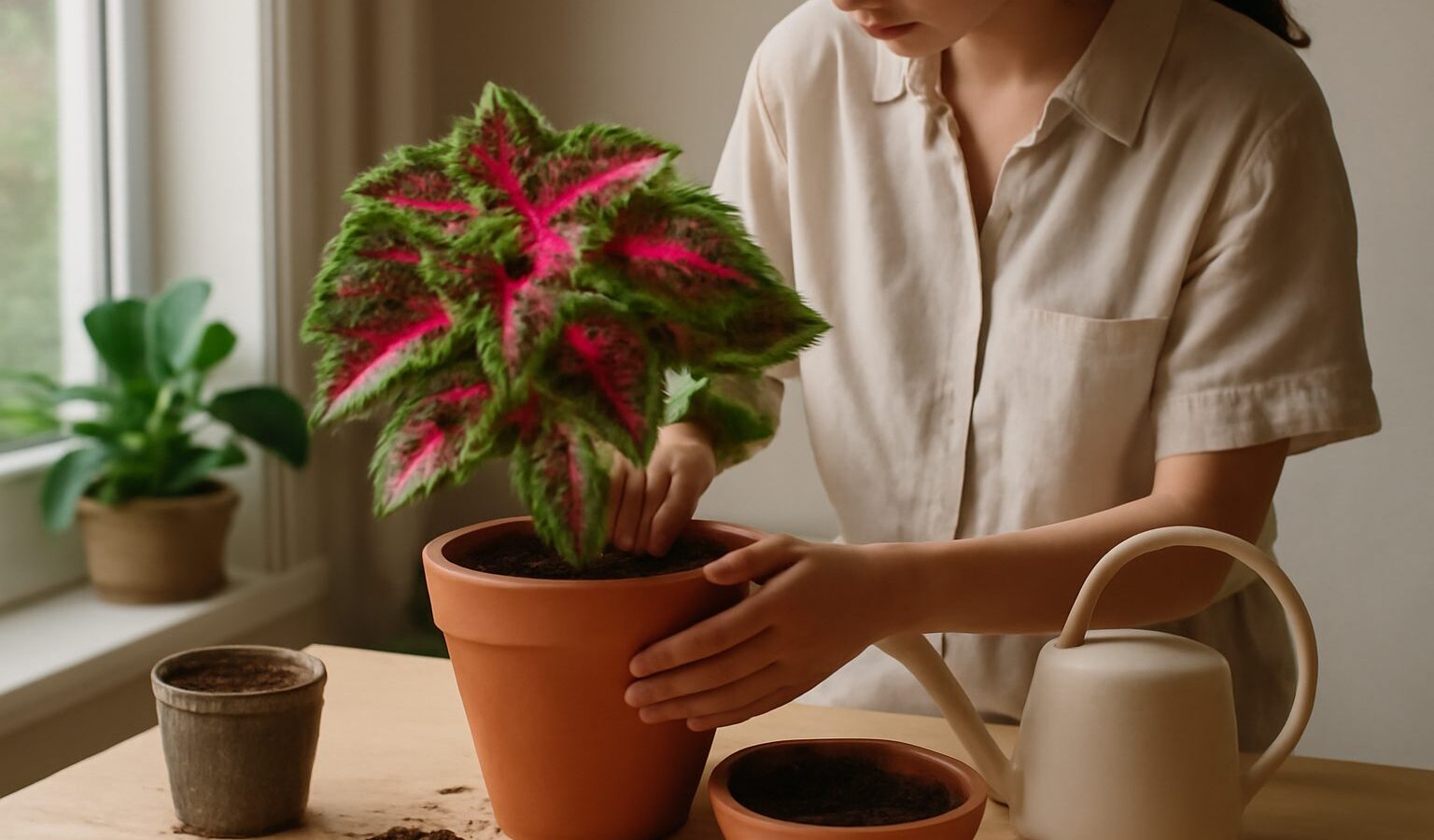
For sheer colour per dollar, few plants beat coleus. Its soft, velvety leaves come in dizzying combinations of lime, burgundy, pink, chocolate and cream, often edged and veined in a second colour, and it grows fast enough to fill a pot in weeks. Coleus is a warm-climate plant that never wants a cold spell, which makes growing coleus almost effortless in Singapore. It roots from cuttings with next to no trouble, so one plant quickly becomes many. This guide covers planting, shaping and multiplying coleus for bright foliage on any balcony, corridor or windowsill.
This is general information for home gardeners, not professional horticultural advice.
Why Coleus Thrives in Singapore
Coleus is grown for its leaves rather than its flowers, and those leaves colour up beautifully in our climate. There is no winter to knock it back, so a well-tended plant stays lush and vivid the whole year round. It grows quickly, which is encouraging for beginners: you see results in days, not seasons, and a leggy or tired plant can be refreshed from cuttings within a couple of weeks.
The plant is flexible about where it lives. It does well in a pot on an HDB balcony, in a trough along a sunny corridor ledge, or massed in a landscaped condo bed. Compact and mounding by nature, it also mixes happily with other plants in a mixed container, spilling colour around taller specimens.
Light shapes the colours. Many coleus varieties show their richest tones in bright light with some gentle sun, while a few of the darker, more delicate types prefer a little shade to stop them scorching. Check the plant tag if there is one, since varieties differ. If you enjoy this painted-leaf look, you may also like caring for croton plants, which offers similar drama in a tougher, shrubbier form.
Planting and Positioning
Getting coleus started is simple, whether you begin with a nursery plant or a cutting from a friend.
- Choose a pot with drainage holes and fill it with a light, free-draining potting mix. Coleus hates sitting in waterlogged soil.
- Pick a bright spot. Morning sun with shade from the fierce midday glare suits most varieties. Watch the leaves in the first week: if they bleach or crisp, move to gentler light; if the colours turn dull and the stems stretch, give more light.
- Plant at the same depth it was growing before, firm the mix gently, and water it in.
- Keep the mix lightly and evenly moist. In our heat coleus can wilt quickly if it dries out, but it usually perks up once watered. Never leave it standing in a saucer of water.
Coleus is a thirsty, fast grower, so it appreciates a light feed. A balanced liquid fertiliser at the strength on the label, roughly every few weeks during active growth, keeps the leaves large and well coloured. Go easy, as too much feeding pushes soft, floppy growth.
Pinching, Shaping and Flowering
The single best habit for full, bushy coleus is pinching. Pinching simply means nipping out the soft growing tip at the top of a stem, just above a pair of leaves, using clean fingers or scissors. This tells the plant to branch out sideways instead of shooting straight up, giving you a denser, rounder plant with more colourful leaves.
- Start pinching while the plant is young, once it has a few sets of leaves, and repeat every few weeks.
- Pinch above a leaf node, the point where leaves join the stem, so new shoots break from there.
- Save the pinched tips; they root easily and become new plants, as covered below.
Coleus will eventually try to flower, sending up small spikes of pale blue or white blooms. The flowers are modest, and the plant tends to lose vigour and colour once it puts energy into them. For the best foliage, pinch out these flower spikes as they appear. If you would rather enjoy the blooms, that is fine too, and if flowering plants interest you generally, see how to get your plants to flower.
Propagating Coleus from Cuttings
Coleus is one of the easiest plants of all to propagate, which is part of its charm. A single plant can furnish a whole balcony in a season. Cuttings root in plain water or straight in moist mix.
The table compares the two common methods so you can pick what suits you.
| Method | How it works | Best for |
|---|---|---|
| Water rooting | Stand a cutting in a glass of water on a bright sill until roots show, then pot up | Beginners who like to watch roots form |
| Direct soil rooting | Push a cutting into moist, light mix and keep it shaded and damp until it takes | Potting several cuttings at once, sturdier start |
| Layering in a mixed pot | Pin a low stem onto the mix so it roots while still attached, then cut free | Filling gaps in an existing container |
To take a cutting, snip a healthy shoot about a hand-span long, remove the lower leaves, and set it to root by your chosen method. Keep it out of harsh sun until new growth appears, usually within a week or two in our warmth. A handy trick is to take a few fresh cuttings before an older plant starts to tire, so you always have young replacements coming on and never lose a favourite variety. One important note for the water method: change the water every couple of days. Stagnant water anywhere at home can breed Aedes mosquitoes, so refreshing it protects your rooting cuttings and follows the NEA Mozzie Wipeout habits.
Endless Colour with Little Effort
Growing coleus is about as rewarding as gardening gets for the effort involved. Give it a bright spot, a free-draining pot, steady moisture and a light monthly feed, pinch it regularly to keep it bushy, and remove the flower spikes to protect the foliage. When a plant tires, snip a few cuttings and start again. With almost no cold-season worries, a Singapore balcony can glow with coleus colour right through the year.
Explore more: caring for an umbrella plant schefflera for another leafy, low-drama plant.