
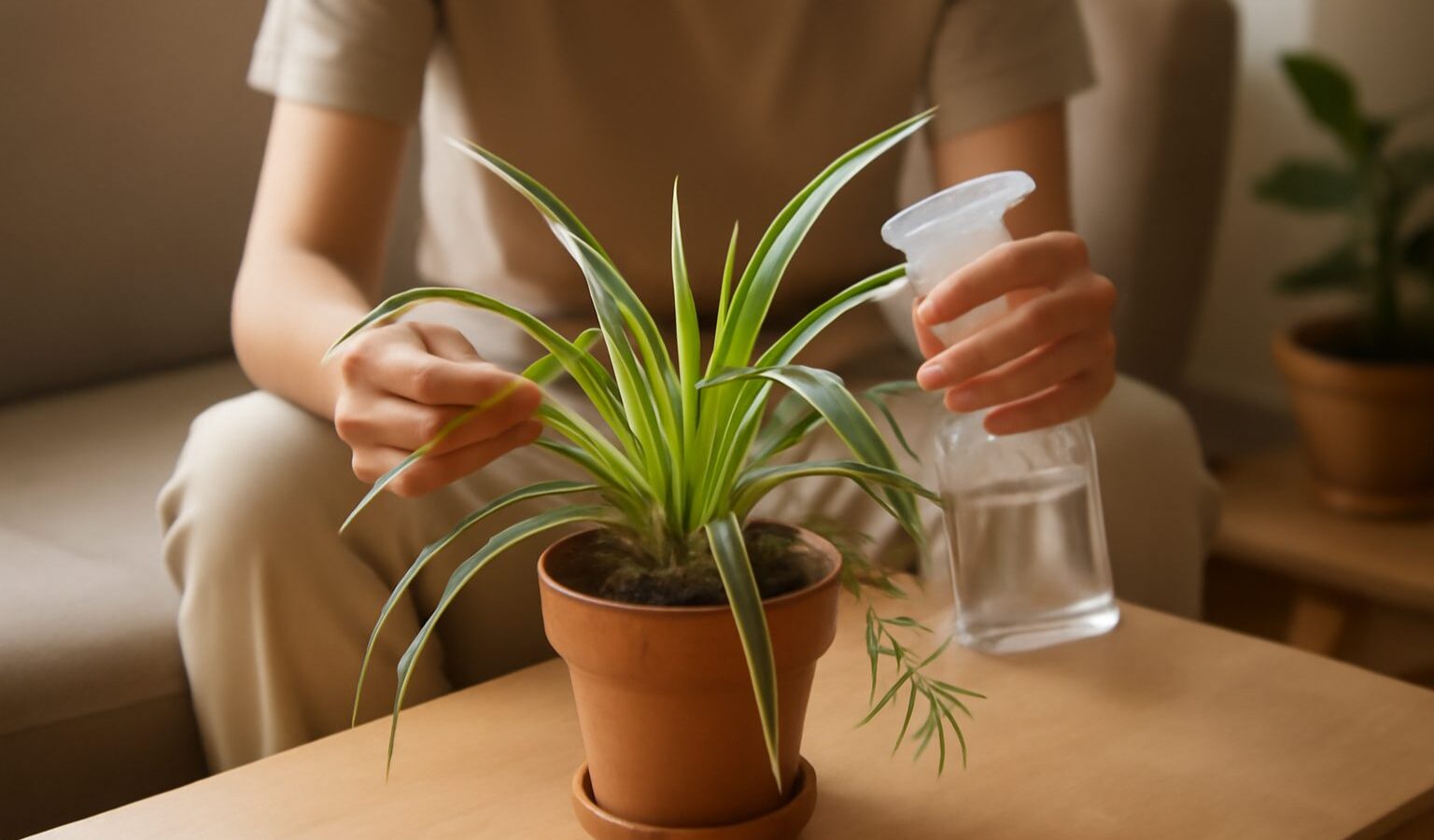
Few houseplants forgive a beginner as generously as the spider plant. With its arching green and cream leaves and the little baby plants, or pups, that dangle on long stems, it looks lively without asking for much. Good spider plant care in Singapore comes down to understanding one thing: this plant enjoys our warmth and humidity, but it dislikes harsh midday sun and soggy roots. Get the light and watering roughly right, and it will reward you for years on a shelf, a hanging basket, or a shaded corner of the balcony.
Botanically it is Chlorophytum comosum, and it earns its place in a small home for another reason too: it is non-toxic and genuinely pet-safe, so a curious cat or dog that chews a leaf is not at risk the way it would be with many trendier plants. That makes it one of the easier choices for a household with animals or young children.
Getting The Light Right In Our Climate
Spider plants like bright, indirect light. In Singapore terms, that means a spot near a window that gets plenty of glow but not the full force of the afternoon sun. A west-facing balcony that bakes from noon onwards will scorch the leaves, leaving pale, crispy patches. An east-facing ledge that catches gentle morning light is ideal, as is a bright interior corner a metre or two back from the glass.
If your only option is a sunny spot, filter the light with a sheer curtain or tuck the plant behind taller plants. Too little light is a milder problem: the plant survives in low light but grows slowly and the cream stripes fade towards plain green. If you notice fewer pups and leggy growth, the plant is quietly asking to be moved somewhere brighter.
Watering And Humidity Without The Guesswork
Spider plants have thick, tuber-like roots that store water, which is why they cope with the occasional missed watering far better than a fern would. The mistake most beginners make is the opposite: watering too often. In our heat a potted spider plant on a breezy balcony may dry out in two or three days, while the same plant in an air-conditioned room can stay damp for a week.
Rather than watering on a schedule, feel the top few centimetres of soil. Water thoroughly when that layer is dry, letting it run out of the drainage holes, then let the pot drain fully. Never leave the pot standing in a saucer of water, both because the roots will rot and because still water in a saucer is a breeding site for Aedes mosquitoes. Tip out any collected water so nothing stagnates, and check saucers at least weekly in line with NEA guidance.
Humidity is rarely a worry outdoors here, but constant aircon indoors dries the air and can brown the leaf tips. If you grow yours in a cool room, an occasional misting or a spot in the bathroom helps. Brown tips are also caused by the fluoride and salts in tap water building up over time, so an occasional deep flush of the pot, or using cooled boiled or filtered water, keeps the foliage neat.
Soil, Pots And Feeding
Use a light, free-draining potting mix rather than heavy garden soil, which stays wet and airless in a pot. A standard indoor mix loosened with a handful of perlite or coarse sand suits it well. A pot with drainage holes is not optional; those water-storing roots rot quickly if they sit in the wet.
Feeding is light work. During the warm, growing months, which is most of the year in Singapore, a balanced liquid fertiliser diluted to half strength every three to four weeks is plenty. Overfeeding builds up salts and worsens brown tips, so err on the side of less. Spider plants actually flower and pup more readily when slightly pot-bound, so resist repotting too soon; move up one pot size only when roots crowd the surface or push out of the drainage holes, usually every couple of years.
Growing New Plants From The Pups
The best part of owning a spider plant is that it makes more of itself for free. Once mature and happy, it sends out long stems tipped with baby plantlets. Each pup can become a whole new plant, which makes this a lovely one to share with neighbours or spread around the flat.
There are two easy ways to root a pup:
- Rooting in soil while attached: set a small pot of moist mix beside the parent, rest a pup on the surface, and pin it down with a bent paperclip while it stays connected to the mother stem. Once it roots in a couple of weeks, snip the stem.
- Rooting in water: cut a pup that already shows little root nubs, and stand it in a glass of water until roots grow, then pot it up. Change the water every couple of days so it never turns stale; standing water left for long becomes a mosquito risk, so keep it fresh and covered where you can.
Pot the rooted pup into a small container, keep it lightly moist for the first fortnight while it settles, and treat it as a grown plant thereafter.
A Quick Comparison: Spider Plant Care At A Glance
| Care factor | What it likes | Warning sign |
|---|---|---|
| Light | Bright, indirect; gentle morning sun | Scorched pale patches (too harsh) or faded stripes (too dim) |
| Water | Deep soak when top few cm dry, then drain | Yellow mushy base (overwatered) or wrinkled leaves (too dry) |
| Feeding | Half-strength liquid feed monthly in growth | Brown leaf tips from salt build-up |
| Humidity | Enjoys our natural humidity outdoors | Crispy tips in dry aircon rooms |
Common Problems And Simple Fixes
Brown leaf tips are the classic spider plant complaint and are almost always down to tap-water salts, overfeeding, or dry aircon air rather than anything serious. Trim the brown edges off with clean scissors for tidiness and adjust the cause. Pale, washed-out leaves point to too much direct sun, so shift the plant back from the glass.
Pests are uncommon but watch for spider mites in a dry indoor spot; a fine webbing and speckled leaves give them away. Rinse the plant under a tap or wipe the leaves with a damp cloth first, and only step up to an insecticidal soap or neem if they persist, following the product label and keeping it away from children and pets. If the base turns soft and yellow, you are watering too often, so let the pot dry out more between drinks and check that the drainage is working.
Give a spider plant a bright corner, a well-drained pot, and a drink only when it needs one, and it will spill over the edge of its basket with healthy foliage and a steady supply of pups to pass on.
Explore more
If you enjoy easy-going foliage, you may also like our guides to caring for peace lilies and caring for ferns in Singapore. For more trailing and hanging greenery to pair on a balcony, see growing hoyas in Singapore.