
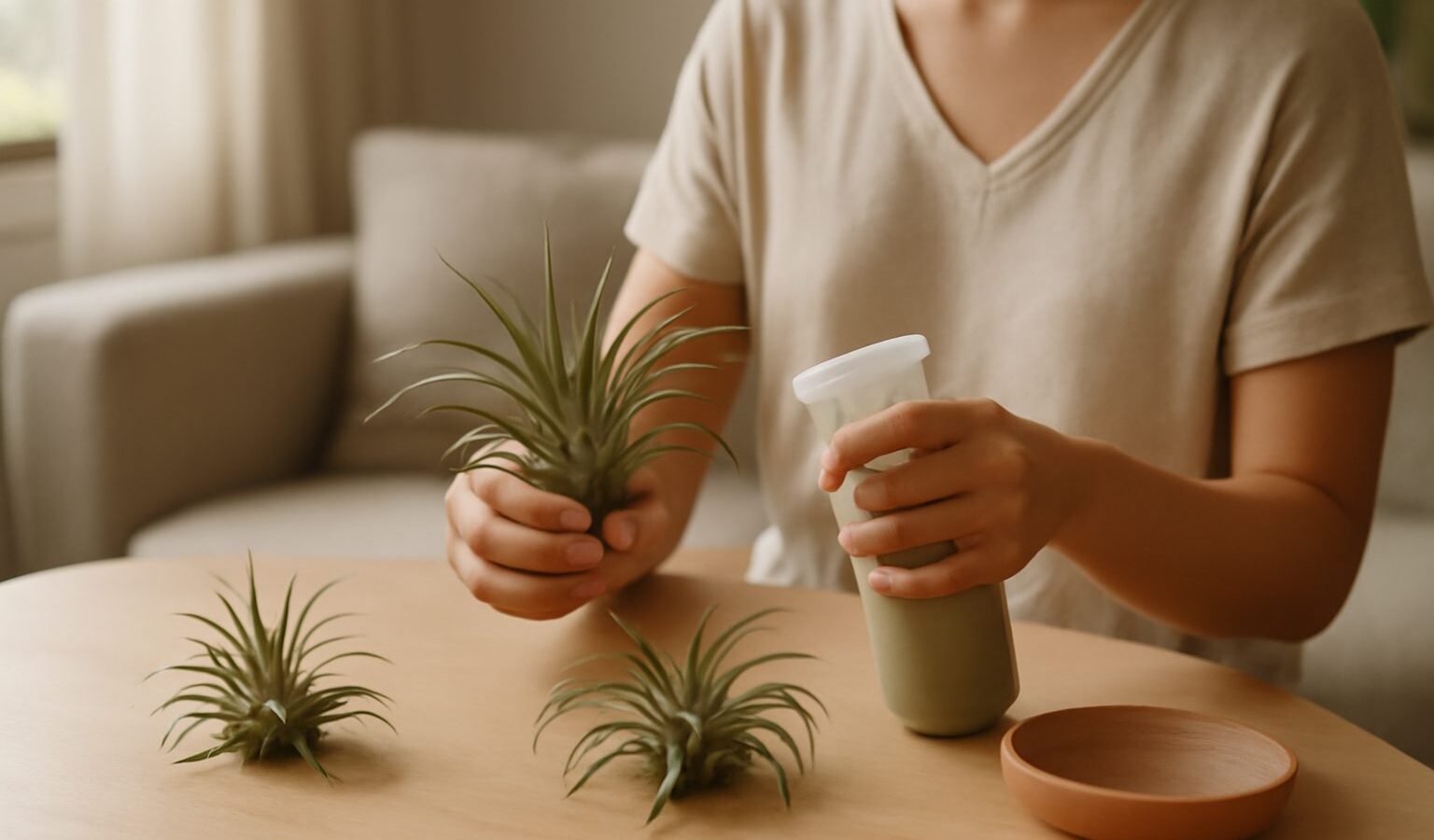
Few plants feel as suited to a small Singapore home as air plants. These silvery, spiky little rosettes belong to the genus Tillandsia, and the clever thing about them is that they grow without soil at all. In the wild they perch on tree branches and rocks, taking in moisture and nutrients through their leaves. That means no pot of soil to find room for, no repotting, and no muddy saucer on the balcony. You can tuck an air plant into a shell, wire it onto a piece of driftwood, or simply rest it in a bowl on the shelf. For anyone short on floor space, they are a gift.
Air plants have a reputation for being fussy, but that mostly comes from one honest mistake: people forget to water them. The name makes it sound as if they live on air alone. They do not. Once you understand how they drink in our warm, humid climate, they are among the easiest plants you can keep.
Choosing the Right Tillandsia for a Tropical Home
There are hundreds of Tillandsia species, and they split roughly into two camps that behave differently. Learning which type you have is the single most useful thing a beginner can do.
The silver, fuzzy-leaved kinds are covered in tiny scales called trichomes, which is what gives them their frosted look. These trichomes help the plant grab moisture from the air, so silver types cope well with bright light and drier spots, such as a shelf near an aircon vent. The greener, smoother-leaved kinds have fewer trichomes. They come from damper, shadier forests, so they want more frequent watering and gentler light.
For a first air plant, a common, sturdy silver species is forgiving and cheap enough to experiment with. Buy from a plant nursery or a reputable online seller, and look for a firm plant with no mushy base or brown, collapsed centre. A healthy air plant feels springy, not limp or hollow. Avoid any that are sold glued into ornaments, as the glue can rot the base over time.
One gentle reassurance for households with pets and young children: Tillandsia are not known to be toxic, unlike many popular houseplants. Even so, they are not food, so it is sensible to keep small, swallowable plants out of a curious toddler’s or pet’s reach.
Light and Air Flow in an HDB Flat
Air plants want bright, indirect light. A spot near a window that gets plenty of daylight but not harsh, direct noon sun is ideal. On a bright HDB balcony, keep them out of the fiercest afternoon glare, which can scorch the leaves and dry the plant out faster than it can drink. A sheer curtain softens strong sun nicely.
The word “air” in their name is a real clue. These plants breathe through their leaves and hate sitting wet in stagnant, stuffy conditions. Good air movement is what lets them dry out between waterings and stops rot setting in. A naturally breezy corridor or a balcony with a light draught suits them well. In a closed, air-conditioned room, run a fan now and then, or simply keep them somewhere the air is not completely still.
Aircon brings a second issue: it strips humidity from the air. Our outdoor climate is generously humid, but an air-conditioned bedroom can be surprisingly dry. Plants kept in aircon will need misting more often than those on a shaded balcony, so watch them a little more closely.
Watering: Misting, Soaking and Aircon
Watering is where air plants live or die, so it is worth getting right. There are two main methods, and most people use both depending on where the plant lives.
Misting means spritzing the plant all over with a spray bottle until the leaves glisten, then letting it dry. It is quick and gentle, and it suits silver species and plants kept in humid, breezy spots. In an air-conditioned room, mist every couple of days, or whenever the leaves start to look dull and curl inwards, which is the plant telling you it is thirsty.
Soaking is the deeper drink. Once a week or so, sit the plant in a bowl of room-temperature water for twenty minutes to half an hour, then lift it out. This is where the most important safety step comes in. After soaking, always tip the plant upside down and shake it gently, then leave it in a bright, airy place to dry fully within a few hours. Water left pooling in the centre of the rosette will rot the plant from the inside, and standing water left in bowls, saucers or trays breeds Aedes mosquitoes. Never leave a soaking bowl sitting around; empty it straight after use, and do not let any container near your plants collect and hold water. Changing or tipping out standing water at least weekly is part of following NEA and NParks guidance on preventing mosquito breeding at home.
Rainwater or filtered water suits air plants better than heavily treated tap water over the long run, though clean tap water is fine for most people. The clearest sign of an underwatered plant is leaves that curl and roll; a well-watered plant looks flatter and more open.
Feeding, Mounting and Display Ideas
Air plants are light feeders and will grow perfectly well with almost no feeding. If you want faster growth or a better chance of flowering, add a very dilute, balanced fertiliser to the soaking water perhaps once a month. Use far less than the label suggests, as their delicate leaves are easily burned. Follow the product label, and keep any fertiliser away from children and pets.
Because they need no soil, displaying them is half the fun. You can rest them loose in a bowl of pebbles, nestle them among shells, or mount them onto driftwood, cork bark or a decorative piece of wood. To mount, tie the plant on with a loop of fishing line, soft wire or a dab of a plant-safe adhesive around the base only, never over the growing centre. On a balcony, make sure whatever you hang is secured against wind so it cannot fall, and follow your HDB, town council or MCST rules for anything fixed to shared walls or railings.
Below is a quick comparison of the two main watering methods to help you choose.
| Watering method | Best for | How often | Watch out for |
|---|---|---|---|
| Misting | Silver types, aircon rooms, breezy spots | Every 2 to 3 days | Under-watering if leaves curl |
| Soaking | Green types, thirsty or dusty plants | Weekly to fortnightly | Rot and standing water if not dried and emptied |
| Dunk and shake | Busy weeks, quick top-ups | As needed | Skipping the shake, leaving water in the centre |
Common Problems and How to Fix Them
Most air plant trouble traces back to water, either too little or trapped in the wrong place. If the plant is curling and greyish, it is thirsty, so soak it and mist more often. If the base turns brown, soft or falls apart, it has rotted from trapped water, and sadly a fully rotted plant cannot be saved; dry survivors better next time. Brown, crispy leaf tips usually mean the air is too dry or the light too harsh, so move the plant somewhere gentler and mist more.
A happy Tillandsia may eventually bloom, sending up a bright flower spike, and after flowering it produces small offsets called pups around its base. Once a pup is about a third the size of the parent, you can gently twist it off to start a new plant, or leave the cluster to grow into a fuller clump. That slow, quiet multiplying is the real reward of keeping air plants: start with one, observe how it drinks, and in time you will have a little colony filling a corner no soil-bound plant could reach.
Explore more
If you like plants that thrive in humidity, you may enjoy our guide to caring for ferns in Singapore and growing hoyas in Singapore, both happy in the same bright, airy spots. For a leafy contrast on the same shelf, see caring for spider plants.