
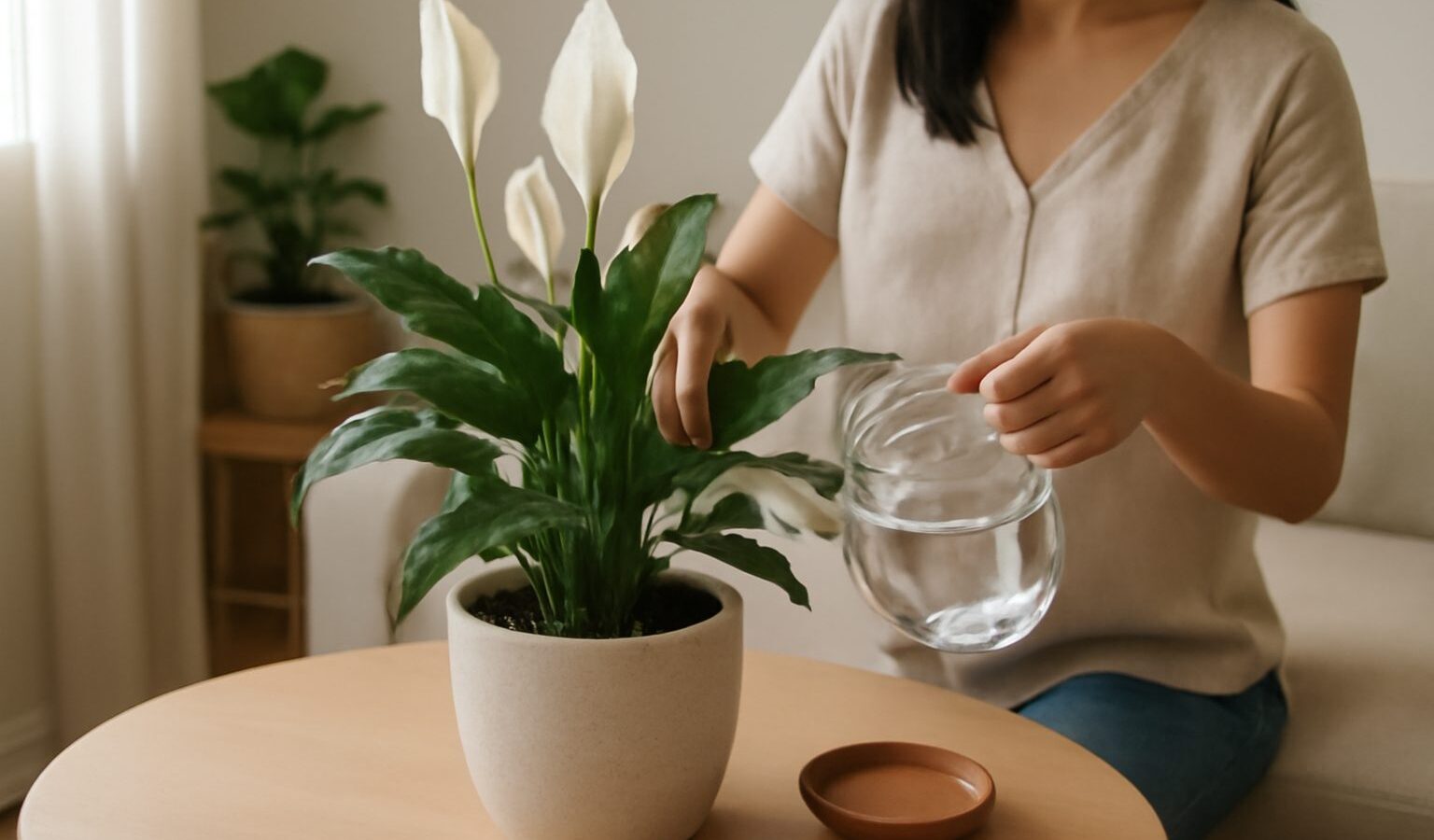
If you want one flowering houseplant that tolerates a shady corner and forgives the occasional missed watering, the peace lily is hard to beat. Its glossy dark leaves and elegant white blooms suit any HDB flat or condo, and it happily thrives indoors where sun-lovers would sulk. Best of all, peace lily care is beginner-friendly: this plant is famously expressive, drooping dramatically when thirsty and springing back within hours of a drink, so it practically tells you what it needs.
The botanical name is Spathiphyllum, and like the anthurium, its white “flower” is really a modified leaf called a spathe wrapped around a central spike. That is why it belongs to the same tolerant aroid family. Understanding the plant as tropical forest-floor greenery, used to dappled light and steady moisture, is the key to keeping it lush.
Light: Why It Loves a Shady Corner
Peace lilies evolved on the rainforest floor, shaded by taller trees, so they cope with lower light better than almost any other flowering houseplant. This makes them ideal for the interior of a Singapore flat, a north-facing room, or a spot set back from the window where nothing else will bloom.
That said, low light and no light are different things. In deep gloom the plant survives but rarely flowers, putting out leaves instead. For the best show of blooms, give it bright, indirect light, such as a metre back from a curtained window. Keep it out of direct sun, though, because our strong tropical rays quickly scorch those broad leaves, leaving bleached or brown patches. If the leaves look pale and washed out, the plant is getting too much light; if it is all leaves and no flowers, nudge it somewhere a little brighter.
Watering Without Drowning It
Peace lilies like their mix lightly and evenly moist, never bone dry but never waterlogged either. The plant makes this easy by wilting visibly when it needs water, then recovering fast once watered. Do not rely on that droop as your only cue, however, because repeated severe wilting stresses the plant and browns the leaf tips over time. Instead, check the top couple of centimetres of mix with a finger and water when it feels dry.
When you water, water thoroughly until it drains freely, then empty the saucer. This matters twice over in Singapore. Soggy, airless mix rots the roots, and standing water left in the saucer or tray becomes a breeding ground for Aedes mosquitoes, which spread dengue. Tip out collected water promptly and check trays at least weekly, following current NEA and NParks guidance on preventing mosquito breeding at home.
Two local quirks are worth knowing. Peace lilies can be sensitive to the chlorine and fluoride in tap water, which contributes to brown leaf tips; letting water stand overnight before use, or using cooled boiled water, can help. And because aircon dries the air, a peace lily in an air-conditioned room appreciates the occasional misting or a tray of damp pebbles, kept topped up but never stagnant.
Feeding, Cleaning and Repotting
Peace lilies are light feeders. A balanced liquid fertiliser at half strength once a month during their steady year-round growth is ample. Overfeeding is a common mistake and shows up as brown leaf tips and a build-up of salts in the mix, so when in doubt, feed less. If tips brown despite careful watering, flush the pot with plenty of plain water occasionally to wash out excess fertiliser salts.
Those big, glossy leaves are dust magnets, and dust blocks the light the plant needs. Wipe them gently with a damp cloth every couple of weeks to keep them clean and breathing, which also lets you spot pests early. It keeps the plant looking its polished best, too.
Repot every year or two, when roots fill the pot and the plant dries out unusually fast or lifts itself upward. Move up just one pot size using a fresh, free-draining mix, and this is a good moment to divide a crowded clump into two plants. Always choose a pot with drainage holes; a decorative cover pot is fine only if you empty any water that collects inside it.
Anthurium or Peace Lily: Which Suits You
Both are tolerant aroids with long-lasting spathe “blooms”, but they suit slightly different spots. This quick comparison helps you choose, or place each where it will do best.
| Feature | Peace Lily | Anthurium |
|---|---|---|
| Light needs | Tolerates low to medium indirect light | Prefers brighter filtered light |
| Bloom colour | White spathes | Red, pink, coral or white spathes |
| Thirst signal | Droops clearly, recovers fast | Less dramatic; check the mix |
| Best spot | Shady interior corner | Bright, curtained window |
| Beginner ease | Very forgiving | Forgiving with a little more light |
Common Problems and a Safety Note
Most peace lily woes are minor. Brown leaf tips point to dry air, tap-water chemicals or overfeeding; yellowing leaves usually mean overwatering or, if just the odd old leaf, natural ageing. No flowers almost always means too little light, so move it brighter. For pests such as mealybugs or spider mites, wipe the leaves, rinse the plant and treat with insecticidal soap or neem oil, repeating weekly until clear. If you ever reach for a stronger product, follow the label exactly, keep it away from children, pets and food, and ventilate the room.
One important caution: the peace lily is not edible. Like other aroids it contains calcium oxalate crystals, so chewing any part can cause burning and swelling of the mouth and throat, and the sap can irritate skin. Keep it well out of reach of young children and pets, and wear gloves when repotting or dividing, washing your hands afterwards. Handled with that small bit of care, a peace lily is a safe, generous and genuinely easy plant to live with.
Explore More
The peace lily is a gentle gateway into the wider aroid world. If it has won you over, try its showier cousin in our guide to caring for anthuriums in Singapore, or branch out to the bold foliage of alocasia and other aroids. For another shade-friendly leafy companion, see our guide to caring for ferns in Singapore.