
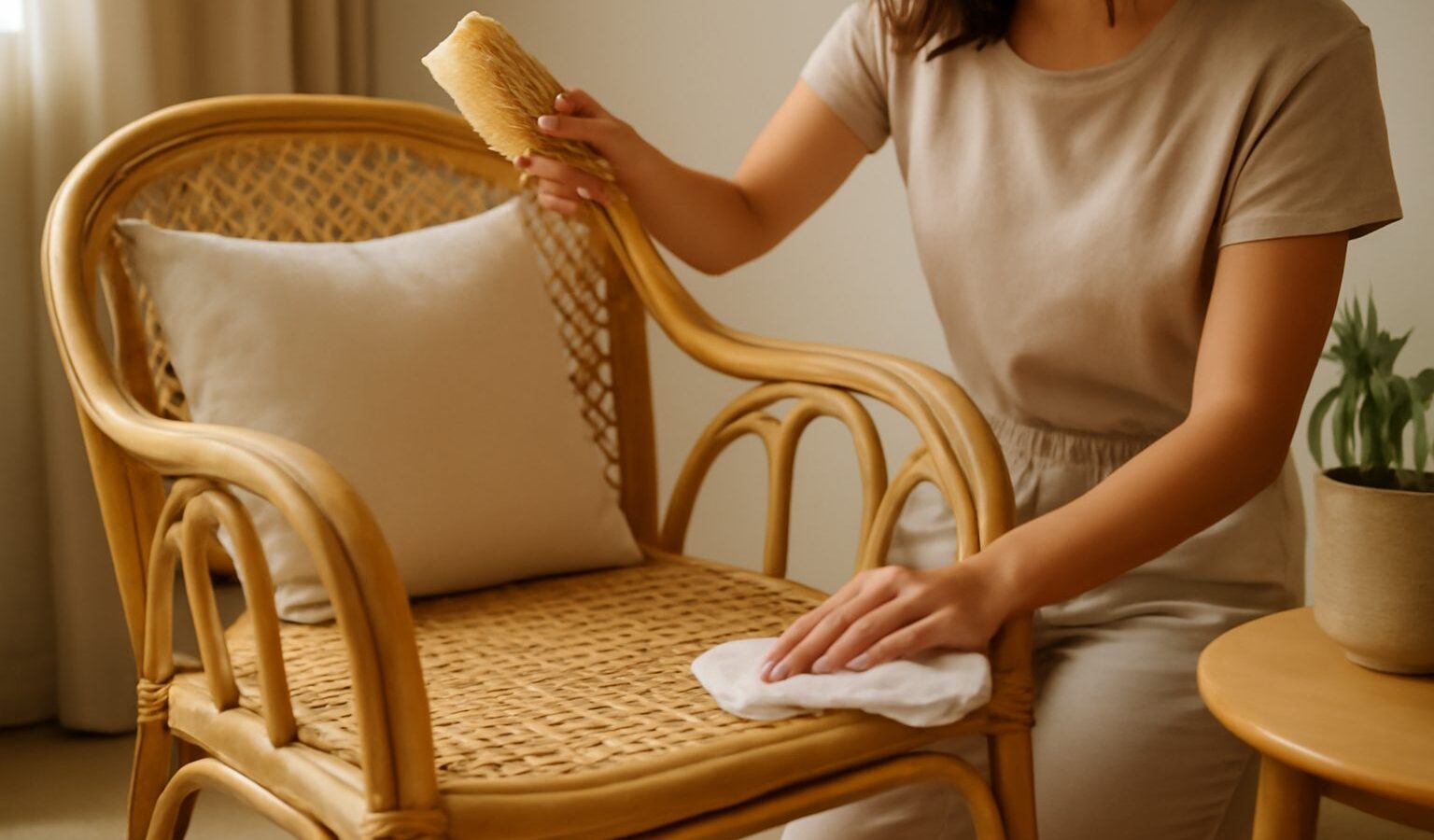
Looking after rattan furniture singapore homes love is mostly about routine dusting, gentle cleaning and managing our high humidity so the weave stays tight and mould-free. Rattan and wicker are natural, breathable and beautifully suited to a tropical interior, but the same fibres that give them their character can dry out, sag or grow mould if neglected. This guide covers everyday care, deeper cleaning, humidity and sun, and simple fixes, all in plain terms. It is general information, so always check any care label from the maker and test a cleaner on a hidden spot first.
Rattan, Wicker and Cane: Know What You Have
People use these words interchangeably, but they are not quite the same. Rattan is a natural climbing palm, prized for its strong, flexible poles that form the frames of chairs and tables. Wicker is not a material at all but a weaving technique, so a wicker chair may be woven from natural rattan, cane, seagrass or synthetic resin. Cane is the thin outer skin of rattan, often woven into the seats and backs you see on classic chairs.
The distinction matters for cleaning. Natural fibres such as rattan, cane and seagrass are more sensitive to water and humidity and can grow mould, while synthetic resin wicker is far more water-tolerant and forgiving. If you are unsure which you own, treat it as natural to be safe, and check the maker’s care information where you can.
Everyday Dusting Keeps It Healthy
The single most useful habit is regular dusting. The gaps and crevices in a woven piece trap dust quickly, and in a humid climate that trapped dust holds moisture, which is exactly what mould needs. A soft dry cloth handles the flat surfaces, while a soft brush, an old toothbrush or a paintbrush reaches into the weave.
For a deeper dust, use a vacuum with a soft brush attachment on low suction, running it gently over the woven areas. Doing this weekly stops grime building up in the joints and keeps the fibres looking bright. It also lets you spot any early loosening or dark patches before they become a real problem.
Gentle Cleaning Without Over-Wetting
When dusting alone is not enough, a light wet clean lifts the grime, but the golden rule is to avoid soaking natural rattan. Too much water swells the fibres, loosens the weave and invites mould, so damp is the aim, never wet.
Follow these steps for a safe clean:
- Mix a little mild soap or dishwashing liquid into warm water and whisk up a light foam.
- Test on a hidden area first to check the finish reacts well.
- Dip a soft cloth, wring it out until it is barely damp, and wipe along the weave.
- For stubborn spots in the crevices, use a soft brush dipped in the same suds, working gently.
- Wipe again with a cloth dampened in clean water to remove residue.
- Dry thoroughly with a towel, then let the piece air-dry completely before use.
Never use harsh scouring pads, strong solvents or a stiff brush that could scratch or fray the fibres. Do not mix cleaning products together, and if you ever use a stronger cleaner, keep the room ventilated and wear gloves.
Managing Humidity and Mould
Humidity is the biggest challenge for natural rattan and wicker in our climate. Fibres absorb moisture from the air, and in a poorly ventilated corner that can lead to a musty smell or fuzzy grey and green mould spots.
Prevention is easier than a cure. Keep pieces in well-ventilated spots, run a fan or the air-con to move air, and avoid pushing furniture hard against a cold external wall where damp collects. A dehumidifier in a closed room does wonders during long spells of wet weather.
If mould appears, act promptly. Take the piece to a ventilated area, ideally outdoors in shade, and brush off the surface growth while wearing gloves and, if you are sensitive, a mask. Wipe with a cloth wrung out in a mild soapy solution, then a barely damp clean cloth, and dry it completely. A common household approach is a diluted white vinegar solution, which many people find helps, but always test on a hidden spot first. Never combine bleach with ammonia or other cleaners, as the fumes are dangerous.
Sun, Heat and Reshaping
Rattan does not enjoy prolonged direct sun any more than it enjoys damp. Strong, constant sunlight through a window dries the fibres, fades the colour and makes them brittle and prone to cracking. Position pieces slightly away from harsh direct sun, or soften the light with a blind or sheer curtain.
Heat sources dry fibres out too, so keep pieces away from anything that runs hot. If a natural rattan chair starts to sag or loosen over time, a light misting of water on the underside of the weave, followed by drying in shade, can help the fibres tighten as they dry. Do this sparingly, as the aim is to refresh, not to soak.
The table below sums up the main care differences between natural and synthetic pieces.
| Care point | Natural rattan and wicker | Synthetic resin wicker |
|---|---|---|
| Dusting | Weekly, soft brush and low vacuum | Weekly, soft brush |
| Wet cleaning | Barely damp only, dry fully | Tolerates more water, still dry it |
| Humidity risk | High, watch for mould | Low, very forgiving |
| Direct sun | Avoid prolonged exposure | More UV-stable but can still fade |
| Best placement | Ventilated, shaded, indoors | Indoors or sheltered outdoors |
Small Fixes and When to Get Help
Minor issues are often fixable at home. A loose strand can be tucked back and, if needed, secured with a dab of suitable wood glue. Squeaks at the joints sometimes ease with a little furniture wax on the contact points. Applying a light coat of a suitable clear finish every year or two can help protect natural fibres and keep them from drying out, following the product instructions.
Some jobs are better left to a specialist. Re-caning a seat, replacing a large section of broken weave, or repairing a cracked structural frame calls for skill and the right materials. If a piece is antique, valuable or sentimental, seek a professional restorer rather than risk further damage.
With a little routine care, sensible placement and a watchful eye on humidity, rattan and wicker reward you with years of light, airy, tropical-friendly comfort.
Explore more
Caring for Wood Furniture in a Humid Climate
Best Furniture Stores
Cleaning Hacks for a Tropical Home
Reducing Dust and Allergens at Home