
Walk into any supermarket or pharmacy in Singapore from August to October and you will see the gift packs stacked high: bottles of chicken essence, jars of bird’s nest, sometimes with a smiling student on the box. Buying chicken essence for kids exams has become something of a ritual for many families, especially around the PSLE and O-Level papers. Grandparents gift them, parents feel they should, and children get used to downing a small bottle before school.
So are these tonics actually worth the money? This guide looks at what the evidence says, what you are really paying for, safety points to keep in mind and the everyday habits that make a bigger difference during exam season. It is general information, not medical advice. If your child has a health condition, allergy or special diet, check with your doctor or polyclinic first.
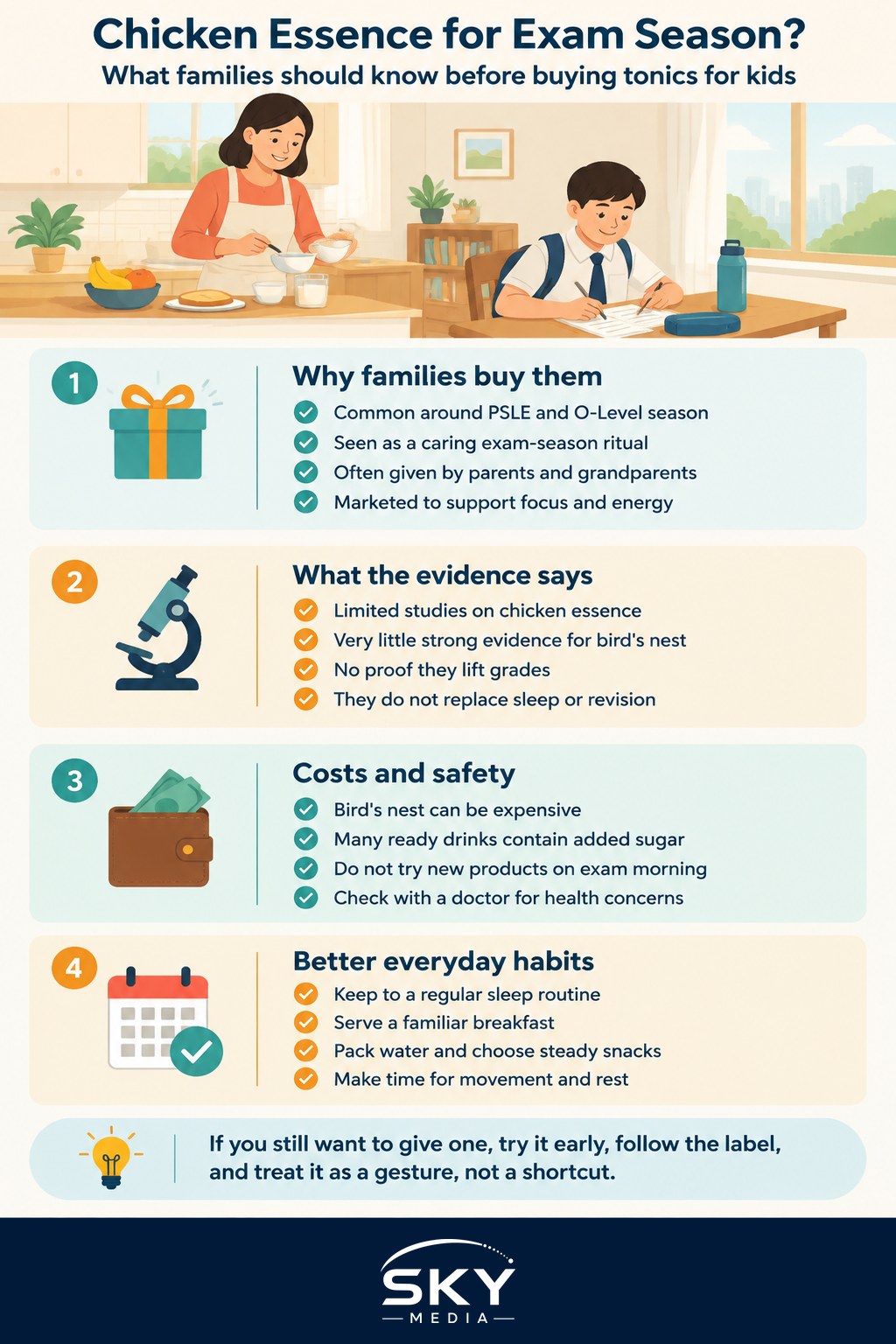
Why These Tonics Are So Popular in Singapore
Chicken essence and bird’s nest both come from Chinese food traditions, where they have long been seen as nourishing and restorative. Chicken essence is a concentrated liquid made by cooking chicken for a long time and extracting the broth. Bird’s nest is made from the hardened saliva of swiftlets, which is cleaned and usually double-boiled with rock sugar.
Over the decades, brands have marketed both as ways to support concentration, reduce fatigue and keep children well during demanding periods. Exam season is a natural fit for that message. For many families, giving a tonic is also an act of care: a way to show support when the rest of the exam feels out of your hands.
That emotional side is real and worth respecting. But it helps to separate it from the question of whether the product itself changes how your child performs.
What the Evidence Actually Says
Chicken essence. There are a number of studies on chicken essence and mental fatigue or cognitive performance, mostly small and many funded by manufacturers. Some report modest short-term effects in adults. Reviews of this research have generally concluded that the evidence is limited and inconsistent, and there is little good-quality research in children of primary or secondary school age. Nothing suggests it can replace sleep, revision or a balanced diet.
Bird’s nest. Bird’s nest contains protein and some compounds that researchers have studied in the lab. However, there is very little robust human evidence that eating it improves memory, concentration or exam performance in children. Much of what is claimed comes from tradition and marketing rather than clinical trials.
In plain terms: these products are unlikely to harm most healthy children in normal amounts, but there is no strong evidence that they will lift grades. If your child enjoys them and the cost does not strain your budget, they can be a pleasant ritual. If money is tight, you are not depriving your child of anything proven.
Cost, Sugar and Safety Points to Consider
Before stocking up, think about these practical points:
- Cost adds up. Premium bird’s nest in particular can be expensive, and a daily bottle of chicken essence over several weeks becomes a noticeable spend. Compare that with what the same budget could buy in fresh fruit, fish, eggs or a family meal out after the last paper.
- Sugar. Many ready-to-drink bird’s nest products are sweetened with rock sugar or other sugars. Check the nutrition label and choose lower-sugar versions if you buy them.
- Sodium and taste. Chicken essence has a strong, salty taste that some children dislike. Forcing it down before an exam can cause more stress than it relieves.
- Allergies. Allergic reactions to bird’s nest have been reported, including in children. If your child has never had it, do not try it for the first time on exam morning.
- Medical conditions. Children with kidney conditions, gout-related issues, specific dietary restrictions or who are on medication should check with a doctor before taking concentrated tonics.
- Buying genuine products. For bird’s nest, buy from reputable retailers. Our guide to buying and preparing bird’s nest in Singapore covers grades, storage and spotting poor-quality products.
Tonics vs Everyday Habits: A Comparison
The table below compares the popular tonics with everyday habits that have stronger support from health authorities for helping children concentrate and stay well.
| Option | What it offers | Strength of evidence for exam performance | Cost to the family |
|---|---|---|---|
| Chicken essence | Concentrated broth with protein and amino acids | Limited, mostly small adult studies | Moderate to high over several weeks |
| Bird’s nest | Protein, often with added sugar | Very limited human evidence | High for premium products |
| Regular sleep routine | Rest that supports memory and mood | Strong, widely supported | Free |
| Balanced breakfast | Steady energy for the morning paper | Good support for concentration | Low |
| Water and short breaks | Hydration and attention reset | Good, practical support | Free |
| Physical activity | Stress relief, better sleep | Good support for wellbeing | Free or low |
Sensible Alternatives That Make a Real Difference
If you want to support your child through exams, these habits matter far more than any bottle:
- Protect sleep. Late-night cramming tends to backfire. Aim for consistent bedtimes, especially in the week of the papers. HealthHub, run by the Ministry of Health’s Health Promotion Board, has guidance on recommended sleep for different ages.
- Serve a familiar breakfast. Something your child already eats, with some protein and wholegrain, such as eggs and wholemeal bread, oats, or a simple porridge. Exam morning is not the time to try new foods.
- Keep water handy. Pack a water bottle. Mild dehydration can affect focus, especially in Singapore’s heat.
- Choose steady snacks. Fruit, nuts (if there is no allergy), yoghurt or wholemeal crackers are better than sugary drinks that cause energy spikes and dips.
- Plan revision in manageable chunks. Our guide to managing your time during exams offers practical ways to break study into focused sessions.
- Make room for movement and rest. A walk, a swim or play time helps release tension.
- Watch the emotional temperature. Calm, steady support from parents often matters more than any food. See our ideas on what parents can do during exam season without nagging.
If You Still Want to Give a Tonic
Many families will keep the tradition, and that is a personal choice. If you do, a few simple guidelines help:
- Introduce it well before the exams so you know your child tolerates it.
- Follow the serving guidance on the label and do not double up.
- Choose lower-sugar options and count it as part of the day’s food, not an extra.
- Let your child have a say. If they hate the taste, drop it.
- Frame it as a treat or a gesture of care, not as something that will make or break their results.
Above all, avoid sending the message that a product is the key to success. Children can absorb the idea that their performance depends on something outside their control, which can add anxiety.
When to Speak to a Professional
If your child is not eating, not sleeping, complaining of frequent headaches or stomach aches, or seems unusually anxious or withdrawn around exams, speak to your family doctor or a polyclinic. The school counsellor can also help with exam stress. These signs deserve attention in their own right, and no tonic is a substitute for proper support.
Chicken essence and bird’s nest can be a comforting part of exam season for families who enjoy them. Just keep expectations realistic, mind the sugar and the budget, and put your energy into sleep, good food and a calm home. Those are the things that genuinely help.