

The kaya toast set is a Singapore ritual, and many children grow up dipping toast into a saucer of soft, runny eggs with dark soy and pepper. Sushi trains and seafood restaurants are just as popular. So parents often ask: at what age is it okay to give half boiled eggs to kids, or let them try sashimi or raw oysters?
There is no single magic birthday, and guidance differs between countries. What is consistent is that babies and young children are more vulnerable to food poisoning than healthy adults, so the advice leans cautious. This article is general information, not medical advice. For your own child, especially if they have health conditions or allergies, speak to your paediatrician or polyclinic, and refer to HealthHub and the Singapore Food Agency (SFA) for current guidance.
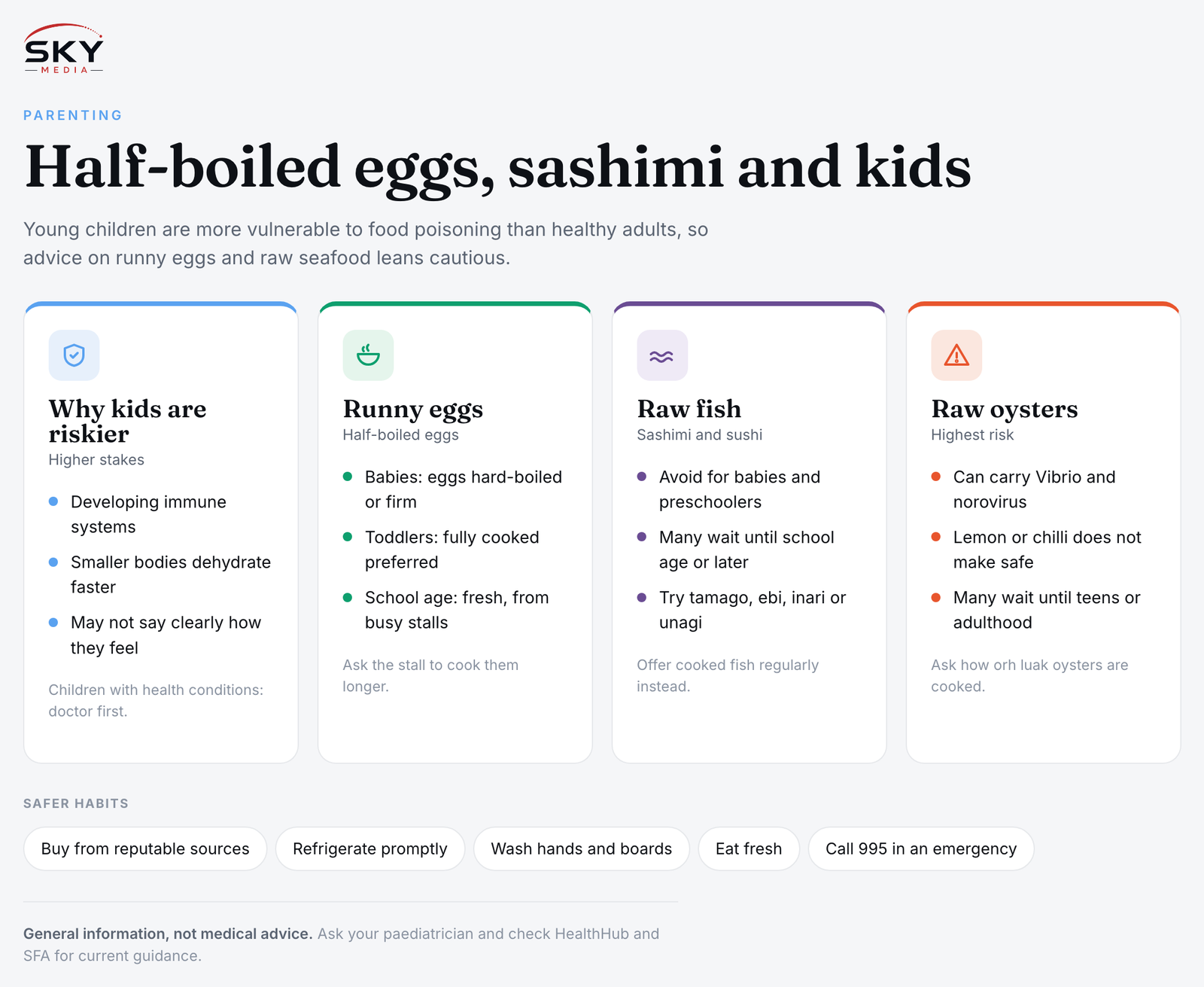
Why Raw and Undercooked Foods Are Riskier for Children
Raw or lightly cooked eggs, fish and shellfish can carry bacteria, viruses or parasites that thorough cooking would kill. Common concerns include Salmonella in eggs, and bacteria, viruses such as norovirus and hepatitis A, and parasites in some raw seafood.
Young children are more affected for a few reasons:
- Developing immune systems may be less able to fight off an infection.
- Smaller bodies dehydrate faster from vomiting and diarrhoea, which is the main danger in a bout of food poisoning.
- They may not be able to tell you clearly how they feel, so illness can be noticed later.
Some children carry extra risk, such as those with weakened immunity, chronic illness or on certain medications. Their doctor’s advice comes first.
Half-Boiled Eggs and Runny Yolks
The local half-boiled egg is cooked briefly in hot water, leaving a runny white and yolk. That is lovely to eat, but it is not cooked through, so any Salmonella present may survive.
Many health authorities advise giving babies and toddlers eggs that are cooked until the white and yolk are firm. Some countries have relaxed this for eggs produced under specific safety schemes, but that guidance may not apply to the eggs you buy here, and it is not universal. A cautious, commonly followed approach:
- Babies starting solids: offer eggs well cooked, such as hard-boiled and mashed, or scrambled until firm. Eggs are also a common allergen, so introduce them as advised by your doctor or HealthHub.
- Toddlers and preschoolers: many parents stick to fully cooked eggs. If you choose to offer soft eggs at home, use fresh eggs from a reputable source, keep them refrigerated and cook them well enough that the white is set.
- Older children: a healthy school-age child may well enjoy a kaya toast set, but it is still a good idea to choose busy, clean stalls and eat the eggs fresh.
Making the Kaya Toast Set More Child-Friendly
- Ask the stall for the eggs to be cooked a little longer. Many are happy to oblige.
- At home, try “soft but set” eggs: cook until the white is firm and the yolk thickened, then serve with soy sauce for the same flavour.
- Avoid eggs that are cracked, dirty or past their date.
- Do not leave cooked eggs sitting out in Singapore’s heat.
Sashimi, Sushi and Raw Fish
Raw fish is a bigger leap than runny eggs. Commercial sushi and sashimi are generally handled to reduce risk, for example by freezing certain fish to control parasites, but no raw product is risk-free.
Paediatric and food-safety sources commonly suggest holding off on raw fish for young children, with many families waiting until a child is at least of school age. Even then, factors to weigh include where the fish comes from, how it has been stored, and your child’s overall health.
Meanwhile, there is plenty of sushi for young kids that is fully cooked:
- Tamago (cooked omelette) sushi
- Cooked prawn (ebi) or unagi (grilled eel)
- Inari (sweet tofu pouch)
- Cucumber, avocado or corn maki
- Teriyaki chicken rolls
Fish is a healthy part of a child’s diet, so offer cooked fish regularly. Raw fish can wait.
Raw Oysters and Other Raw Shellfish
Raw oysters and shellfish sit at the higher end of the risk scale. Oysters filter large volumes of seawater and can concentrate bacteria such as Vibrio, and viruses including norovirus and hepatitis A. Lemon juice, chilli or alcohol do not make them safe.
Health authorities in many countries advise that young children, pregnant women, older people and anyone with weakened immunity avoid raw oysters and raw shellfish. Many parents wait until their child is a teenager or an adult before considering them, if at all.
The local favourite oyster omelette (orh luak) often uses only lightly cooked oysters, so ask how they are prepared before ordering for a young child. Our guide to oyster omelette in Singapore explains the dish. For little ones, stick to well-cooked seafood such as steamed fish, stir-fried prawns cooked through, or fish soup.
A Cautious Guide by Age
Treat this as a general starting point to discuss with your child’s doctor, not a fixed rule.
| Food | Babies and toddlers | Preschoolers | School-age children | Teens |
|---|---|---|---|---|
| Half-boiled or runny eggs | Fully cooked eggs only | Fully cooked eggs preferred | Occasionally, from clean, busy stalls, if healthy | Generally fine if healthy |
| Sashimi and raw fish | Avoid | Avoid | Many families still wait; cooked sushi is a good swap | Small amounts from reputable places, if healthy |
| Raw oysters and raw shellfish | Avoid | Avoid | Avoid | Many families still wait; seek advice if any health condition |
| Cooked eggs, fish and seafood | Yes, once introduced as advised | Yes | Yes | Yes |
Safer Habits at Home and When Eating Out
Whatever you decide, good food handling lowers the risk for the whole family.
- Buy from reputable sources and check use-by dates.
- Refrigerate eggs and seafood promptly, and keep raw seafood away from ready-to-eat foods.
- Wash hands, boards and knives after handling raw eggs, fish or shellfish.
- Eat fresh. In hot, humid weather, do not leave cooked or raw food out for long.
- Choose busy, clean outlets with good hygiene, and check for the SFA licence displayed at food establishments.
- Trust your instincts. If something smells or looks off, skip it.
When to See a Doctor
Most mild food poisoning settles on its own, but children can dehydrate quickly. Seek medical help promptly if your child shows signs of dehydration such as fewer wet nappies or little urine, is unusually drowsy, has blood in their stool, has a high fever, keeps vomiting and cannot keep fluids down, or if you are worried for any reason. For babies, seek advice early. In an emergency, call 995.
The Bottom Line for Parents
Runny eggs, sashimi and raw oysters are part of the food culture many of us love, and there is no need to make them scary. Simply delay them until your child is older and healthy, choose good sources, and lean on the many delicious cooked alternatives in the meantime. When in doubt, ask your paediatrician.
For more ideas on building healthy eating habits, read our tips on getting kids to eat more vegetables and packing a healthy school lunchbox.
Official sources: Singapore Food Agency (SFA)
Further reading: When Can Kids Start Eating Spicy Food? Introducing Chilli Gently · Heaty Foods and Kids: TCM Beliefs vs Paediatric Advice