
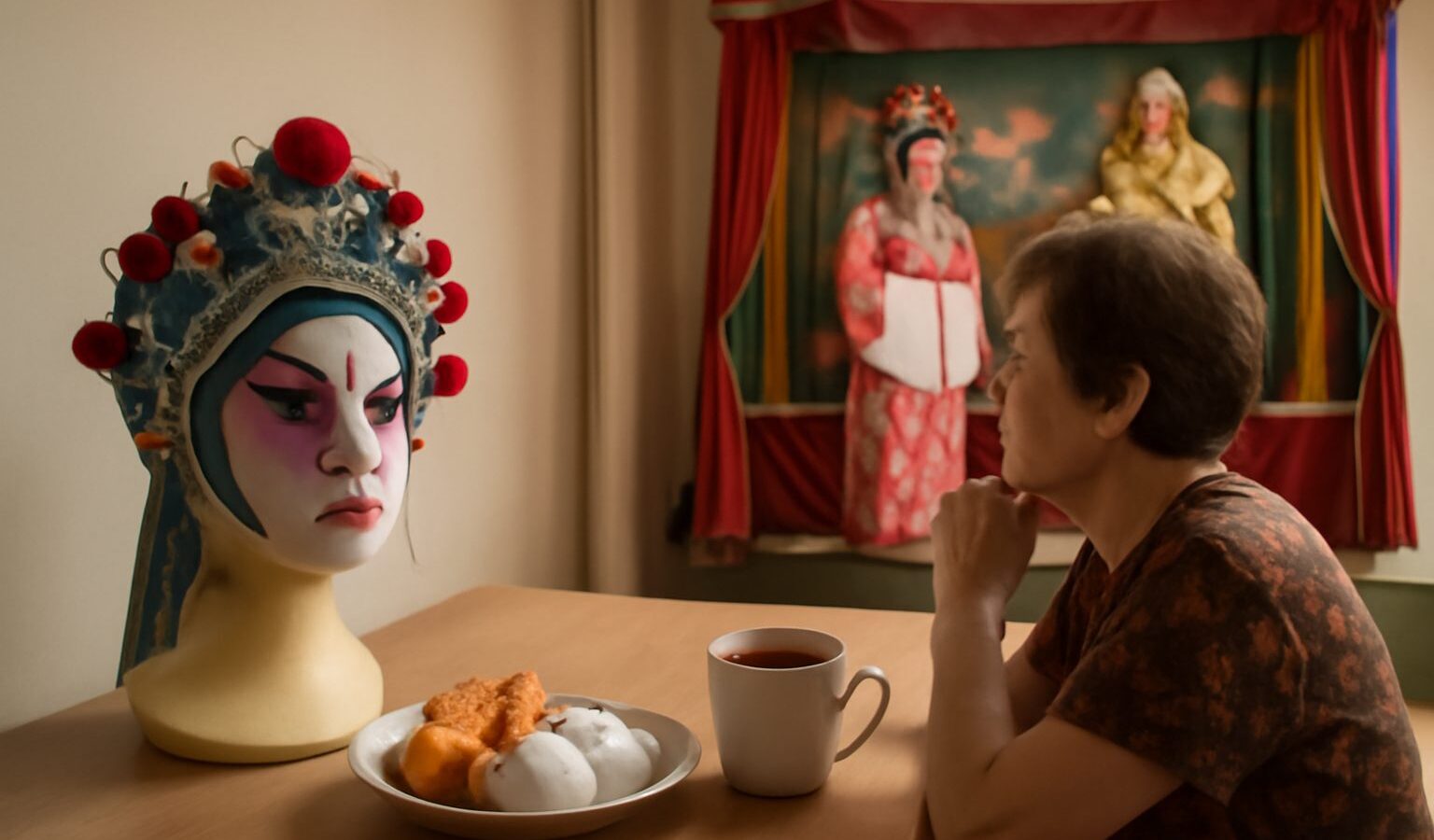
Few live traditions are as distinctive as Chinese opera and getai in Singapore. On warm evenings, especially during the seventh lunar month, you may come across a brightly lit stage set up in a car park or an open field, with painted performers, live music and rows of empty red chairs left, by custom, for unseen guests. These are living community traditions with long histories here, and they are open for anyone to watch respectfully. This guide explains what each form is, when and where it appears, and how to find current shows, so you can appreciate them with a little context.
Both forms are tied closely to the calendar of Chinese festivals and temple celebrations, so they are seasonal rather than year-round. They are also community events as much as performances, presented by temples, clan associations and organisers rather than by commercial theatres, though staged and heritage versions do appear at arts venues too.
What Chinese Opera Is
Chinese opera, often called wayang locally, is a traditional theatre form that combines singing, stylised acting, music, elaborate costumes and painted or masked faces. Several regional styles are performed in Singapore, reflecting the dialect groups who settled here, including Hokkien, Teochew, Cantonese and Hainanese opera, each with its own musical character and repertoire. Stories are frequently drawn from history, legend and classic tales of loyalty, romance and morality.
A few features help newcomers follow along:
- Costumes and face paint signal a character’s role and temperament, so colours and patterns carry meaning.
- Movement is highly stylised. Gestures, walks and sleeve movements are conventions rather than everyday actions.
- Live music from a small ensemble, including percussion and string instruments, drives the pacing and mood.
- Language is usually the relevant Chinese dialect, so even many local viewers watch for the spectacle and the broad story rather than every line.
Street performances staged near temples during festivals are traditionally offered as entertainment for the deities and spirits being honoured, which is why the front rows may be left empty out of respect.
What Getai Is
Getai, meaning “song stage”, is a livelier, more modern form of live variety entertainment. A typical getai features singers performing popular songs in dialects, Mandarin and sometimes other languages, colourful outfits, energetic hosts who banter with the crowd, and a festive, informal atmosphere. Where Chinese opera is centuries old and formal, getai is a twentieth-century popular tradition that grew into a beloved part of local seventh-month celebrations.
Getai stages are usually free to watch, set up outdoors in housing estates and at temple events, with the audience seated on those familiar rows of chairs. As with street opera, the front row is customarily reserved and left vacant for the spirits, so visitors should choose seats further back. The tone is warm and communal, and hosts often keep the energy high between acts.
When and Where They Appear
Timing is the key to catching either form, because both are concentrated around specific festivals rather than spread evenly through the year.
| Feature | Chinese opera (wayang) | Getai |
|---|---|---|
| Style | Traditional stylised theatre | Modern live song variety |
| Origin | Centuries-old regional forms | Twentieth-century popular tradition |
| Peak season | Temple festivals, deities’ birthdays, seventh month | Mainly the Hungry Ghost Festival (seventh month) |
| Typical setting | Temporary stages near temples, some theatres | Outdoor stages in housing estates and at events |
| Cost | Usually free to watch outdoors | Usually free to watch outdoors |
The busiest time by far is the seventh lunar month, known as the Hungry Ghost Festival, which typically falls around August to September on the Western calendar. During this period, temporary stages appear across neighbourhoods for both opera and getai. Chinese opera also turns up at other times, such as temple anniversaries and deities’ birthdays, and during festivals like Chinese New Year. Because exact dates shift each year with the lunar calendar and depend on individual organisers, check community notices, temple announcements and local listings for what is on near you.
Watching Respectfully and Finding Shows
These are cultural and, in the case of street performances, spiritually significant occasions, so a little awareness goes a long way.
- Leave the front row empty. The reserved front seats are traditionally for the deities or spirits; sit further back.
- Watch quietly and considerately. You are welcome to observe and photograph the stage in most cases, but be mindful of any offerings, altars or rituals nearby and follow signs or organisers’ guidance.
- Dress comfortably and modestly for an outdoor evening, and be ready for a lively, informal setting rather than a hushed theatre.
- Come and go freely. Outdoor shows are casual, so it is fine to arrive partway through and move on when you wish.
For staged and heritage versions in a formal theatre, keep an eye on the Esplanade’s programming, the Singapore Chinese Cultural Centre and various arts festivals, which sometimes present Chinese opera in a curated setting with surtitles or context for newcomers. Tickets for those, when charged, are typically sold through SISTIC or the venue. For the seasonal street performances, the best sources are temple and community announcements during the seventh month, as line-ups and locations are set locally and change from year to year.
Approached with curiosity and respect, both traditions offer a vivid window into part of Singapore’s living heritage, and both remain among the most accessible live performances you can find, often at no cost at all.
Explore more
Curated Chinese opera and other traditional performances sometimes appear on formal stages, so the Esplanade guide is a useful starting point for indoor programming. Many heritage shows are folded into the wider calendar covered in our overview of arts festivals in Singapore, and if you enjoy live drama more broadly, our guide to theatre in Singapore rounds out the picture.
Related across Sky Media: Chinese Opera and Getai