
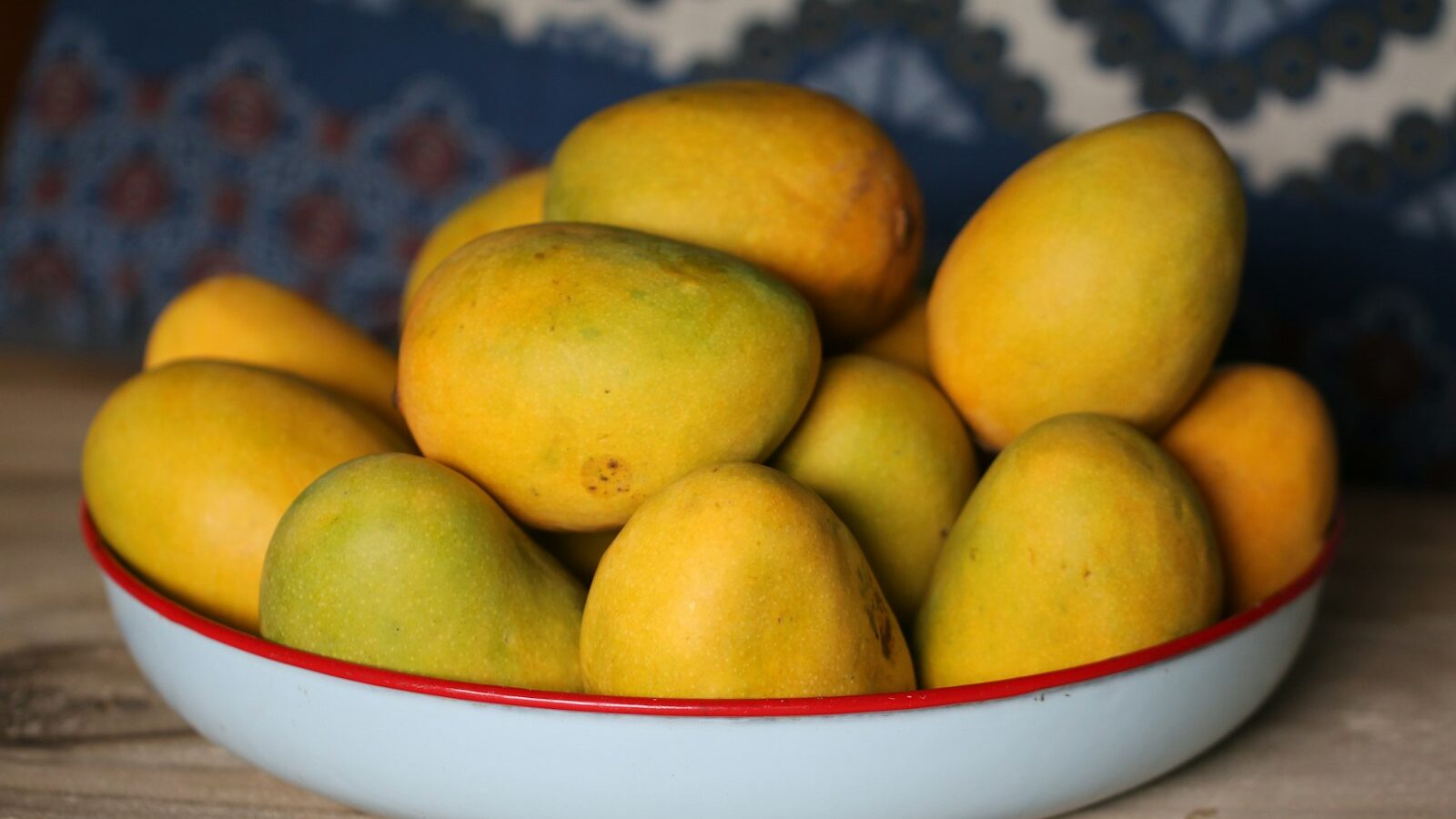
A perfect mango is sweet, fragrant and juicy, with smooth flesh that melts on the tongue. A bad one is sour, stringy or mushy. Singapore gets mangoes from many countries across the year, so learning how to choose ripe mango at the supermarket or wet market, and how to cut it without making a mess, pays off quickly.
This guide covers the varieties you are likely to see here, the signs of ripeness that actually work, how to ripen mangoes at home, and three easy ways to cut one.

Mango Varieties You Will Commonly See in Singapore
Availability changes with the season and the importing country, and stores label varieties differently, so use this as a general guide.
- Thai honey or yellow mangoes (such as Nam Dok Mai). Slim, elongated, bright yellow when ripe. Very sweet, smooth and low in fibre. Popular for mango sticky rice.
- Philippine mangoes (often sold as Carabao or Manila mangoes). Long and slightly flattened, yellow when ripe, sweet with a gentle tang.
- Indian mangoes (such as Alphonso and others). Seasonal and often sold in boxes. Rich, aromatic and deeply sweet. Usually turn golden yellow, sometimes with a blush.
- Australian mangoes (often the Kensington Pride type). Round, yellow-orange with a red blush. Juicy and fragrant. More common in the later months of the year.
- Red-skinned mangoes from various origins. Large, often green, red and purple. Firm and mildly sweet; red skin is not by itself a sign of ripeness.
- Green mangoes for cooking or salads. Sold unripe and sour on purpose, for kerabu, rojak-style salads, achar or eating with salt and chilli. Do not wait for these to soften.
If you are unsure, ask the stall holder which country the mangoes are from and whether they are ready to eat today or in a few days.
Signs of a Ripe Mango That Actually Work
Colour alone is unreliable, because some varieties stay green or red even when ripe. Use several clues together.
- Gentle give when pressed. Hold the mango in your palm and press lightly with your fingers, as you would a ripe avocado or peach. A ripe mango yields slightly. Rock-hard means unripe; very soft or with dents means overripe.
- Sweet smell at the stem end. Sniff near the stalk. A rich, fruity scent is a good sign. No smell usually means not ready; a sour or alcoholic smell means it is past its best.
- Feels heavy for its size. Heavier fruit tends to be juicier.
- Skin condition. A few small freckles are normal on some varieties. Avoid large black patches, wrinkles all over, leaking sap or mould near the stem.
- Shape. A plump, full mango, especially around the stem, usually has more flesh than a flat, thin one.
Shopping tip: buy a mix of ready-to-eat and slightly firm mangoes so you have fruit for today and for later in the week.
Ripening and Storing Mangoes at Home
- To ripen: keep firm mangoes at room temperature, away from direct sun. Singapore’s warm weather helps them ripen fairly quickly, so check daily.
- To speed things up: place the mango in a paper bag, optionally with a banana. Fruit like bananas gives off ethylene, a natural gas that encourages ripening.
- Once ripe: move it to the fridge to slow further ripening. Eat within a few days for the best flavour.
- Cut mango: store in a covered container in the fridge and eat soon. You can also freeze cubes for smoothies.
- Do not refrigerate unripe mangoes, as cold can stop them ripening properly and affect texture.
Three Ways to Cut a Mango
Every mango has a large, flat seed in the middle. The trick is to cut around it.
Method 1: The hedgehog (or cheek) cut
- Stand the mango on its stem end. The seed runs lengthwise, roughly in line with the narrow sides.
- Slice down on either side of the seed, a little off centre, to remove the two “cheeks”.
- Score the flesh of each cheek in a criss-cross pattern, cutting down to the skin but not through it.
- Push the skin upwards from underneath so the cubes pop out. Eat directly or slice the cubes off.
- Trim the remaining flesh from around the seed with a small knife, or enjoy it straight off the seed.
Method 2: The glass method
- Remove the cheeks as above.
- Hold a cheek and press the edge of a sturdy drinking glass between the flesh and the skin, then slide it down. The flesh drops neatly into the glass.
- Slice or cube as you like. This works best with ripe but not mushy fruit.
Method 3: Peel and slice
- Peel the whole mango with a vegetable peeler. Thin-skinned honey mangoes are easiest.
- Cut slices lengthwise down to the seed and lift them off.
- Good for salads, platters or mango sticky rice.
Hold the mango with a towel if it is slippery, and always cut away from your hand.
Which Cut to Use When
| Cutting method | Best for | Difficulty | Mess level |
|---|---|---|---|
| Hedgehog cut | Eating fresh, sharing with kids | Easy | Low |
| Glass method | Quick cubes for desserts or smoothies | Easy | Low |
| Peel and slice | Neat slices for platters and sticky rice | Moderate | Medium, juicy hands |
| Eating off the seed | The cook’s reward | Very easy | High |
Ways to Enjoy Mangoes Beyond Eating Them Plain
- Mango sticky rice, with coconut milk and glutinous rice.
- Mango pomelo sago, a chilled Hong Kong style dessert popular in Singapore.
- Smoothies and lassi, blended with yoghurt or milk.
- Mango salsa, with red onion, chilli, lime and coriander, alongside grilled fish or chicken.
- Green mango salad, using sour unripe mango with lime, chilli and peanuts.
Mangoes are naturally sweet, so if you are watching your sugar intake, enjoy them in reasonable portions. Our guide on how to cut down on sugar has more ideas. Leftover ripe fruit is easy to freeze, which also helps with meal planning to cut food waste.
A quick note on skin: mango sap and skin contain compounds related to those in poison ivy, and some people get an itchy rash around the mouth from biting into the skin. If you are sensitive, peel or cut the fruit rather than eating it off the skin, and see a doctor if a reaction is severe.
If you love mangoes enough to try growing your own, see our guide to growing a mango tree at home in Singapore. Until then, a gentle squeeze, a good sniff and a sharp knife are all you need.
Frequently Asked Questions
Can people with diabetes eat mango? Mango contains natural sugar, so portion size matters. Many people with diabetes can fit a small serving into a meal, but this depends on their medication, readings and overall diet. Ask your doctor or dietitian how much is suitable, and avoid pairing it with sugary drinks.
When can babies start eating mango? Ripe mango, mashed or cut into soft pieces, is a common early food once a baby has started solids. Introduce it on its own at first so you can watch for any reaction, and skip the skin. Check with your paediatrician about timing and about allergies.
Which mango variety works best for desserts like mango pomelo sago? Sweet, smooth, low-fibre varieties such as Thai honey mangoes are a popular choice, as they blend and cube cleanly. Mangoes with a lot of fibre can feel stringy in a drink or pudding. Choose fruit that is ripe but still holds its shape.
Why is my mango sour even though it feels soft? Softness alone is not a reliable sign of sweetness. Some varieties stay tangy even when ripe, and fruit picked too early may soften without developing full sugar. Smell near the stem and choose a variety known for sweetness next time, or use sour fruit in smoothies or with lime and chilli.