
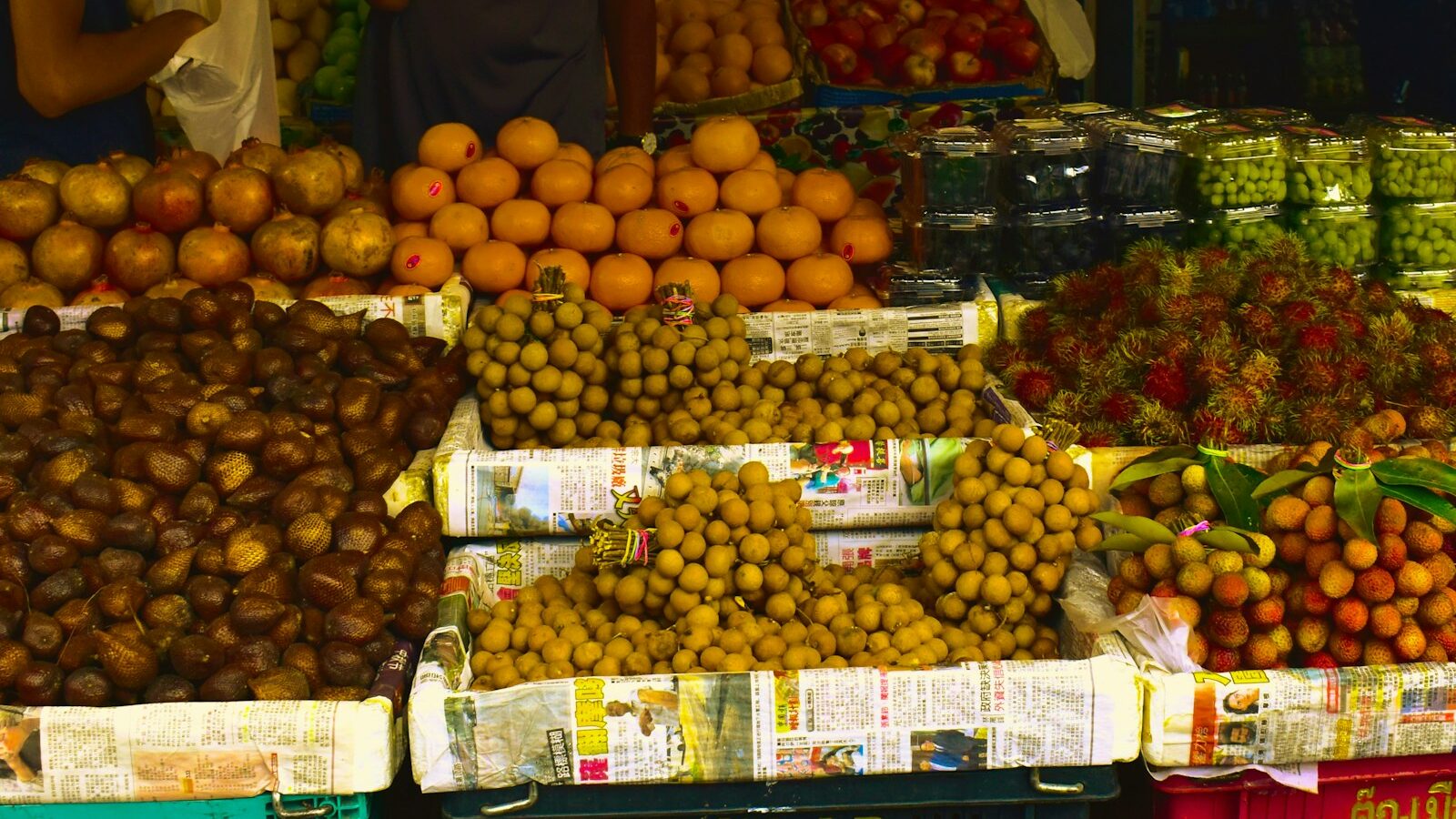
Walk past a wet market or fruit stall in Singapore and you will often see two small, sweet fruits piled high in bunches: hairy red rambutan and smooth, tan-skinned longan. Both are related to the lychee, both have juicy translucent flesh around a single seed, and both are easy to love. Yet they are also easy to buy badly, ending up with sour, dried-out or fermented fruit.
This rambutan longan Singapore guide focuses on the practical details: when each fruit tends to be at its best, how to choose a good bunch, how to store it at home in a humid climate, and simple ways to eat and use it. Exact harvest timing varies from year to year with weather, so treat the seasons below as rough patterns and let what you see at the stall be your guide. For other local favourites, see our guide to tropical fruits in Singapore.
Rambutan and Longan at a Glance
Rambutan gets its name from the Malay word “rambut”, meaning hair, which describes its soft, spiky skin. Inside is white, slightly translucent flesh that ranges from sweet to mildly tart, wrapped around a seed with a thin papery coat. Most rambutan sold here comes from the region, especially Malaysia and Thailand, with some varieties sold by name at specialist stalls.
Longan, known in Chinese as 龙眼 (lóngyǎn, “dragon’s eye”), has a thin, brittle, light brown shell. Peel it and you find glossy, very sweet, slightly musky flesh around a shiny black seed, which gives the fruit its “eye” look. Fresh longan sold in Singapore is often imported from Thailand, and China and other countries also grow it. Longan is also widely sold dried, as a staple ingredient in Chinese desserts and soups.
When They Are in Season
Because Singapore imports most of its fruit, both rambutan and longan can appear at different times of the year. Still, there are broad patterns:
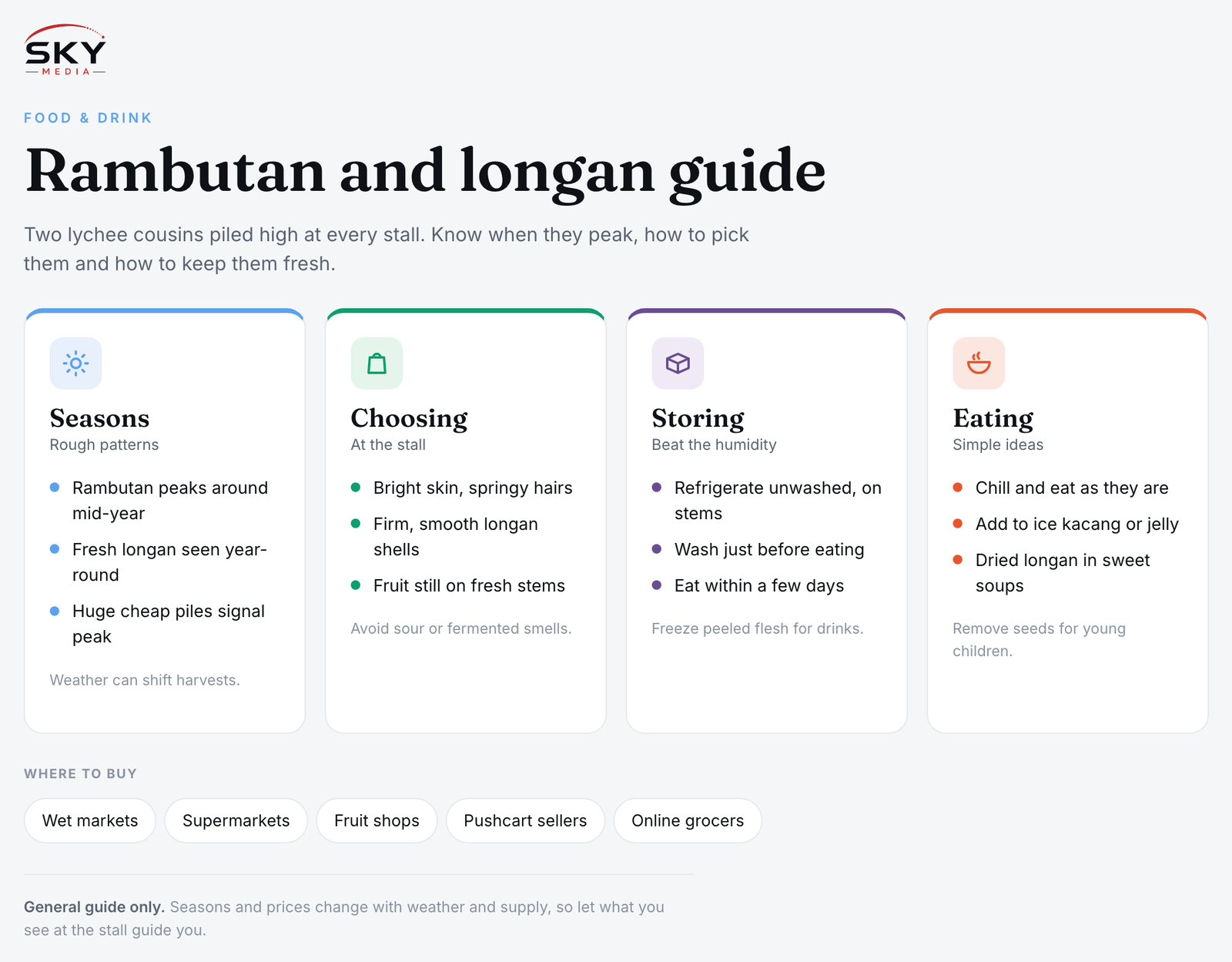
- Rambutan is generally most abundant and cheapest during the main regional harvest, which is commonly around the middle of the year, with a smaller crop for some areas towards the end of the year. Outside these periods, supply can be thin and quality more variable.
- Fresh longan is often seen year-round because it is grown in several countries with different harvest times, but many shoppers notice better value and bigger displays around the middle of the year.
Heavy rain or unusually dry spells in growing areas can shift harvests, which is one reason prices and quality swing. Our explainer on the monsoon and rainy season in Singapore gives a feel for the regional weather patterns behind this. A good rule is simple: when a stall suddenly has huge, cheap piles of a fruit, it is probably at its peak.
How to Choose Good Rambutan and Longan
Picking well is the difference between a juicy treat and a disappointing bag. Here is what to look for side by side.
| What to check | Good rambutan | Good longan | Signs to avoid |
|---|---|---|---|
| Skin colour | Bright red, red-orange or yellow (depending on variety) | Even light tan to golden brown | Blackened rambutan; very dark, wet or cracked longan shells |
| Hairs or shell | Hairs fresh and mostly green or red at the tips, still springy | Shell firm, smooth, not sunken | Rambutan hairs fully black and limp; longan shells that are soft or split |
| Feel | Firm, with a little give | Firm and plump, slightly springy | Mushy fruit, leaking juice |
| Smell | Fresh, faintly sweet | Clean, sweet | Sour, alcoholic or fermented smell |
| Stems | Fruit still attached to fresh-looking stems | Bunches with fruit still on the twig | Lots of loose, fallen fruit at the bottom of the box |
A few more tips:
- Taste if allowed. Some stallholders are happy to let you try one. Ask politely rather than helping yourself.
- Inspect the bottom of the bunch. Fruit at the base is often the first to go soft.
- Black hair tips are normal on rambutan after a day or two off the tree, but the skin should still be bright and the fruit firm.
- Buy what you can eat. Both fruits deteriorate fairly quickly, so a smaller bunch eaten fresh beats a large bunch that spoils.
Storing Them in a Hot, Humid Home
Singapore’s heat speeds up spoilage, and both fruits dry out or ferment if left on the kitchen counter.
- Refrigerate soon after buying. Keep the fruit unwashed, still on the stems if possible, in a loosely closed bag or a container lined with kitchen paper to absorb moisture.
- Wash just before eating. Washing then storing adds moisture that encourages mould.
- Eat within a few days. Rambutan in particular browns quickly. Longan generally lasts a little longer in the fridge, but check it daily and remove any soft or leaking fruit so it does not affect the rest.
- Freeze extras. Peeled, deseeded rambutan or longan flesh can be frozen in a sealed container and used in drinks, smoothies and desserts. The texture softens on thawing, so frozen fruit is best for blending or eating half-frozen as a snack.
- Keep pests away. Sweet fruit left out attracts ants and fruit flies. Clear peels and seeds promptly.
How to Eat and Prepare Them
Rambutan: Hold the fruit and press your thumbnail or a small knife into the skin around the middle, then twist the halves apart. The flesh slips out. In some varieties the flesh separates cleanly from the seed; in others it clings, and the papery seed coat can stick to the flesh. Eat around the seed and discard it, as the raw seed is not commonly eaten.
Longan: Squeeze gently until the shell cracks, then peel. Pop the flesh in your mouth and discard the seed. A bowl of longan makes a good after-dinner snack for the family, and children usually find them easy to peel.
Simple ideas:
- Chill and serve as they are, the most popular way to enjoy both fruits.
- Add peeled fruit to a fruit salad, or to a bowl of ice with a little lime and syrup.
- Blend into a cooling drink or smoothie.
- Use fresh or canned longan in desserts such as chilled jellies or as a topping for grass jelly or ice kacang.
- Use dried longan in Chinese desserts and tonic soups, such as longan and red date tea or sweet soups with white fungus. Dried longan is sold at Chinese medical halls, provision shops and supermarkets.
A Note on Sugar, Allergies and Eating Too Much
Both fruits are naturally sweet. They are a better choice than many processed snacks, but portions still matter, especially for people managing blood sugar. Eating a few at a time and pairing fruit with a meal is a sensible approach; anyone with diabetes should follow their own care team’s advice on fruit.
In traditional Chinese food culture, longan is often described as a “heaty” fruit, and some people limit how much they eat at once. This is a cultural belief rather than a medical rule, but it explains why older relatives may caution you.
Fruit allergies are uncommon but possible. If you notice itching, swelling or difficulty breathing after eating any new fruit, stop and seek medical help. Always cut fruit into small pieces and remove seeds for young children, as round slippery fruit and seeds can be a choking hazard.
Where to Buy in Singapore
You will find rambutan and longan at:
- Wet markets, where stallholders often sell by the kilo or by the bunch, and can tell you which batch is freshest.
- Supermarkets, which usually sell pre-packed bunches with clear origin labels.
- Neighbourhood fruit shops and pushcart sellers, which are good for spotting peak-season deals.
- Online grocers, convenient but you cannot inspect the fruit, so check their freshness or refund policy.
Prices change with season and supply, so compare a few places when the fruit first appears. Once you know what a good bunch looks and smells like, picking the best of the season becomes second nature.
Frequently Asked Questions
Can I eat rambutan or longan seeds? Eat around the seed and discard it. The raw seed is not commonly eaten. With rambutan, the seed has a thin papery coat that can cling to the flesh in some varieties, so take care when eating.
Are rambutan and longan safe for toddlers? Only with care. Round, slippery fruit and seeds can be a choking hazard, so cut fruit into small pieces and remove the seeds for young children. Stop and seek medical help if a child shows itching, swelling or difficulty breathing after a new fruit.
Why are the hairs on my rambutan turning black? Black hair tips are normal after a day or two off the tree. What matters is that the skin is still bright and the fruit firm. Avoid rambutan that is fully blackened, limp or mushy, or that smells sour, alcoholic or fermented.
Can people with diabetes eat longan and rambutan? Both fruits are naturally sweet, so portions matter. Eating a few at a time and pairing fruit with a meal is sensible, but anyone with diabetes should follow their own care team’s advice on fruit.
Is it better to buy longan at a wet market or online? A wet market lets you inspect the fruit, and stallholders can tell you which batch is freshest. Online grocers are convenient but you cannot check the fruit, so look at their freshness or refund policy. Dried longan is sold at medical halls and supermarkets.
Further reading: Chempedak and Jackfruit in Singapore: How to Tell Them Apart and Enjoy Them · Mangosteen Season in Singapore and How to Pick Good Ones · How to Choose and Cut a Ripe Mango in Singapore