

Few decisions shape a doctorate as much as the person who guides you through it. Choosing a phd supervisor singapore students commit to is not only about finding a famous name or a well-funded lab. It is about finding someone whose research, working style, and values fit the way you learn and grow. A good match can turn a hard few years into a rewarding chapter. A poor one can make even brilliant work feel exhausting. This guide helps you think it through calmly and ask the right questions before you commit.
Look at Research Fit First
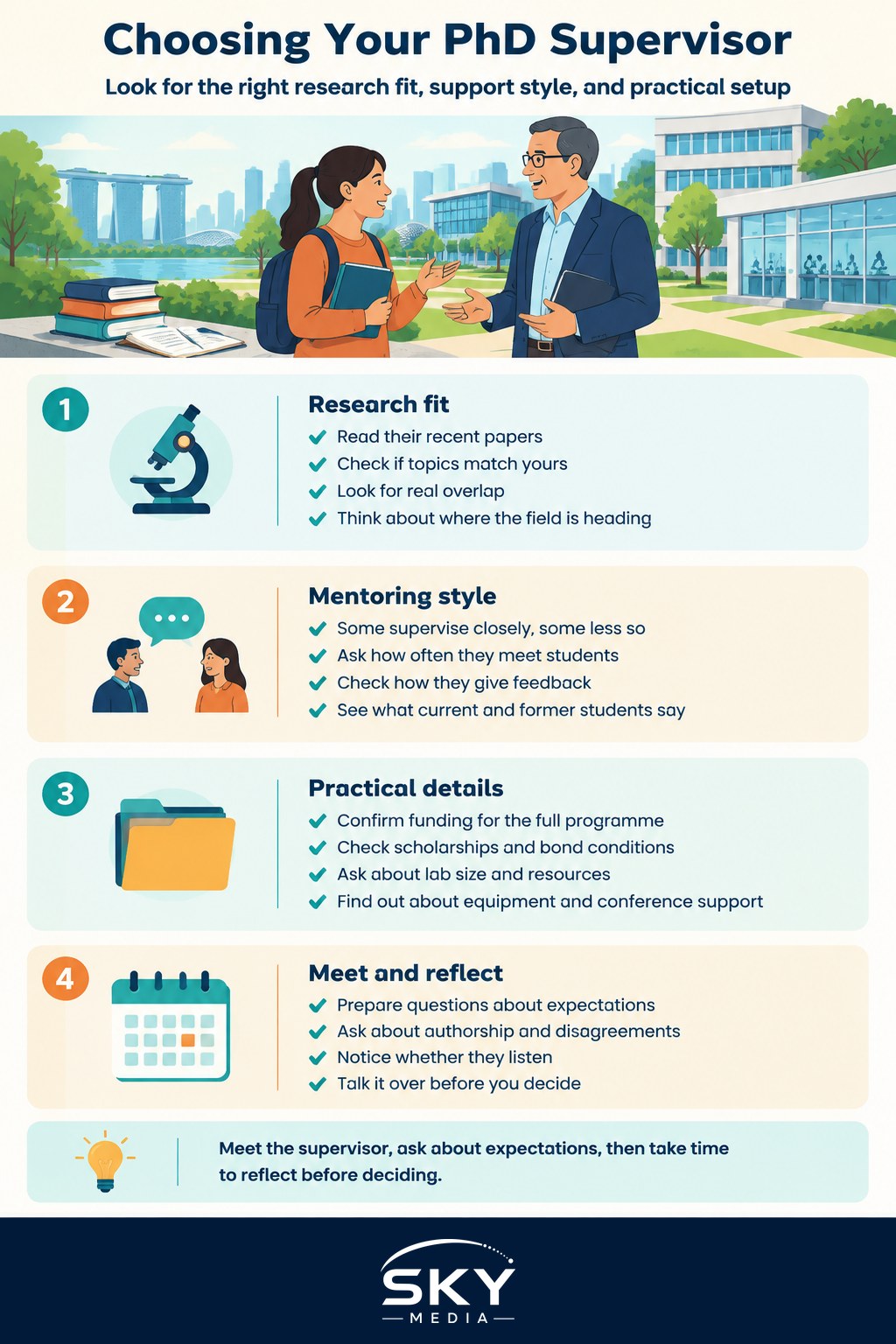
Start with the work itself. A supervisor should be active in an area close to what you want to study, so their expertise genuinely helps your project. Read their recent papers, not just their profile page. Do the topics excite you? Can you imagine spending years in that space? Fit does not mean you must copy their exact interests, but there should be real overlap so they can guide your methods and thinking.
Also consider where the field is heading. A supervisor working on questions that still have room to grow can open doors to collaborations and future roles. If you are still weighing whether a doctorate is right for you at all, it helps to revisit the bigger picture through doing a PhD in Singapore before you narrow down to individuals.
Understand Their Mentoring Style
Two supervisors with equal expertise can offer completely different experiences. Some are hands on, meeting weekly and reading every draft. Others expect you to work independently and check in occasionally. Neither is wrong, but one will suit you better. Be honest with yourself about how much structure you need, especially in your first year when you are still learning how to research.
The best way to learn their style is to ask their current and former students. Do they meet regularly? Are they responsive to emails? Do students finish on time? Are they supportive when experiments fail or life gets hard? Most students will speak frankly if you ask kindly and in private. Pay attention to how people talk about the group culture, since your daily wellbeing depends on it as much as the science.
Think too about how feedback flows. A supervisor who gives clear, timely, and constructive comments will help you improve far faster. Building the habit of using criticism well is something you can practise, and a piece like how to learn from feedback can prepare you for the many revisions ahead.
Check the Practical Details
Research fit and mentoring matter most, but practicalities can make or break a PhD. Ask about funding for the full length of the programme, so you are not left scrambling midway. Understand what scholarships, stipends, or bond conditions may apply, and read any agreement carefully before signing. Do not rely on assumptions or hallway rumours for something this important. Where money and contracts are involved, confirm every figure and rule with the university and the official scheme rather than trusting a summary.
Consider the group size. A large lab may offer many collaborators but less individual attention. A small group may give you closer contact with your supervisor but fewer peers to learn from. Ask about resources too, such as equipment, data access, and conference support, since these shape what your project can realistically achieve.
Meet, Ask, and Reflect
Before committing, try to meet potential supervisors in person or online. Come prepared with thoughtful questions about their expectations, your likely project, authorship on papers, and how they handle disagreements. Notice how they treat you in the conversation. Do they listen? Do they seem interested in your ideas? A respectful, two way discussion is a good sign.
Afterwards, give yourself time to reflect rather than deciding on the spot. Talk it over with mentors, family, or peers who know you well. If something feels off, trust that instinct and keep looking. There is no shame in taking your time, because this relationship will last for years.
Choosing a PhD supervisor in Singapore is a personal decision, and there is no single right answer. Focus on genuine research fit, a mentoring style that suits you, honest practical planning, and a working relationship built on respect. Get those foundations right, and you give yourself the best chance to thrive throughout your doctorate.
Frequently Asked Questions
What questions should I ask a potential PhD supervisor in the first meeting? Ask about their expectations, your likely project, authorship on papers and how they handle disagreements. Also notice whether they listen and show interest in your ideas, since a respectful two-way conversation is a good sign. Prepare thoughtful questions beforehand.
How do I find out what a supervisor is really like to work with? Speak to their current and former students, kindly and in private. Ask whether they meet regularly, reply to emails, help students finish on time and stay supportive when experiments fail. Most students will speak frankly, and the group culture matters as much as the science.
Is it better to join a big lab or a small research group? Each has trade-offs. A large lab may offer many collaborators but less individual attention, while a small group gives closer contact with your supervisor but fewer peers to learn from. Think about how much structure and individual guidance you need, especially in your first year.
Should I confirm funding before accepting a supervisor? Yes, ask about funding for the full length of the programme so you are not left scrambling midway. Read any scholarship, stipend or bond agreement carefully before signing, and confirm every figure and rule with the university and the official scheme rather than relying on hearsay.
What if I realise my supervisor is a poor fit after starting? Reflect on what is not working, talk it over with mentors or peers you trust, and consider raising it with your supervisor first. Your department or graduate office may have a process for concerns, so ask about it. Take your time, since this relationship lasts for years.