
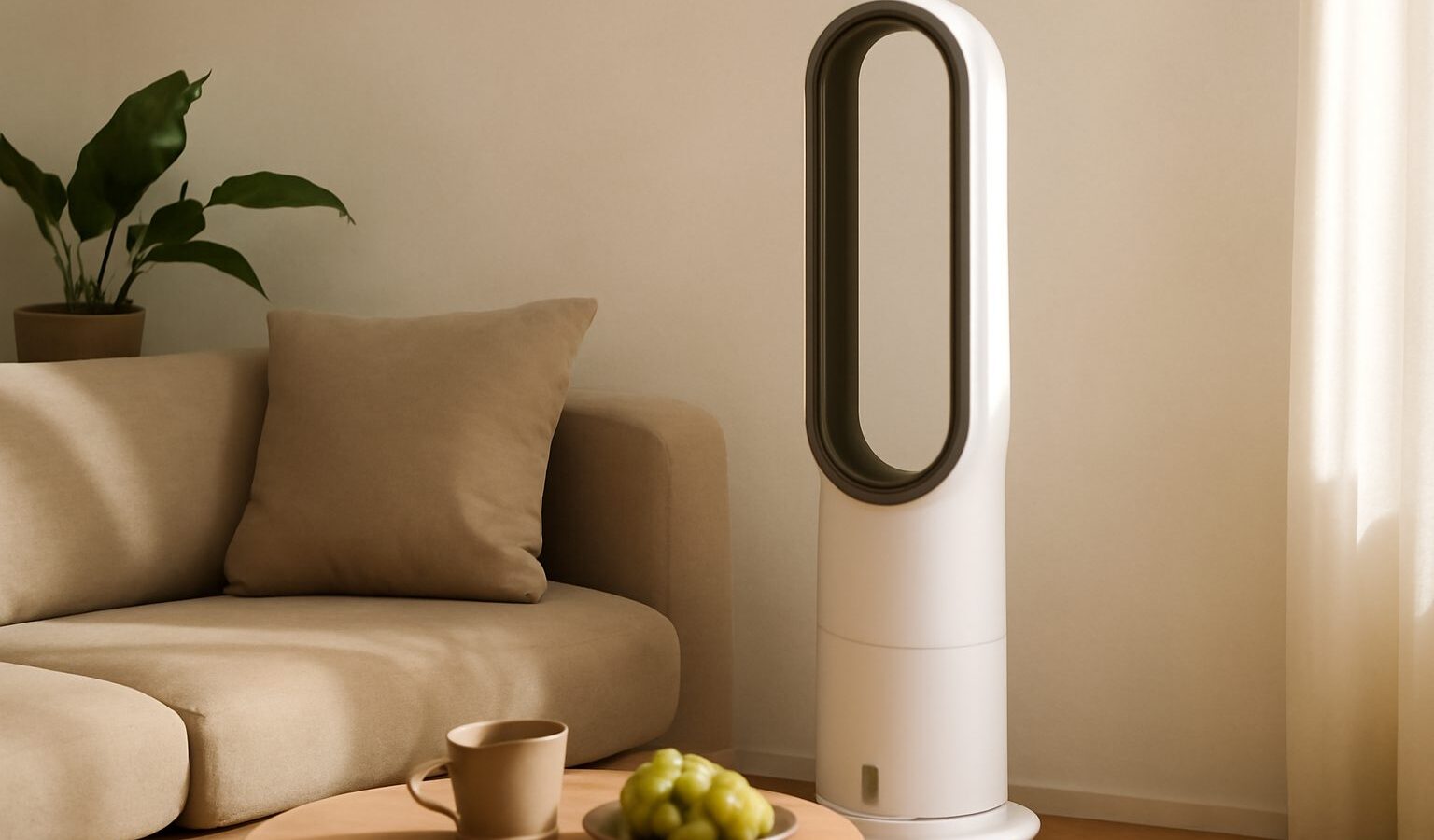
Tower and bladeless fans have become popular for good reason: they look tidy, tuck into small spaces and move air without the bulky cage of a traditional standing fan. But they are not all the same, and the right choice depends on your room, your budget and how much you value quiet, safety and easy cleaning. This guide compares both styles honestly so you can cool your flat without overspending.
What sets them apart
A tower fan is a tall, slim column with a set of blades hidden inside that draw air in and push it out through a vertical vent. A bladeless fan, despite the name, also uses a hidden impeller in its base; it then channels air through a loop or slot at the top, amplifying the flow. Both hide their moving parts, so both are safer around curious fingers than an open blade fan. The visible difference is mostly in shape, price and the feel of the airflow.
Airflow and room size
The most important question is whether a fan can actually move enough air for your space. Tower fans generally produce a broader, stronger stream and suit medium to larger rooms, including living areas. Bladeless fans often deliver a smoother, gentler flow that many find more pleasant up close, though some models struggle to reach across a big room. For a bedroom or study, either works well. For an open plan living and dining area, a tower fan or a larger bladeless model with a stronger rating is the safer bet. Look at the number of speed settings and whether the top speed feels adequate in the shop.
Compare the two styles
| Factor | Tower fan | Bladeless fan |
|---|---|---|
| Airflow | Broad and strong | Smooth, sometimes gentler |
| Price | Budget to mid range | Mid to premium |
| Noise | Low to moderate | Often very quiet |
| Cleaning | Internal blades, harder to reach | Wipe the loop easily |
| Safety | No exposed blades | No exposed blades |
| Looks | Slim column | Modern, minimal |
Noise, sleep and comfort
In a small flat where the fan runs all night, noise matters as much as airflow. Bladeless models are often marketed on their quietness and can be very gentle on low settings, which suits light sleepers. Good tower fans are also quiet at low speed but tend to get louder at the top setting. If you are sensitive to sound, test the fan at the speed you would actually sleep with, not just the lowest. A sleep or night mode that dims the display and lowers speed over time is a genuinely useful feature here.
Features worth having
Beyond raw airflow, a few features make daily life easier.
- Oscillation spreads air across a wider area; some units oscillate more widely than others, and a few add vertical movement.
- A remote control and a timer are almost essential for bedroom use.
- An adjustable range of speeds gives finer control than a simple low, medium, high.
- A clear, dimmable display stops a bright panel from lighting up the room at night.
- Some premium models add air purification or heating, turning the fan into a year round appliance, though these cost more and are not necessary for cooling alone.
Decide which of these you will use rather than paying for a long feature list you will ignore.
Safety and the household
Both styles enclose their moving parts, which is their headline safety advantage over a traditional bladed fan. That makes them reassuring choices for homes with young children or pets who might poke at a spinning blade. Still, place any tall fan where it will not be knocked over easily, keep cords tucked away, and choose a model with a stable base. A tip over switch that cuts power if the fan falls is a welcome extra.
Cleaning and upkeep
Cleaning is where the two styles diverge most. A bladeless fan is easy to keep tidy; you simply wipe the loop and the base intake with a cloth. A tower fan hides its blades inside a narrow column, which collects dust that is fiddly to reach. Look for a tower model with an accessible or removable rear grille, and use a vacuum brush or a can of air to clear the intake regularly. In our dusty, humid environment, a clogged intake weakens airflow and can carry dust into the room, so build cleaning into your routine whatever you choose.
Running cost and cooling sense
Fans are among the cheapest ways to stay comfortable because they use a fraction of the power of air conditioning. A fan does not lower the room temperature; it cools you by moving air across your skin, so it works best when you are in the room and can be switched off when you leave. Used together with air conditioning, a fan lets you set the aircon a little higher and still feel comfortable, which trims the bill. Check the energy label where shown, though the difference between models is small next to the saving over running an aircon alone.
Making the decision
Choose a tower fan if you want strong, broad airflow at a friendlier price and do not mind a little more cleaning effort. Choose a bladeless fan if you value very quiet operation, a smooth flow and effortless wiping down, and your budget stretches to the premium. For most bedrooms, either serves well, so let noise and cleaning break the tie. Match the airflow to your room size, pick the two or three features you will genuinely use, and tower and bladeless fans both become a low cost, safe and stylish way to stay comfortable through a warm Singapore year.
Explore more: Ceiling fans and home cooling · Lowering your electricity bill at home · Energy efficient appliances