
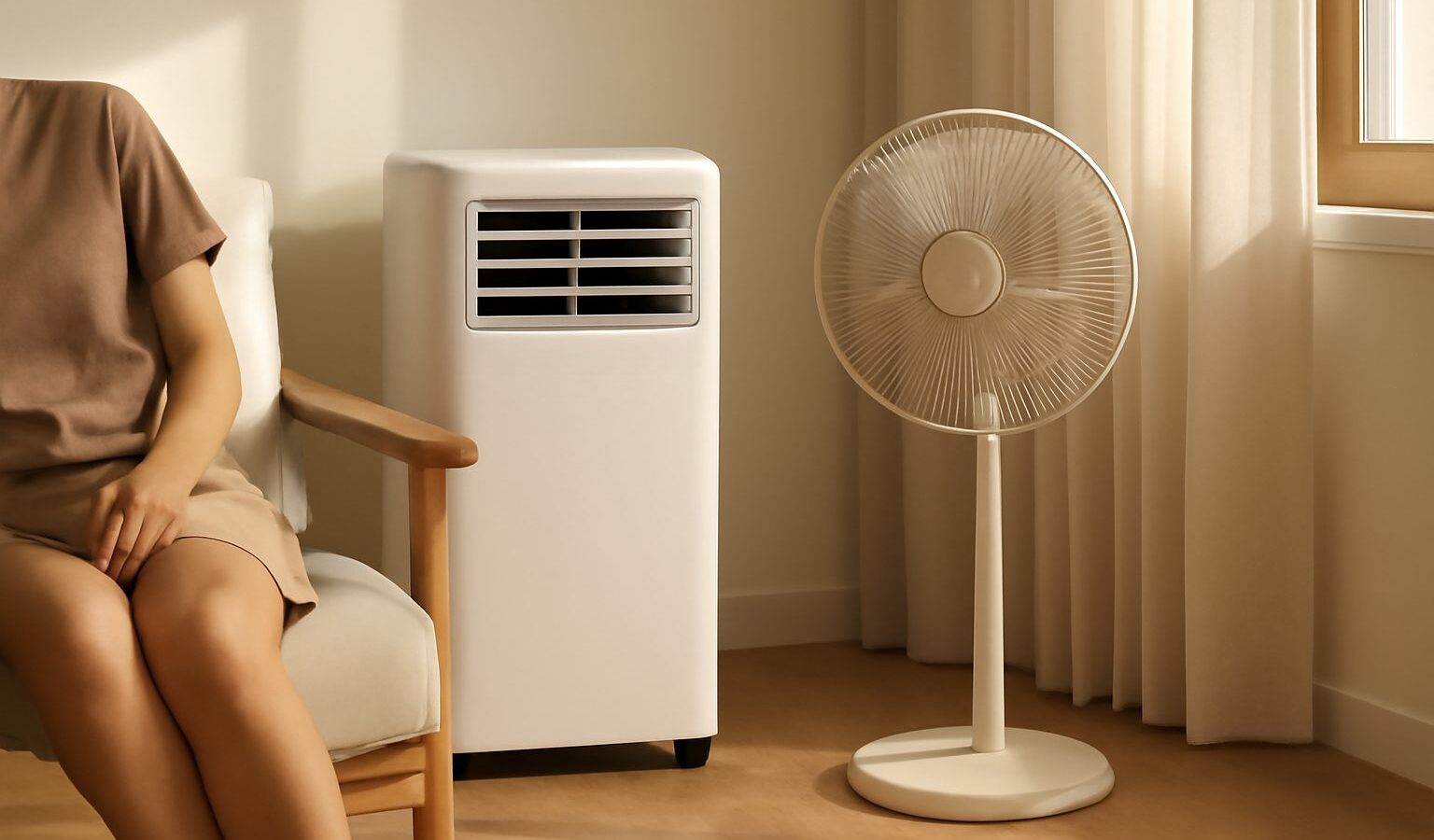
Deciding between portable aircon vs fans usually comes down to how hot your room gets, how much you want to spend on electricity, and whether you can vent hot air outside. Both have a real place in a Singapore flat, and the honest answer is that neither wins every time. This guide walks through the trade-offs so you can match the machine to the room instead of the marketing.
How Each One Actually Cools
A fan does not lower the temperature of the air. It moves air across your skin, which speeds up the evaporation of sweat and makes you feel cooler. That effect is real and effective in a well ventilated room, but on a still, humid afternoon a fan simply pushes warm air around.
A portable air conditioner does lower the air temperature. It draws in warm room air, passes it over a cold coil, and blows cooler, drier air back out. The heat it removes has to go somewhere, so it is pushed out through a ventilation hose that usually runs to a window. This is the single biggest practical difference, and it shapes almost every other decision below.
Cooling Power and Room Size
For a small bedroom or a study where you sit still for hours, a portable aircon gives genuine relief because it tackles both heat and humidity. For a kitchen, a service yard, or an open living area where you are moving about, a fan often feels perfectly comfortable and costs far less to run.
A portable unit also struggles in a large or sun facing room. Because part of its own hot exhaust can leak back indoors, its effective cooling is lower than a fixed wall mounted system. If you are cooling a big space or the whole flat, a proper split air conditioner is the better long term answer, and our guide below covers that choice.
Running Cost and Electricity
Fans use a small fraction of the power a compressor based aircon does, so they are the cheaper choice by a wide margin. A portable aircon runs a compressor, which is the same energy hungry part found in any air conditioner.
If you want to keep your bill sensible, the practical middle path is common in Singapore homes: run the aircon to take the edge off the heat and humidity for an hour or two, then switch to a fan to keep the air moving. You feel cool without the compressor running all night.
| Factor | Portable aircon | Fans |
|---|---|---|
| Cooling effect | Lowers air temperature and humidity | Moves air, no temperature drop |
| Running cost | Higher, runs a compressor | Much lower |
| Setup | Needs a window for the hose | Plug in and go |
| Drainage | May need emptying or a drain hose | None |
| Noise | Louder, compressor plus fan | Generally quieter |
| Portability | Heavy, on castors | Light, easy to move |
| Best for | Sitting still in a hot room | Well ventilated or active spaces |
Drainage and Venting: The Catch With Portables
The part shoppers overlook most is what happens to heat and moisture. A portable aircon must vent its hot exhaust outside through a hose fitted to a window, otherwise it just heats the room it is meant to cool. In many HDB flats the window style makes a neat seal awkward, so factor this in before buying.
The unit also pulls moisture out of the air. Some models evaporate most of it out with the exhaust, while others collect it in an internal tank you empty by hand or drain through a small hose. In humid Singapore, expect to deal with water one way or another. A fan has none of these worries, which is part of its appeal.
Noise, Sleep and Comfort
Fans are usually the quieter option, and many people sleep better with the steady hum of a standing or ceiling fan. A portable aircon combines a fan with a compressor that cycles on and off, so it is noticeably louder and the changing noise can disturb light sleepers. If a silent bedroom matters to you, test the noise level in person before committing.
On comfort, the portable wins on the hottest, stickiest nights because it removes humidity, which fans cannot do. Dry, cool air simply feels better when the weather is at its worst.
When Each One Suits an HDB Room
Choose a fan when your room gets decent airflow, when you mainly need comfort while awake and moving, or when you want to keep both the upfront and running costs low. Fans also pair beautifully with natural cooling habits like opening windows at cooler times of day.
Choose a portable aircon when you have a hot, still room with no fixed air conditioner, when you rent and cannot install a wall unit, or when you need real humidity control for sleep, study or working from home. Just confirm you have a window you can vent through and somewhere for the water to go.
A Practical Middle Ground
Many households do not choose at all. They keep a fan in every room for everyday comfort and use one portable aircon in whichever room needs it most. This spreads the cost, keeps electricity use down, and covers both mild days and brutal ones.
Installation and Safety Notes
A portable aircon is designed to be plug and play, so it usually needs no tradesperson. However, avoid running it off a daisy chain of extension cords, and if you are unsure whether a socket or circuit can take the load, ask a licensed electrician. If you later decide a fixed wall unit is the better fit, that installation should always be done by a qualified air conditioning installer.
The Bottom Line
There is no universal winner in portable aircon vs fans. Fans are cheaper, quieter and fuss free, while a portable aircon delivers the deep, humidity busting cooling a fan never can, at the cost of higher bills, venting and drainage. Match the machine to the room and the way you live, and you will stay comfortable without overspending.
Explore more: Choosing an Air Conditioner · Keeping Your Home Cool Naturally · Lowering Your Electricity Bill at Home