
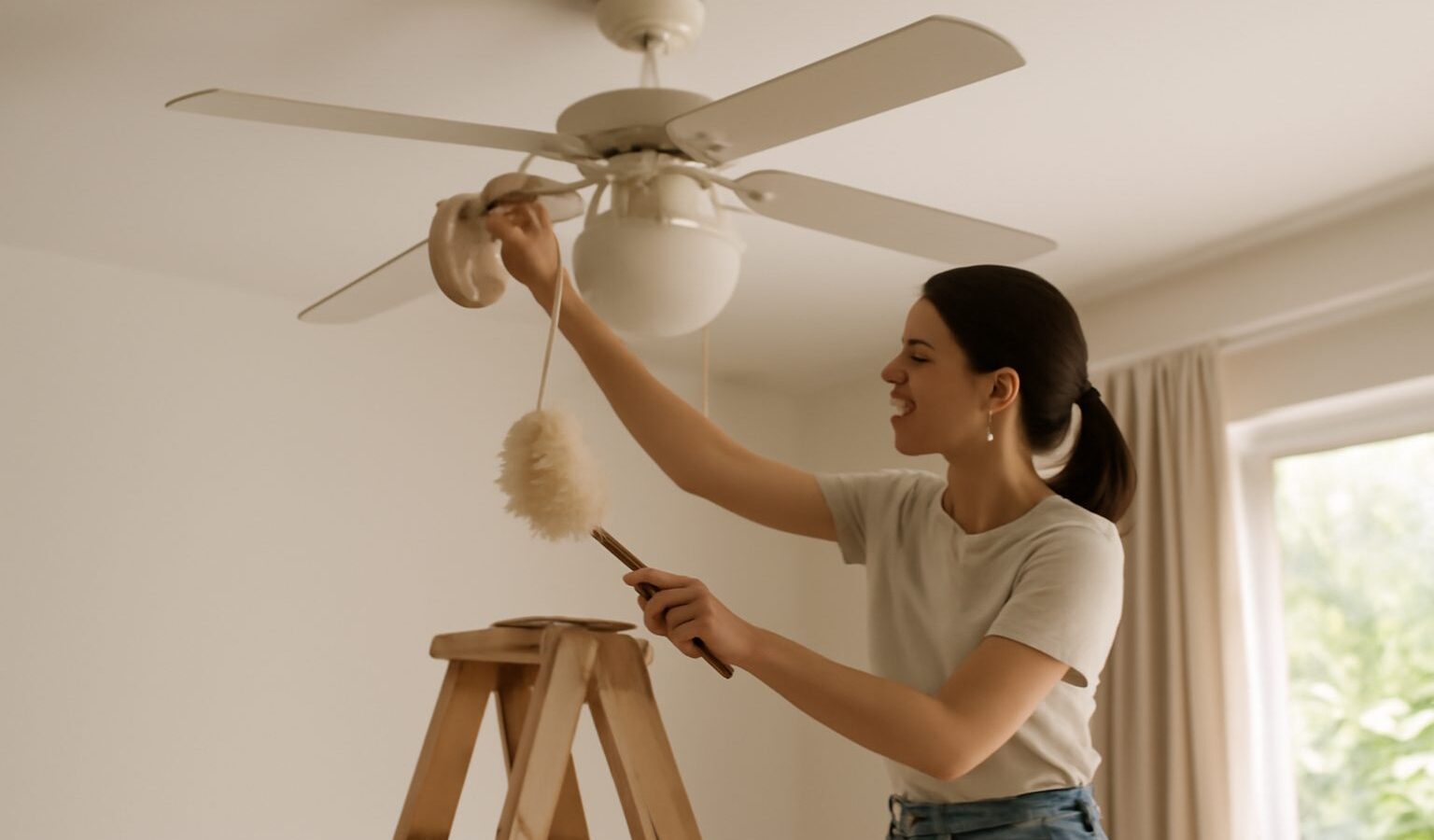
In our warm, humid climate, cleaning ceiling fans is one of those jobs that always seems to slip down the list until the blades are furred with grey dust and every switch-on flings it across the room. The good news is that this is a simple, low-risk task once you follow a safe routine. This guide walks you through cleaning ceiling fans and light fixtures the tidy way, with the right tools and a few sensible precautions.
Why fans and fixtures get so dusty here
Singapore homes run fans almost year round, so blades collect a steady film of dust, cooking grease and the fine haze that drifts in through open windows. Light fixtures gather the same grime plus dead insects that get trapped inside covers and diffusers. Left alone, the build-up dulls your lighting, spreads allergens and makes the whole room feel less clean than it is.
Tools you will need
You do not need anything fancy. Gather these before you start:
- A sturdy step stool or a stable ladder, never a wobbly chair
- An old pillowcase for the fan blades
- A microfibre cloth and a soft duster
- A bowl of warm water with a drop of washing-up liquid
- A dry cloth for finishing
- A soft brush or an old toothbrush for grooves
- Optional: a vacuum with a brush attachment
Safety first, before you climb
This job is low risk, but a fall or a hot bulb can still hurt you. Take these steps every time.
- Switch off the power. Turn the fan and the lights off at the wall switch. If you are handling a light fixture closely or removing a cover, switch off the relevant circuit at the mains distribution board so the fitting is dead.
- Let bulbs cool. Halogen and older incandescent bulbs get hot enough to burn. Give them at least ten to fifteen minutes to cool before you touch them.
- Use a stable base. Set your step stool on level, dry flooring. Have someone steady it if you can, and keep your hips within the rails rather than overreaching.
- Do not wet the electricals. Keep water and damp cloths away from bulb holders, wiring and switches. Damp, not dripping, is the rule.
If any fitting looks damaged, has exposed wiring, or the fan wobbles badly, stop and call a qualified electrician rather than poking around yourself.
How to clean ceiling fan blades
The pillowcase method is the classic trick because it traps dust instead of scattering it.
- Slip the open pillowcase over one blade so the top and bottom are inside the fabric.
- Gently pull the pillowcase back towards you, wiping both surfaces at once. The dust falls inside the case.
- Repeat for each blade, then take the pillowcase outside or straight to the wash.
- For sticky grease near the motor housing, wipe with the barely damp microfibre cloth, then dry immediately.
Do not press hard or lean your weight on the blades, as they can bend and throw the fan out of balance. If your fan already wobbles after cleaning, the blades may be misaligned or a fixing may be loose, which is worth having checked.
How to clean light fixtures and covers
Covers, diffusers and glass shades usually lift or twist off. Work out how yours detaches before you tug at it.
- With the power off and bulbs cool, remove the cover carefully. Some clip on, some have small screws or a bayonet twist.
- Wash removable glass or plastic covers in warm soapy water in the sink, rinse and dry fully before refitting.
- Wipe the bulb itself with a dry cloth only. Never run a bulb under water.
- Dust the bulb holder and surrounding fitting with a dry cloth or soft brush.
- Refit the cover firmly so it does not rattle or drop later.
For high or awkward fittings, the same principles from our guide on reaching tricky spots apply: stable footing first, patience second.
Comparison: cleaning methods at a glance
| Method | Best for | Effort | Watch out for |
|---|---|---|---|
| Pillowcase wipe | Fan blades | Low | Do not bend the blades |
| Damp microfibre | Motor housing, greasy edges | Low | Keep water off electricals |
| Wash in sink | Removable glass or plastic covers | Medium | Dry fully before refitting |
| Vacuum brush head | Light dusting, high ceilings | Low | Use a stable ladder |
| Dry cloth only | Bulbs themselves | Low | Let them cool first |
How often should you do this?
A quick blade wipe every two to four weeks keeps things easy, especially if you run the fan daily or live near a busy road. A deeper clean of covers and fittings every two to three months is usually enough for most homes. If anyone in the household has dust allergies, lean towards the more frequent end.
When to hire a professional
Cleaning is firmly in DIY territory, but a few situations call for a pro. If your ceiling is very high, if the fan wobbles or hums after cleaning, or if a light fitting flickers, buzzes or shows any scorching, switch it off and bring in a qualified electrician. Anything involving loose wiring, a failing bulb holder or remounting the fan is electrical work, not cleaning, and is not worth risking on a ladder.
A tidy finish
Cleaning ceiling fans and light fixtures takes half an hour and instantly brightens a room. Keep the routine simple: power off, cool bulbs, stable footing, dust trapped not scattered. Do it little and often and you will never face that thick grey fur again.
Explore more: How to clean high and hard to reach places · Ceiling fans and home cooling · When to DIY and when to hire a professional