
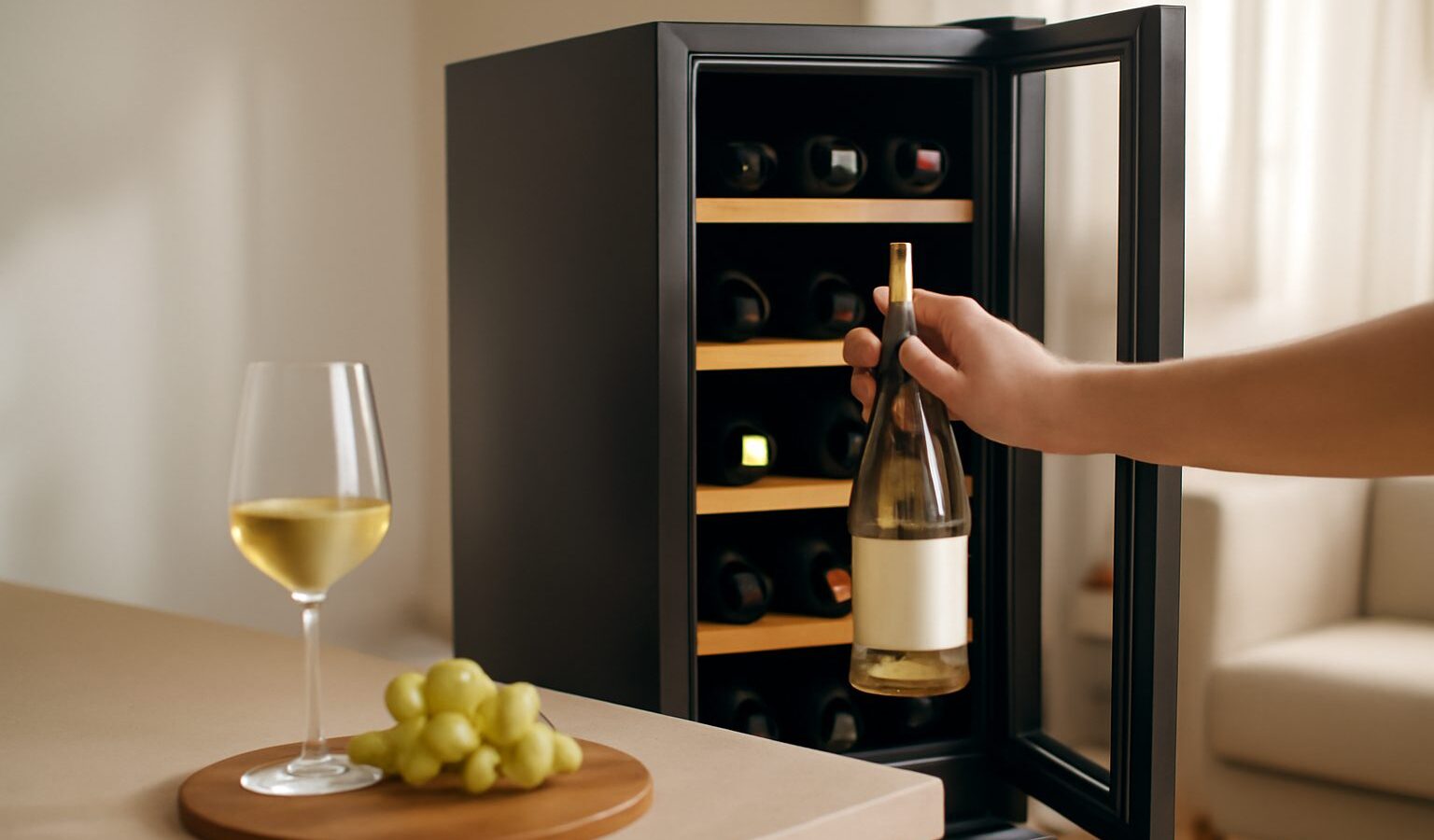
Buying a wine fridge singapore collectors and casual drinkers alike will be happy with is less about status and more about protecting what you have already paid for. Our climate is warm and humid all year, and an ordinary kitchen simply runs too hot for wine to rest well. A dedicated cooler holds a stable, cellar-like temperature so bottles do not cook, oxidise early or turn dull. This guide covers temperature zones, capacity, placement and ventilation, plus the quieter details that separate a good buy from a noisy regret.
Why a Dedicated Cooler Makes Sense Here
Wine is happiest at a steady, moderate temperature away from light, vibration and swings between hot and cold. A normal refrigerator is too cold and too dry, and it hums with vibration, while a cupboard in a local flat can drift well above the ideal range on a warm afternoon. A wine fridge sits in between, holding a gentle temperature that suits storing and serving rather than deep freezing.
The other benefit is humidity control. A good cooler keeps enough moisture in the air to stop natural corks drying out and letting air seep in. That matters more here than you might think, because although Singapore is humid outside, an air-conditioned room can be surprisingly dry.
Temperature Zones: Single or Dual
The most important spec is the number of temperature zones.
A single-zone cooler holds one temperature throughout. It is simpler, usually cheaper, and ideal if you mostly drink one style, or if you are storing bottles for the medium term rather than serving them at different temperatures. A dual-zone cooler has two separately controlled compartments, so you can keep whites and sparkling cooler in one section and reds a little warmer in the other, each ready to pour. If you enjoy a range of styles and like bottles at serving temperature, dual-zone earns its keep. If you simply want safe storage, single-zone is perfectly sensible and often more energy efficient.
| Feature | Single-zone | Dual-zone |
|---|---|---|
| Temperature control | One setting throughout | Two independent compartments |
| Best for | One style, medium-term storage | Mixed collection, serving-ready |
| Complexity and cost | Simpler, usually lower | More features, usually higher |
| Typical energy use | Often lower | Often higher |
Capacity and Layout
Coolers are rated by how many standard bottles they hold, but treat that number as optimistic. It usually assumes uniform, slim bottles, and real collections include fatter Burgundy and sparkling bottles that take up more room. A useful rule is to decide how many bottles you keep on hand, then choose a model rated for noticeably more, so shelves are not jammed.
Think about layout too. Pull-out shelves make it easy to reach bottles without disturbing the rest, while fixed racking may pack more in but is fiddlier. A freestanding unit is the flexible choice for most flats, whereas a built-in model is designed to sit under a counter and vents from the front, which is essential if you want it flush within cabinetry. Never enclose a freestanding model in a tight cabinet, as it needs air around it to shed heat.
Placement and Ventilation
Placement decides how hard the cooler has to work and how long it lasts. Keep it out of direct sunlight and away from heat sources such as an oven, hob or a window that catches the afternoon sun. Every extra degree of surrounding heat makes the compressor run harder, which raises running costs and can shorten the appliance life.
Leave clearance around the unit as the maker specifies, particularly at the back and top for a freestanding model and at the front for a built-in one. Crowding the vents traps heat and undoes the cooling. Set the fridge on a level surface so the door seals evenly and any compressor sits flat, which keeps vibration and noise down. In a compact home, also consider noise: a bedroom-adjacent spot calls for a quieter cooling system, covered below.
Cooling System, Humidity and Glass
Two cooling technologies are common. Compressor coolers work like a normal fridge, cool powerfully and cope well with a warm room, but they can vibrate and hum a little more. Thermoelectric coolers are quieter and gentler on the bottles, yet they struggle when the surrounding room is hot, which is a real limitation in an un-air-conditioned flat. For our climate, a compressor model is the safer all-rounder unless the cooler will live in a consistently cool room.
Look for a unit that manages internal humidity so corks stay supple. A UV-tinted glass door helps shield wine from light, which degrades it over time, while still letting you see your bottles. Anti-vibration features and a solid, well-sealed door round out a good design.
Noise, Vibration and Where It Lives
In a compact home the cooler often has to share space with a living or sleeping area, so how it sounds matters as much as how it cools. A compressor kicks in and out through the day, and a cheaper unit can hum or buzz enough to notice at night. If the fridge will sit near a bedroom or a quiet study, look for a model that lists a low noise rating and sits on anti-vibration feet, and set it on a firm, level floor rather than a flexing shelf. Vibration is not only a comfort issue: constant shaking disturbs the sediment in older bottles and can tire the wine over time. Give the door a clear swing so you are not forced to shuffle bottles awkwardly each time, and keep the unit slightly proud of the wall so warm air can escape from the back.
Running Costs and Care
A wine fridge runs continuously, so efficiency adds up over the years. Check the energy label, favour the right size rather than an oversized unit, and give it a cool, well-ventilated spot to reduce its workload. All models here run on Singapore mains of 230V and 50Hz with the standard three-pin BS 1363 plug, so avoid overseas units unless the voltage rating clearly matches.
Maintenance is light. Wipe the interior occasionally, keep the door seal clean so it closes tightly, clear dust from the vents and rear coils, and avoid opening the door more than needed. Store bottles with natural corks on their side so the cork stays moist. Treated well, a good cooler quietly protects your wine for many years.
Explore more
Choosing a Refrigerator
Energy-Efficient Appliances
Home Appliance Shopping
How to Maintain Your Home Appliances