

A good walking aid can be the difference between staying active and staying stuck at home. Used well, it steadies the step, eases sore joints, and lowers the risk of a fall. Used wrongly, the wrong height or the wrong type can actually make things less safe. Choosing a walking aid singapore seniors will genuinely benefit from is less about buying the fanciest model and more about getting the right fit for the person. This is general information, not medical advice, and a proper assessment is the best starting point.
The main types of walking aid
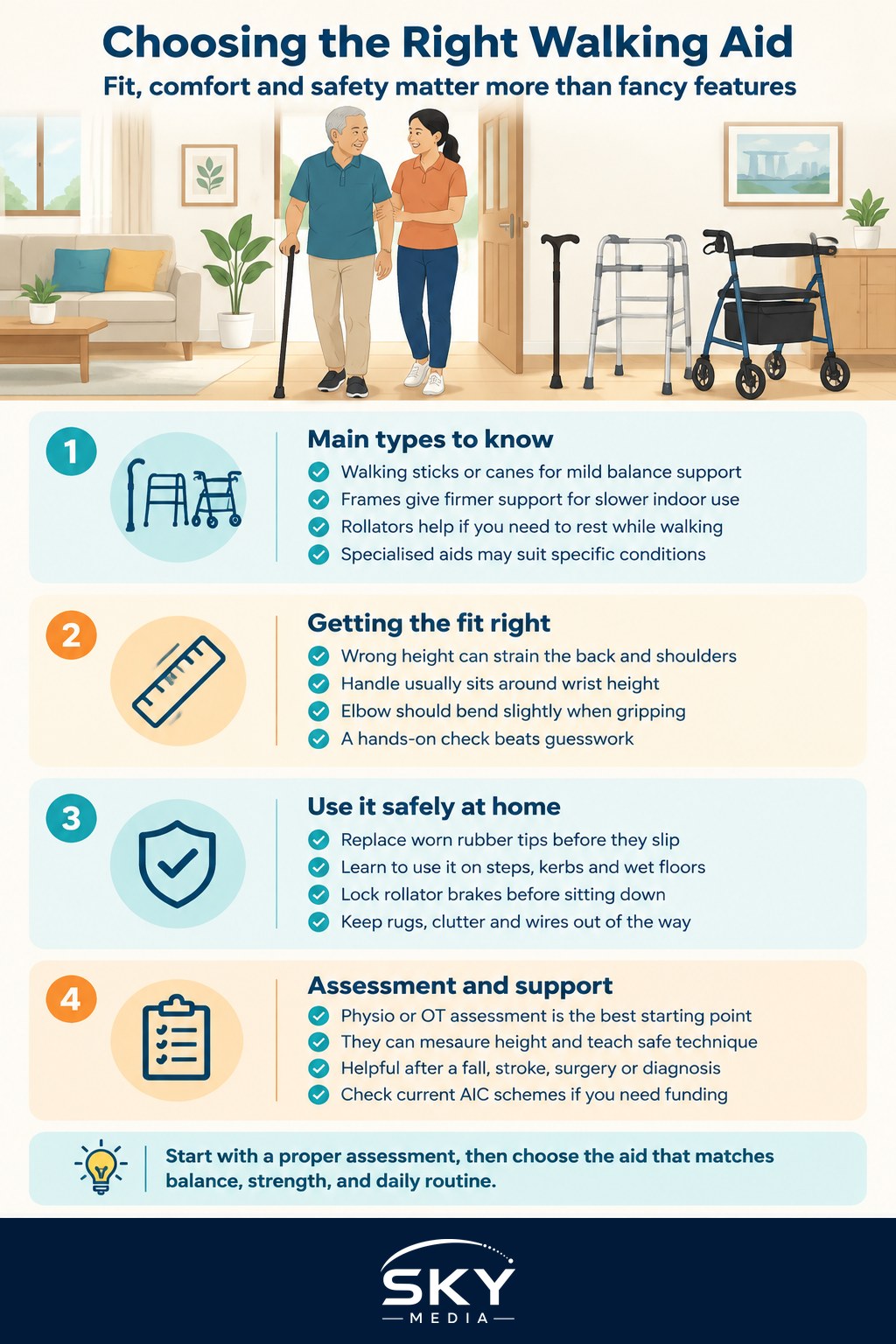
There is no single best device, only the one that suits the person’s balance, strength, and daily routine. In broad terms:
- Walking sticks and canes. Good for mild balance issues or to take weight off one sore leg. Some have a single tip, others a wider base for extra steadiness.
- Walking frames. A frame gives more support and is lifted with each step. It suits people who need firm stability but move slowly, often indoors.
- Rollators, or wheeled walkers. These roll along and usually have brakes and a seat, which helps someone who tires easily and needs to rest. They suit those with enough strength to control the brakes.
- Specialised aids. Some people need a device tailored to a particular condition or to use with one hand. This is where professional input really matters.
The best choice depends on how far the person walks, whether they are indoors or out, how their balance is, and what their hands and arms can manage.
Why fit and setup matter so much
An aid set to the wrong height forces the user to stoop or reach, which strains the back and shoulders and can throw off balance. As a rough guide, when standing upright with arms relaxed, the handle of a cane or frame usually sits around wrist height, so the elbow bends slightly when gripping it. That said, the right setting varies from person to person, which is exactly why a hands-on check beats guesswork.
A few safety points worth remembering:
- Check the rubber tips regularly and replace them when worn, as a smooth tip can slip.
- Make sure the person knows how to use it on the specific surfaces they face, such as steps, kerbs, and wet floors.
- On a rollator, teach proper braking and never sit on it unless the brakes are locked.
- Keep the home clear of loose rugs, clutter, and trailing wires so the aid moves freely.
An aid the person finds heavy, awkward, or embarrassing often ends up in a corner unused, so comfort and dignity count as much as the technical features.
Getting an assessment and any funding
The single most useful step is an assessment by a physiotherapist or occupational therapist, often reached through a polyclinic, hospital, or a community care provider. They can watch the person walk, measure the correct height, recommend the right type, and teach safe technique. This is especially important after a fall, a stroke, surgery, or a new diagnosis that affects movement. A device chosen without this input may not match the person’s real needs.
Costs vary by type and features, from a simple cane to a rollator with brakes and a seat, so ask clearly what you are paying for. We are not quoting prices here because they differ and change. Funding may be available for some assistive devices for those who qualify, so check the current schemes and eligibility with the Agency for Integrated Care (AIC) rather than relying on figures you find online.
A walking aid works best alongside wider fall safety. You may find our guides to preventing falls at home for seniors, improving your balance to prevent falls, and getting around as a senior in Singapore helpful. If a bigger mobility device is needed, see choosing a mobility scooter or wheelchair.
A steady next step
The right walking aid, fitted properly and used with confidence, helps an older person keep moving and stay independent. Start with an assessment, choose for comfort and safety over looks, and keep the device well maintained. If pain, dizziness, or unsteadiness is new or getting worse, see a doctor, and for the right aid and any funding help, speak with a physiotherapist, an occupational therapist, or the Agency for Integrated Care.
Frequently Asked Questions
How do I know if a walking stick, frame or rollator is right for me? It depends on your balance, strength, daily routine and what your hands can manage. Canes suit mild balance issues, frames give firm support at a slow pace, and rollators help people who tire and need a seat. A therapist can recommend one.
What height should a cane or walking frame be set to? A rough guide is that the handle sits around wrist height when you stand upright with relaxed arms, so the elbow bends slightly. The right setting varies, so have a physiotherapist or occupational therapist check it.
Is it safe to sit on a rollator? Only with the brakes locked. Wheeled walkers can roll away, so learn proper braking and never sit unless the brakes are on. A therapist can teach safe technique on the surfaces you face, such as kerbs and wet floors.
How often should rubber tips on walking aids be replaced? The article gives no fixed interval. Check them regularly and replace them once worn, because a smooth tip can slip. Ask your therapist or supplier what to look for.
Why does my walking aid end up unused in a corner? Aids that feel heavy, awkward or embarrassing often go unused, so comfort and dignity matter as much as features. Involve the person in the choice and get a professional assessment. A device chosen without that may not suit real needs.
Official sources: Agency for Integrated Care