
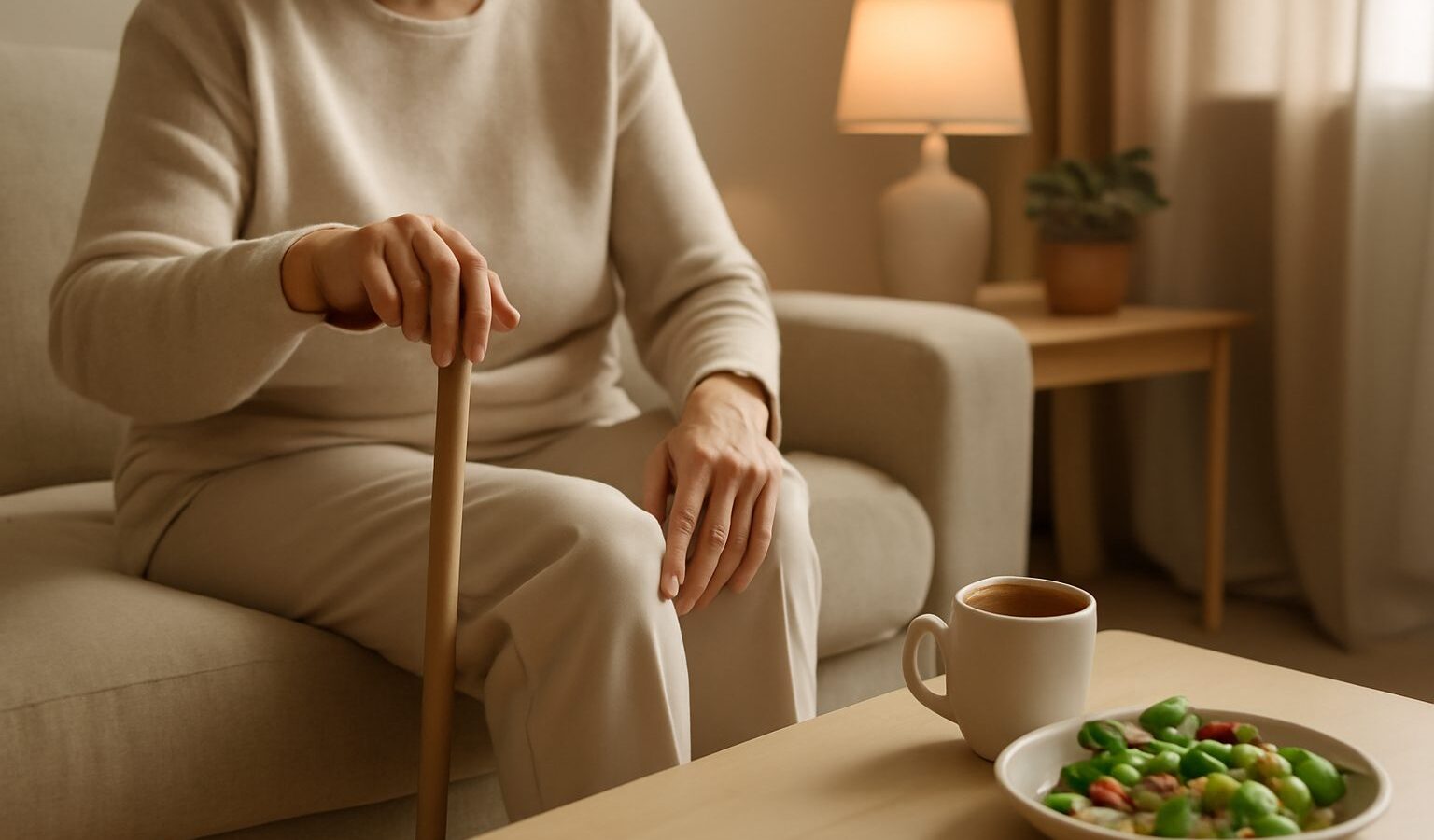
Knee arthritis is one of the most common reasons older Singaporeans slow down. It can turn a walk to the market, a climb up HDB stairs or a squat at the toilet into something you dread. This guide on knee arthritis for seniors focuses on the knee specifically and on the everyday moments where it hurts most: walking, stairs, getting up from chairs and staying active. It is general information, not medical advice. Your doctor, polyclinic or physiotherapist should guide any treatment, and you can read our broader overview on managing arthritis in older age for other joints.

Why the Knee Is So Often Affected
The knee carries much of your body weight with every step, and it bends deeply when you sit, squat or climb. Over the years, the smooth cartilage that cushions the joint can wear thin. This is commonly called osteoarthritis, sometimes described as “wear and tear”. Other forms, such as rheumatoid arthritis or gout, can also affect the knee and need different care, which is why a proper diagnosis matters.
Common signs people notice include:
- Stiffness in the morning or after sitting for a while, which eases once you start moving.
- Pain that gets worse with stairs, squatting, kneeling or long walks.
- A grinding or creaking feeling in the joint.
- Swelling or warmth around the knee after activity.
- A sense that the knee may “give way”.
If your knee is suddenly very swollen, red and hot, you cannot bear weight, or you have had a fall, see a doctor promptly rather than managing it at home.
Getting a Diagnosis and a Care Plan
Many seniors put up with knee pain for years, assuming it is just old age. Seeing a doctor early helps you find out what kind of arthritis you have and what will help. A family doctor or polyclinic is a sensible first stop. They may examine the knee, ask about your daily activities, and arrange scans or refer you to a specialist or physiotherapist if needed.
Things worth bringing to the appointment:
- A short note of when the pain started, what makes it better or worse, and how it affects daily tasks.
- A list of all medicines and supplements you take, since some pain relievers interact with heart, kidney or stomach conditions.
- Questions such as “Which exercises are safe for me?” and “Should I use a walking aid?”
Knee arthritis often sits alongside other conditions such as high blood pressure or diabetes. Our guide to managing chronic conditions in older age explains how to keep several conditions organised. Check with your clinic or HealthHub about subsidy schemes such as CHAS (Community Health Assist Scheme) that may lower costs at participating clinics; eligibility and benefits are set by the government and can change.
Walking More Comfortably
It is tempting to stop walking when your knee hurts, but gentle, regular movement usually helps the joint and the muscles that support it. The aim is to walk smarter, not to stop.
- Choose your surface. Flat, even park connectors and void deck paths are kinder than uneven grass or steep slopes.
- Break it up. Several short walks across the day may suit you better than one long one.
- Wear supportive shoes. Cushioned soles and a firm grip matter more than style. Avoid worn-out slippers for longer walks.
- Pace yourself in the heat. Walk in the cooler morning or evening and carry water. Our tips on staying hydrated in older age are worth a read.
- Consider a walking aid. A walking stick, held in the hand opposite the painful knee, can take some load off the joint. A physiotherapist can advise on the right type and height.
Handling Stairs, Chairs and Toilets
Stairs and low seats are where knee arthritis tends to bite hardest. Small changes in technique can make a real difference.
| Daily situation | Easier way to do it | What to avoid |
|---|---|---|
| Going up stairs | Lead with the stronger leg, hold the handrail, one step at a time | Rushing or carrying heavy bags in both hands |
| Going down stairs | Lead with the painful leg, keep a firm grip on the rail | Skipping the rail or looking away from the steps |
| Getting up from a chair | Shuffle forward, feet slightly back, push up with arms on armrests | Very low, soft sofas without arms |
| Using the toilet | Use grab bars or a raised toilet seat if squatting is painful | Squat toilets or deep crouching when the knee is sore |
| Picking things off the floor | Use a reacher tool or bend at the hips with support | Deep kneeling on hard floors |
A simple way to remember stairs is “up with the good, down with the bad”. Where you have a choice, use lifts, ramps or escalators on bad days without guilt.
Making Your Home Knee-Friendly
A few adjustments around the flat can save your knees thousands of painful movements a year.
- Raise low beds and chairs, or choose firm seats with armrests.
- Install grab bars near the toilet and shower. HDB households may be able to apply for home modifications under the Enhancement for Active Seniors (EASE) programme; check the current eligibility and items covered with HDB.
- Use non-slip mats in the bathroom and keep floors dry and clutter-free.
- Store everyday items at waist to shoulder height so you are not crouching or climbing.
- Use a shower chair if standing for long is tiring.
Staying Active and Strong
Strong thigh and hip muscles act like shock absorbers for the knee. Many seniors find their pain eases when these muscles get stronger, but the right programme depends on your condition, so ask a physiotherapist before starting.
Activities often suggested for people with knee arthritis include:
- Gentle strengthening exercises shown by a physiotherapist, such as leg raises while seated.
- Water-based exercise, where the water supports body weight.
- Stationary cycling at low resistance.
- Tai chi or gentle group exercise classes at community centres or senior activity centres.
Stop and seek advice if an exercise causes sharp pain or swelling that lasts for hours afterwards. Mild discomfort that settles quickly is usually less of a concern, but your physiotherapist can tell you what is normal for you.
Weight also matters. Every kilogram you carry is felt by the knees on each step, so a balanced diet helps. See eating well as you get older for ideas that suit older appetites.
Managing Pain Day to Day
Alongside exercise, many people use a mix of simple measures. Discuss these with your doctor or pharmacist so they suit your health and medicines.
- Heat or cold. Warmth can ease stiffness; a cold pack wrapped in a cloth may help after activity if the knee feels swollen.
- Pain relief. Only take medicines, including over-the-counter creams and tablets, as advised by your doctor or pharmacist.
- Knee supports. Braces or sleeves help some people feel more stable; get advice on fit.
- Rest wisely. Balance activity with short rests, rather than long periods of sitting still.
- Further treatment. For some people, doctors may discuss injections or surgery such as knee replacement. These are individual decisions to make with a specialist.
Keeping Your Spirits and Social Life Up
Knee pain can quietly shrink your world. People skip outings because they worry about stairs or long walks, and that can lead to isolation. Plan outings to places with lifts and seating, go with a friend, and keep in touch with neighbours and family. Living well with knee arthritis is about protecting both the joint and the active, connected life you enjoy.
Frequently Asked Questions
Should I stop walking if my knee arthritis hurts? Usually not entirely. Gentle, regular movement tends to help the joint and the muscles supporting it, so aim to walk smarter, with shorter walks on flat surfaces. Stop and get advice if there is sharp pain or swelling that lasts for hours.
Which exercises are good for knee arthritis in the elderly? Often suggested options include gentle strengthening such as seated leg raises, water-based exercise, low-resistance stationary cycling and tai chi. The right programme depends on your condition, so ask a physiotherapist before starting.
Which hand should I hold a walking stick in for a painful knee? The hand opposite the painful knee, which takes some load off the joint. A physiotherapist can advise on the right type and height of stick, as a wrong fit can cause other problems.
Are there grants to make an HDB flat easier for arthritic knees? HDB households may be able to apply for home modifications such as grab bars under the EASE programme. Eligibility and items covered change, so check the current details with HDB before applying.
Does losing weight help knee arthritis? It can, because the knees feel every kilogram you carry on each step. A balanced diet suited to older appetites is a sensible start. Ask your doctor or a dietitian before making big changes, especially if you have other conditions.
Official sources: HealthHub
Further reading: Managing Gout in Older Age: A Singapore Guide