
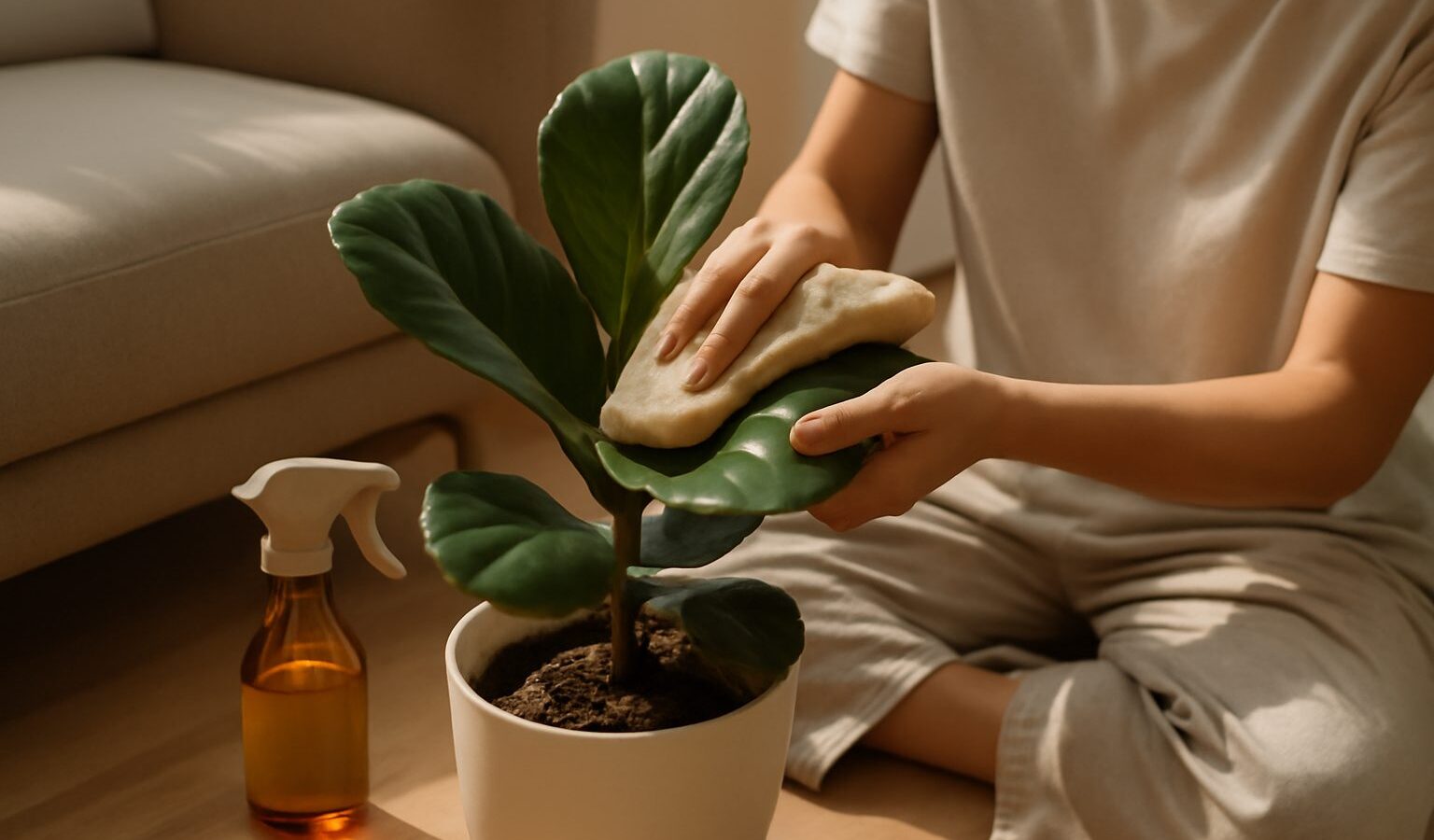
It is the easiest houseplant job to forget, yet one of the most rewarding once you start. Leaves are working surfaces, gathering light and breathing, and when they are coated in a fine film of dust they simply cannot do their job as well. Cleaning plant leaves in Singapore takes only a few minutes, costs nothing but a bowl of water, and instantly makes a plant look glossier and healthier. Better still, it gives you a regular, close-up chance to catch pests before they become a problem.
Why Dusty Leaves Matter
Plants feed themselves through photosynthesis, using light captured by their leaves to make energy. A layer of dust acts like a dirty window, blocking some of that light before it ever reaches the green tissue that needs it. In our indoor spaces, where light is already limited compared with the bright outdoors, every bit counts. A dusty plant grows more slowly and looks duller than a clean one in the very same spot.
Dust also clogs the tiny pores, called stomata, that leaves use to breathe and release moisture. When those pores are blocked, the plant works less efficiently. On top of that, a fine coating of grime and household grease can trap pests and make it harder to spot them. So while wiping leaves might feel like mere housekeeping, it genuinely helps the plant function, not just look prettier.
Which Plants Collect the Most Dust
You will notice dust builds up fastest on certain plants, and those are the ones to prioritise. Large, flat, smooth-leaved plants are the biggest dust collectors: think fiddle-leaf figs, rubber plants, monsteras, peace lilies and philodendrons. Their broad surfaces sit like little shelves gathering grime, and because each leaf is large, the loss of light really shows.
Plants near the source of dust need more frequent attention too. Anything close to open windows facing a busy road, near a kitchen where cooking grease drifts, or beside a fan that stirs up household dust will dirty faster. Fuzzy or textured leaves, such as those on African violets or some begonias, trap dust differently and need a gentler approach, which we will come to. Fine-leaved ferns and plants with many small leaflets rarely need wiping and are better rinsed instead.
The Gentle Way to Clean Leaves
For most smooth-leaved plants, plain water is all you need, and the method is simple. Support each leaf from underneath with one hand and wipe the top surface gently with a soft, damp cloth or sponge held in the other. Work from the base of the leaf towards the tip, following the natural direction of growth. Room-temperature water is kinder than cold, and you rarely need any soap; if leaves are greasy, a single drop of mild soap in a bowl of water is plenty, and never use leaf-shine products, which can clog the pores you are trying to unblock.
Take it slowly and treat each leaf with care.
- Support before you wipe. Cradle the leaf from below so you do not bend or crack it as you clean the top.
- Be gentle on new growth. Young, soft leaves tear easily, so save your firmest wiping for mature foliage.
- Rinse small-leaved plants instead. For ferns and dense, leafy plants, a gentle shower or a dunk in room-temperature water beats wiping leaf by leaf.
- Keep fuzzy leaves dry. For African violets and hairy-leaved plants, brush dust off gently with a soft, dry brush rather than a wet cloth.
Leaf Cleaning at a Glance
| Leaf type | Best method | How often |
|---|---|---|
| Large, smooth (monstera, rubber plant) | Wipe with damp cloth | Every few weeks |
| Small, many leaflets (ferns) | Gentle rinse or shower | As needed |
| Fuzzy or hairy (African violet) | Soft dry brush | Occasionally |
| Near a road or kitchen | Wipe more often | More frequently |
| Delicate new growth | Light wipe only | Sparingly |
Check the Undersides Every Time
Here is the habit that turns leaf-cleaning from a chore into your best pest defence. Every time you wipe a plant, turn the leaves over and look at the undersides. This is exactly where sap-sucking pests like spider mites, mealybugs, scale and aphids love to hide, tucked out of sight and out of the light. Most infestations begin quietly on the underside of leaves and along the leaf joints, long before you would notice damage from above.
As you clean, run your eyes and cloth over these hidden surfaces. Look for tiny moving specks, fine webbing, white cottony blobs, sticky residue or little brown bumps. Catching a handful of pests early, and wiping them straight off, is far easier than tackling a full outbreak later. In our warm climate pests breed quickly all year round, so this routine inspection is one of the most valuable things you can do for your collection.
A Simple Routine That Works
You do not need a strict schedule. The easiest approach is to fold leaf-cleaning into something you already do, such as your regular watering. Every few weeks, as you water, wipe down the biggest, dustiest leaves and give everything a quick once-over for pests. Small-leaved and dense plants can be taken to the shower or a shaded outdoor spot and rinsed gently, which cleans and refreshes them in one go.
A word of care in the tropics: after any rinsing, let plants drain and dry in an airy spot rather than sitting in water, both to avoid rot and to deny mosquitoes anywhere to breed, following NEA’s advice on removing stagnant water. Clean leaves catch more light, breathe more freely and reveal pests early, so this humble little task quietly rewards you with healthier, better-looking plants.
Explore more
Cleaning is the perfect moment to spot trouble, so pair it with Common Houseplant Problems and Fixes. For the big glossy-leaved plants that most need dusting, see How to Care for a Monstera and Caring for Pothos and Philodendrons. New to plant care? Start with A Beginner’s Guide to Houseplants.