
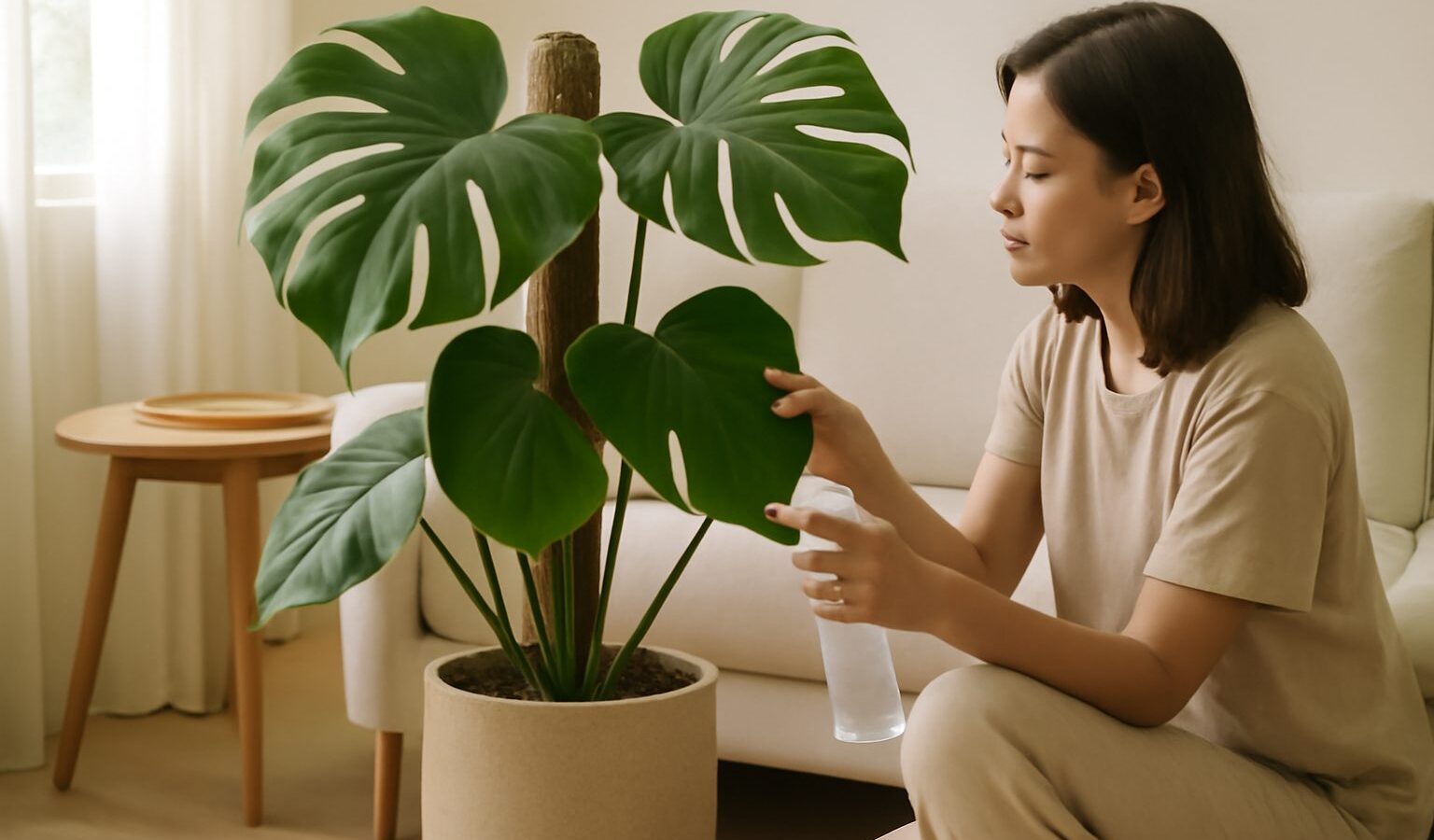
The monstera, with its big split leaves and easy-going nature, has become one of the most popular houseplants in Singapore homes, and for good reason. It is forgiving, it grows fast in our warmth, and a single plant can turn a bare HDB corner into a small jungle. If you have just brought one home, or you are eyeing that glossy specimen at the nursery, this guide to monstera care in Singapore covers everything a beginner needs, from where to place it to how to water it without breeding mosquitoes.
Meet the Monstera and Why It Loves Singapore
The plant most people mean by “monstera” is Monstera deliciosa, also called the Swiss cheese plant for the holes and splits in its mature leaves. It is a climbing tropical plant native to the rainforests of Central America, where it scrambles up tree trunks in warm, humid, dappled shade. That origin story is good news for us: our year-round heat and humidity are almost exactly what it wants. Where gardeners in cooler countries fuss over heating and grow lights, we mostly just have to give it a bright spot and not drown it.
Because it grows quickly here, a monstera rewards a little care with fast, visible progress. New leaves can unfurl every few weeks in the warmer months, and each one tends to be bigger and more split than the last. That sense of momentum makes it a genuinely encouraging first plant.
Finding the Right Spot: Light and Placement
Monsteras want bright, indirect light. Think of a position near a window where the room is clearly bright, but the leaves are not sitting in the full blast of the afternoon sun. Our tropical sun is intense, and direct rays through glass can scorch the leaves, leaving pale or brown patches.
Good spots in a typical Singapore home include:
- A metre or two back from a bright window, out of direct beams.
- A sheltered balcony that gets morning light but shade in the harsh afternoon.
- Near an east-facing window, where the sun is gentler.
Too little light is the more common mistake. In a dim inner corridor or a windowless corner, a monstera will survive but sulk: new leaves come out smaller, stay solid without their signature holes, and the stems stretch and lean towards the nearest light. If that happens, move it somewhere brighter. Turning the pot a quarter every week or two also keeps growth even rather than one-sided.
Watering, Humidity and Keeping Mosquitoes Away
Overwatering kills far more monsteras than underwatering. The simple rule: water thoroughly, then wait until the top two to three centimetres of soil feel dry before watering again. Poke a finger in to check rather than watering on a fixed schedule, because how fast the soil dries depends on your light, pot and the weather. In our humidity a monstera in a plastic pot might only need watering once or twice a week.
Always use a pot with drainage holes and let the excess run out fully. This is where a Singapore-specific warning matters: never leave water standing in the saucer or tray under the pot. Stagnant water in saucers, trays and container bases is a classic breeding ground for Aedes mosquitoes, and dengue is a real, year-round risk here. Tip out any collected water within a day, keep saucers dry between waterings, and follow NEA’s anti-mosquito advice. Avoid letting soil harden into a compacted crust too, as that can trap water on the surface. A dry saucer is both healthier for the plant and safer for your household.
Humidity is rarely a problem in Singapore, so you can skip the misting rituals you see in overseas guides. If your monstera sits directly under a strong air-conditioner vent, though, move it, as the constant dry, cold draught can brown the leaf edges.
Feeding, Support and Repotting
A monstera in fresh potting mix does not need feeding straight away. Once it is settled and actively growing, a balanced liquid fertiliser roughly once a month during the main growing period is plenty. Always follow the product label for dosage, keep fertilisers and any pest treatments away from children and pets, and lean towards eco-friendly or organic options where you can. More feed does not mean faster growth; it usually just means burnt roots.
As the plant matures it will want to climb. Pushing a moss pole or a sturdy stake into the pot gives the aerial roots something to grip, encourages bigger, more split leaves, and stops a large plant from flopping over. Tie the stems loosely to the support as it grows.
Repot every year or two, or when roots start creeping out of the drainage holes and the plant dries out very quickly. Move it up to a pot just one size larger, use a well-draining aroid or general potting mix rather than heavy garden soil, and water it in. Pruning is simple: snip off any yellow or damaged leaves at the base, and you can trim leggy stems to keep the shape. Those cuttings, if they include a node, root easily in water and become free new plants to share.
Choosing Your Monstera: Common Types
Not every “monstera” on the shelf is the same plant, and some suit small spaces better than others. Here is a quick comparison of the types you are most likely to meet at a local nursery.
| Type | Leaf and size | Best for | Care level |
|---|---|---|---|
| Monstera deliciosa | Large leaves with splits and holes, spreads wide | A feature plant with floor or shelf space | Easy |
| Monstera adansonii | Smaller leaves, delicate holes, trailing or climbing | Hanging pots, shelves, tighter HDB spaces | Easy |
| Monstera “Thai Constellation” | Cream and green variegated leaves, slower growing | Collectors wanting a statement plant | Moderate |
| Mini monstera (Rhaphidophora) | Small split leaves, fast climber, not a true monstera | Narrow spots and quick vertical greenery | Easy |
Where to Buy and What You Need to Start
You will find monsteras almost everywhere plants are sold: the nurseries along Thomson Road and out at Sungei Tengah, Far East Flora, community nurseries, IKEA and plenty of online sellers. Prices swing a lot with size and variety, from budget small pots to premium large or variegated specimens, so check with the nursery or shop rather than fixing on a number. A small, healthy plant is the friendliest and cheapest way to start, and it will grow fast anyway.
To get going you really only need a monstera in a pot with drainage holes, a saucer you keep dry, a bag of well-draining potting mix and a watering can. Add a moss pole later once it starts climbing. Start with one plant, keep the saucer empty, watch it push out a new leaf, and you will quickly see why monstera care in Singapore has such a devoted following.
Explore more
If this is your first plant, our beginner’s guide to houseplants in Singapore covers the basics, and the best low-maintenance indoor plants pairs beautifully with a monstera. When yours grows too big for its pot, follow our guide on how to repot a houseplant, or troubleshoot any yellow leaves with common houseplant problems and fixes.