

Every year, at several points on the calendar, Singapore’s homes fill with visitors. Relatives arrive in fresh clothes, neighbours drop by with small gifts, and dining tables groan under snacks and sweets. This custom of house visiting in Singapore, moving from home to home to greet family and friends during festive seasons, is one of the most cherished threads of local life. It is where kinship is renewed, where children learn their place in a wide family, and where the country’s many communities open their doors to one another.
House visiting is not unique to any one group. It appears, in different forms, across the major festivals celebrated here, and it has deep roots in the traditions immigrants carried with them and adapted to island life. Over generations it has also become a shared national habit, with friends and colleagues of all backgrounds visiting during one another’s festivals. To understand the custom is to understand something of how Singapore holds together.
Roots and Meaning of the Custom
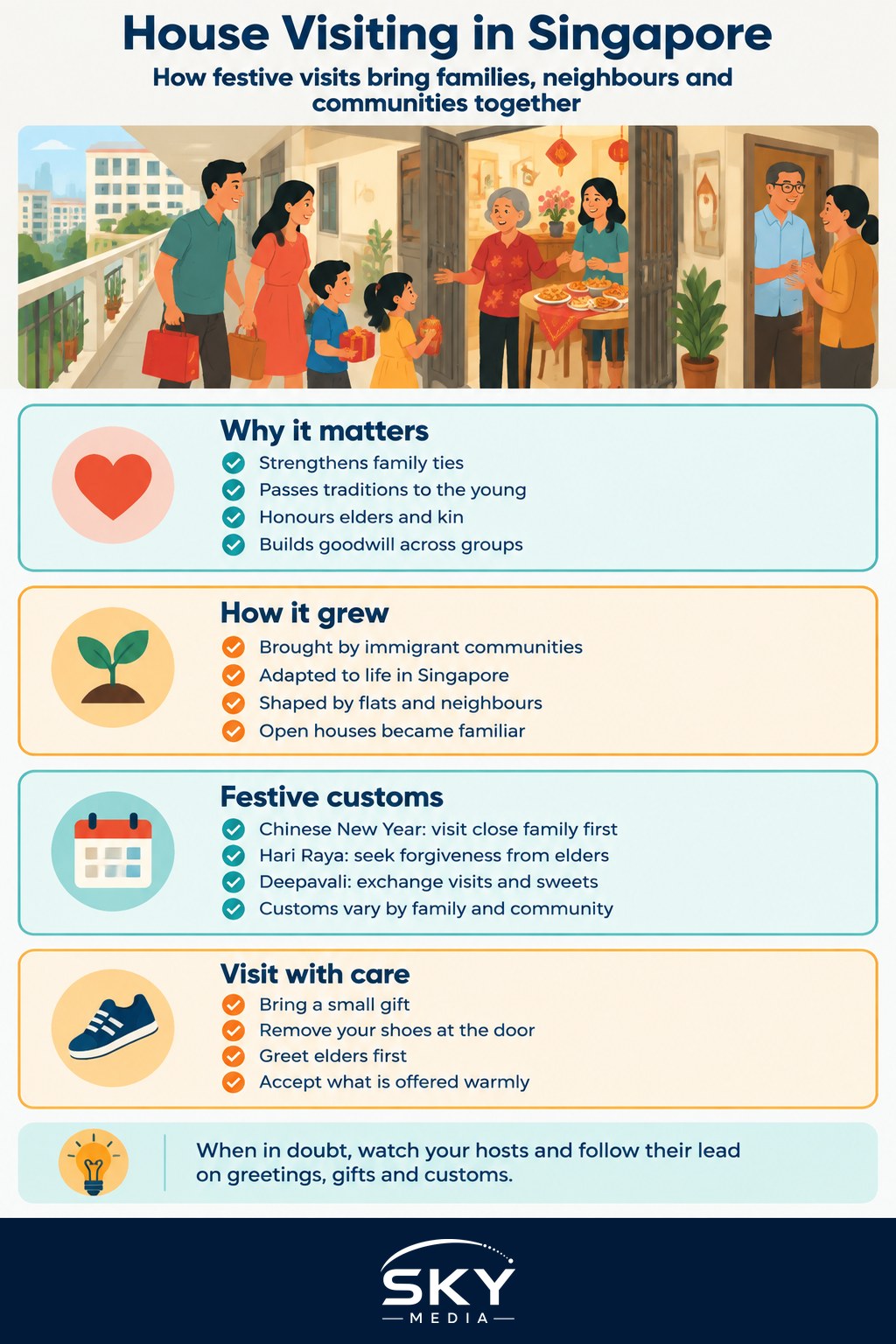
The practice of visiting during festivals travelled with the communities who settled in Singapore over the nineteenth and twentieth centuries. Chinese migrants brought the reunion and new year traditions of their home regions, Malay families continued the customs of the Muslim festive calendar, and Indian settlers maintained the visiting patterns tied to their own celebrations. In a new land, far from ancestral villages, these visits took on added weight, knitting scattered kin into a community and passing memory from elders to the young.
At its heart, house visiting is about relationships. A visit says that a bond is worth the effort of travel, dressing well and setting time aside. Elders are honoured, quarrels are quietly set down for the season, and the youngest generation is introduced to aunts, uncles and cousins they might otherwise rarely see. Food is central, as sharing a meal or a snack seals the goodwill of the visit. The specific dishes, greetings and gestures differ by community, dialect group and family, but the underlying intention is remarkably similar across cultures.
Housing has shaped the custom in distinctly Singaporean ways. As families moved into flats, the neighbourly nature of visiting grew, with doors along a corridor open to one another during festivals. The idea of the open house, where a family welcomes a wide circle of guests over a day or several days, has become a familiar feature of local celebrations and a natural bridge between communities.
Visiting Across the Festivals
During Chinese New Year, visiting follows a well-known rhythm. The first day is often reserved for the closest family, with married couples visiting the husband’s side and, by tradition in many families, the wife’s family visited on the second day, though customs vary. Younger people offer new year greetings to elders and receive red packets in return, and visitors bring gifts such as mandarin oranges, presented in pairs as a wish for good fortune. Trays of festive snacks appear on every table, and the visiting can stretch across the fifteen days of the season. Our overview of Lunar New Year in Singapore sets out the wider customs of the period.
Hari Raya Aidilfitri, which marks the end of the fasting month of Ramadan for Muslims, is another great season of visiting. Families gather first to seek forgiveness from parents and elders, a gentle and moving ritual at the heart of the day, before the round of open houses begins. Homes are decorated, festive dishes are laid out, and guests of all backgrounds are welcomed with warmth. Children often receive small green packets of money. The tradition of Hari Raya in Singapore shows how these visits express both family devotion and open hospitality.
Deepavali, the festival of lights celebrated by many Hindus, brings its own visiting traditions. Homes are cleaned and lit, doorways are decorated, and families exchange visits and sweets in a spirit of renewal and goodwill. Here too, friends and colleagues from other communities are often invited to share in the celebration, and the open house has become a warm point of contact across Singapore’s cultural lines.
What binds these different festivals together is the shared grammar of the visit. Bring a small gift, remove your shoes at the door, greet the elders first, accept what you are offered, and carry yourself with warmth and respect. Because customs differ from one family and community to the next, the surest guide is always to watch your hosts and follow their lead. For visitors unsure of the details, our guide to social etiquette and norms in Singapore offers a gentle starting point.
House visiting has changed with the times. Busy schedules, smaller families and messaging apps have all reshaped how people keep in touch, and some worry that the custom is thinning. Yet the core impulse endures. Each festive season, the doors still open, the tables still fill, and the quiet work of visiting still stitches Singapore’s families and communities a little closer together. In a fast-moving city, that unhurried journey from home to home remains one of the most human things the calendar offers.