
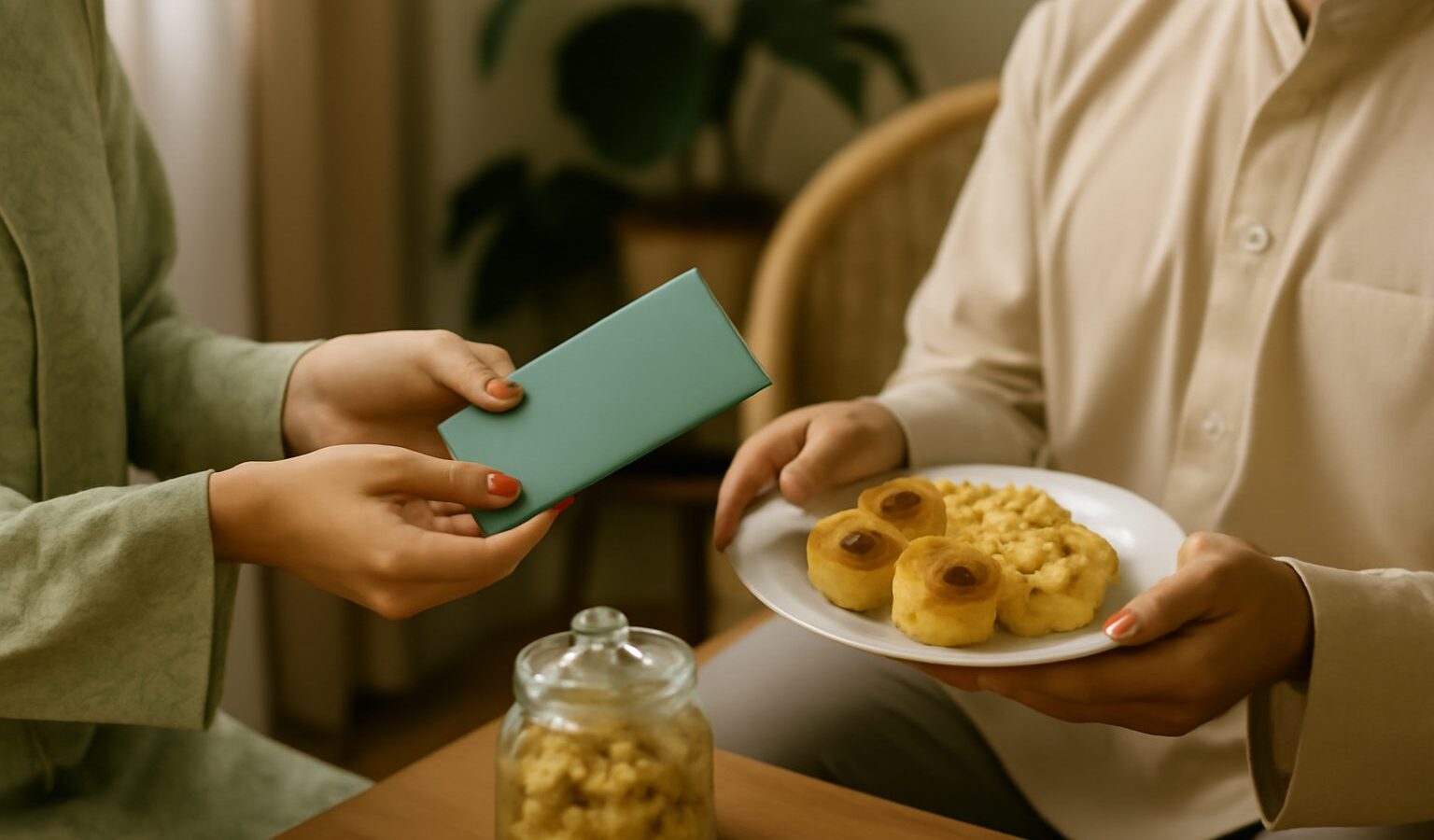
An invitation to a friend’s or colleague’s home during Hari Raya Puasa is a lovely gesture, and most hosts are simply happy to see you. Still, it is natural to wonder what to bring, what to wear and how to greet everyone at the door. This guide to Hari Raya visiting etiquette covers the practical details, from gift ideas to small manners that show you care.
Customs vary from family to family, so treat these as commonly seen practices rather than strict rules. When in doubt, a friendly question to your host is always welcome.

Why Visiting Matters During Hari Raya
Hari Raya Puasa (also called Hari Raya Aidilfitri) marks the end of Ramadan, the Muslim fasting month. Beyond prayers on the first morning, the celebration is very much about visiting. Families go from house to house, starting with elders, and many hold open houses where relatives, neighbours, friends and colleagues drop by throughout the day.
Visiting does not end after the public holiday. Many families continue receiving guests on weekends throughout Syawal, the month after Ramadan, so an invitation two or three weeks after the holiday is perfectly normal.
The spirit of the occasion is forgiveness and reconnecting. Being present and sincere matters far more than any gift you carry.
What to Bring: Gift Ideas That Work
You are not obliged to bring anything to an open house, but a small gift is a thoughtful touch, especially if it is your first visit. The golden rule is simple: food gifts should be halal, and alcohol should never be brought.
Good choices include:
- Festive cookies (kuih raya). Pineapple tarts, almond cookies and other bite-sized treats are classic. Buy from shops or bakeries displaying halal certification from MUIS (the Islamic Religious Council of Singapore).
- Dates. Often enjoyed during Ramadan and Hari Raya, a nicely packed box is a respectful gift.
- Cakes or kek lapis. Layered cakes are a festive favourite. Again, check for halal certification.
- Fruit. A simple fruit basket suits almost any household.
- Non-food gifts. A small home item, decorative piece or something for the children works well if you are unsure about food.
Avoid homemade food unless you know your kitchen meets your host’s dietary standards. A kitchen that also handles pork or alcohol may not be acceptable, even if the dish itself contains neither. Shop-bought halal items take the guesswork out.
If you would like to compare gifting customs across festivals, our guide on what to bring when visiting during Chinese New Year shows how expectations differ.
Duit Raya: The Green Packets
Duit raya is money given in small packets, traditionally green, to children and sometimes to elderly relatives. It is similar in idea to red packets at Chinese New Year, but the customs around it are relaxed.
- Givers are usually working adults or married couples, mostly within the family or close circle.
- As a non-Muslim guest, you are not expected to give duit raya. Some guests choose to give a small packet to the host’s children as a friendly gesture, which is usually appreciated.
- Amounts are typically modest. It is the gesture that counts, and there is no fixed figure.
- Hand the packet to the child, ideally with the parents present, using your right hand.
Gift and Gesture Guide at a Glance
| Item or gesture | Suitable? | Notes |
|---|---|---|
| Halal-certified cookies or cakes | Yes | Look for the MUIS halal certification mark |
| Box of dates or fruit basket | Yes | Safe, practical and widely appreciated |
| Small duit raya for the host’s children | Optional | A kind gesture; not expected from non-Muslim guests |
| Homemade food from a non-halal kitchen | Best avoided | Hosts may not be able to eat it |
| Alcohol or anything containing pork | No | Never appropriate as a gift |
| Coming empty-handed | Fine | Your presence is what matters most |
What to Wear to a Hari Raya Visit
Modest clothing is the safest choice. For most guests, that means:
- Tops that cover the shoulders, with sleeves preferred
- Long pants, or skirts and dresses well below the knee
- Clean, neat clothes in bright or festive colours
Many families coordinate outfits in a chosen colour each year, and you may see beautiful baju kurung and baju Melayu. Guests are welcome to wear traditional clothing if they like, but neat smart casual is perfectly fine. Our guide on what to wear for Hari Raya goes into styles and fabrics in more detail.
Wear shoes or sandals that slip on and off easily, as you will remove them at the door, and make sure your socks are presentable.
Greetings and Arrival Manners
What to say. “Selamat Hari Raya” is the standard greeting. You may also hear “Selamat Hari Raya, maaf zahir dan batin”, which asks forgiveness for any wrongs, physical or emotional. Saying it back, even imperfectly, is warmly received.
The salam. A traditional greeting where hands are lightly clasped and then brought to the chest. Younger family members may raise an elder’s hand towards their forehead or lips as a sign of respect. Guests are not expected to do this. Follow your host’s lead.
Handshakes across genders. Some Muslims prefer not to shake hands with members of the opposite sex. If someone places their hand on their chest instead of extending it, simply smile and do the same. No one will be offended by a respectful nod.
At the door. Remove your shoes before entering. Greet elders first if they are present.
Being a Good Guest Inside the Home
- Use your right hand to give and receive gifts, food and drinks.
- Accept food graciously. Hosts usually prepare a spread of dishes such as ketupat, rendang and lontong. Try a little of what is offered. If you cannot eat something, a polite “thank you, I am full” is enough. Our Hari Raya food guide explains the common festive dishes.
- Mind prayer times. If family members step away to pray, carry on quietly.
- Keep visits reasonable. At busy open houses, other guests are arriving. An hour or so is usually comfortable unless your host invites you to stay.
- Be careful with photos. Ask before photographing people, especially elders and women who may prefer not to appear online.
- Say a proper goodbye. Thank your hosts, and offer the salam or a nod again on the way out.
For a broader look at home visiting manners in Singapore, our guide to housewarming and visiting etiquette covers everyday situations too.
A Quick Checklist Before You Go
- Confirm the date, time and address, and whether it is a family visit or an open house.
- Pick a halal-certified gift, or decide to go empty-handed.
- Prepare small duit raya packets if you plan to give them.
- Choose a modest, festive outfit and easy-to-remove shoes.
- Practise “Selamat Hari Raya, maaf zahir dan batin”.
With a little preparation, Hari Raya visiting etiquette becomes second nature. Arrive with a warm greeting, respect the home you are in, and enjoy the food and company.
Further reading: Visiting Family Graves on Hari Raya: Ziarah Kubur Etiquette in Singapore · Travelling to Malaysia or Indonesia for Hari Raya: Booking and Border Tips