
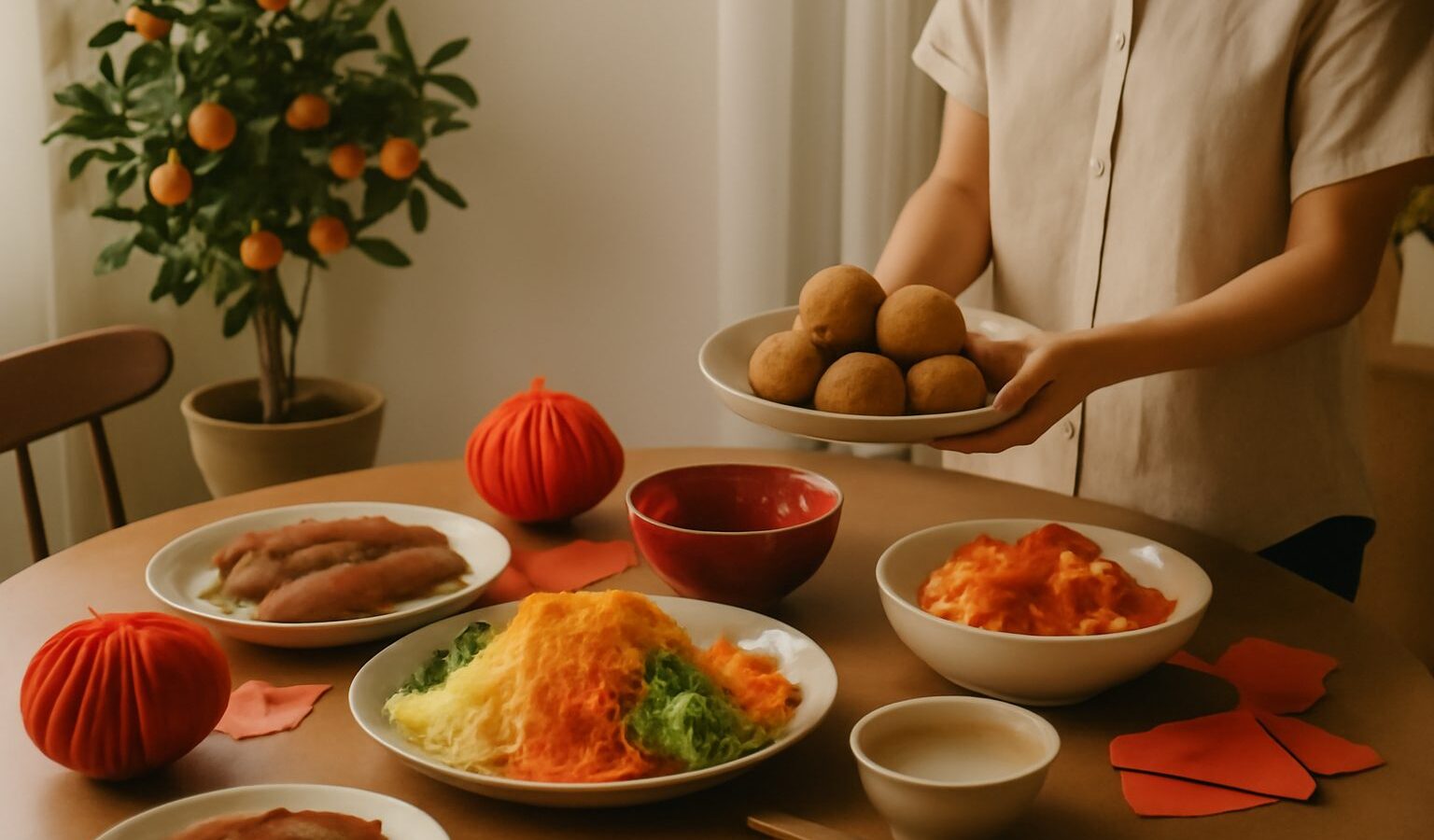
A CNY potluck reunion is a sensible answer to a familiar problem. Restaurant reunion dinner slots get booked out early and set menus can be expensive, while one person cooking an entire feast at home is exhausting. Sharing the cooking spreads the work and the cost, and many families find the meal feels more personal when everyone has brought something.
The catch is coordination. Without a plan, you end up with four plates of fried noodles, no vegetables and nowhere to put anything. This guide covers how to organise a shared reunion meal at home: who hosts, how to divide dishes, how to balance the menu, and how to keep food safe and the evening relaxed.

Decide the Host and the Basics Early
Agree on three things about two to three weeks before the eve of Chinese New Year:
- Who hosts. Often this is the eldest generation’s home, but it does not have to be. Pick the place with the most space, easiest access for elderly relatives and enough fridge room.
- Headcount. Count adults, children and elders separately. Children eat less, but elders may have dietary needs.
- Time. Reunion dinner is traditionally on the eve of Chinese New Year. Agree on an arrival time and a target time to eat so hot dishes are not sitting around for an hour.
Set up a family chat group just for the potluck. It keeps dish sign-ups, arrival times and reminders in one place instead of scattered across private messages.
The host should not also cook the most dishes. Their contribution is the venue, table setup, rice, drinks and cleanup support. That is already a lot.
Split the Menu by Category, Not by Dish
The single most useful trick is to assign categories rather than let everyone choose freely. Post a list in the group, and let each household claim a slot.
| Menu slot | Who usually suits it | What to watch for |
|---|---|---|
| Main meat or poultry dish | A confident cook with a big pot or oven | Needs reheating space at the host’s home |
| Fish or seafood dish | Someone living close to the host | Best cooked late or finished on site, as it does not travel well |
| Vegetable dishes (two) | Anyone, including busy households | Easy to forget, so assign them explicitly |
| Noodles or rice dish | A household that likes cooking in bulk | Counts as a filler, so one is usually enough |
| Soup | The host or a nearby household | Heavy to transport, keep it at or near the host’s home |
| Dessert and fruit | Younger relatives or those short on time | Can be bought, which takes pressure off |
Adjust the slots to fit your family’s size and traditions. For a large gathering, double the vegetable and main slots rather than adding more noodle dishes.
Keep the Symbolic Dishes Without Overloading One Person
Many families like to include dishes with auspicious meanings at the reunion meal, such as fish for abundance, or a prosperity toss (yusheng, the raw fish salad tossed by everyone at the table). Customs vary widely from family to family, so include the dishes that matter to yours rather than trying to cover everything.
Practical ways to handle these:
- Fish: if travel is an issue, the host steams it on site and another household brings the sauce and garnish.
- Yusheng: buying a ready-made kit or a prepared set is common and saves a lot of preparation. Assign one person to buy it and bring it chilled.
- Snacks and goodies: pineapple tarts, love letters and other festive snacks make easy contributions from people who do not cook. Our guide to CNY snacks and goodies runs through the classics.
Plan for Dietary Needs and Elders
A shared table should work for everyone. In the chat group, ask early whether anyone:
- Is vegetarian, or avoids beef or pork for religious or personal reasons
- Has food allergies, such as nuts or shellfish
- Needs softer, less salty or less oily food, which is common for elderly relatives
- Has young children who need plainer options
Ask each cook to label their dish with a small card listing main ingredients and any common allergens. It saves repeated questions at the table and helps guests with allergies eat safely. If a guest has a serious allergy, the safest approach is for them or their family to bring a dish they can be sure of.
Transport, Reheating and Food Safety
Potlucks fail most often in the hand-off between kitchens. A few habits help a lot:
- Cook in containers you can serve from. Disposable foil trays or oven-safe dishes save washing and transferring.
- Keep cold food cold. Use cooler bags or ice packs for salads, seafood, desserts and yusheng ingredients, especially in Singapore’s heat.
- Tell the host what needs reheating. The host can plan oven, stove and microwave time. Staggered arrivals help here.
- Do not leave cooked food out too long. In a warm home, perishable dishes should go back in the fridge once people have finished their first round, rather than sitting on the table all night.
- Send leftovers home properly. Ask everyone to bring a few clean containers so leftovers can be shared out and chilled quickly.
For more on food safety guidance, the Singapore Food Agency (SFA) publishes general advice for home cooks on its website.
Table Setup and Flow at the Host’s Home
A little preparation on the host’s side makes the evening calm:
- Set up a serving table separate from the dining table if space allows, so dishes can be laid out buffet style.
- Use a lazy Susan or two on the dining table if everyone is sitting together, which suits a family-style reunion.
- Prepare rice, plates, cutlery, serving spoons and drinks before guests arrive.
- Lay out a simple seating plan if elders need easy access to the table and the bathroom.
- Decorate lightly. A few festive touches like red table runners or mandarin oranges set the mood without much effort. Our CNY home decor ideas has more.
Splitting Costs Fairly
Not everyone contributes equally in effort or ingredients. A fish dish costs more than a fruit platter. Some families simply accept the imbalance as part of family life; others like to even things out. Options include:
- Rotating the expensive slots each year
- Asking the households with lighter slots to cover drinks or desserts
- Pooling a shared fund for the costly items, with one person buying them
Agree on this at the start, not at the end of the night. If you are setting a wider budget for the festive season, our guide on how to budget for Chinese New Year can help.
Cleanup Without Resentment
Assign cleanup roles in advance, just like the dishes. One household handles washing, another clears and wipes the tables, and the younger cousins take out the rubbish and recycling. With many hands, the work is done in twenty minutes and the host is not left alone with a mountain of dishes.
A well-planned CNY potluck reunion keeps what matters about the meal, the whole family at one table, while sharing the effort so that nobody spends the evening stuck in the kitchen.
Further reading: What to Bring to an Easter Potluck in Singapore · Christmas Potluck Dishes That Travel Well in Singapore