
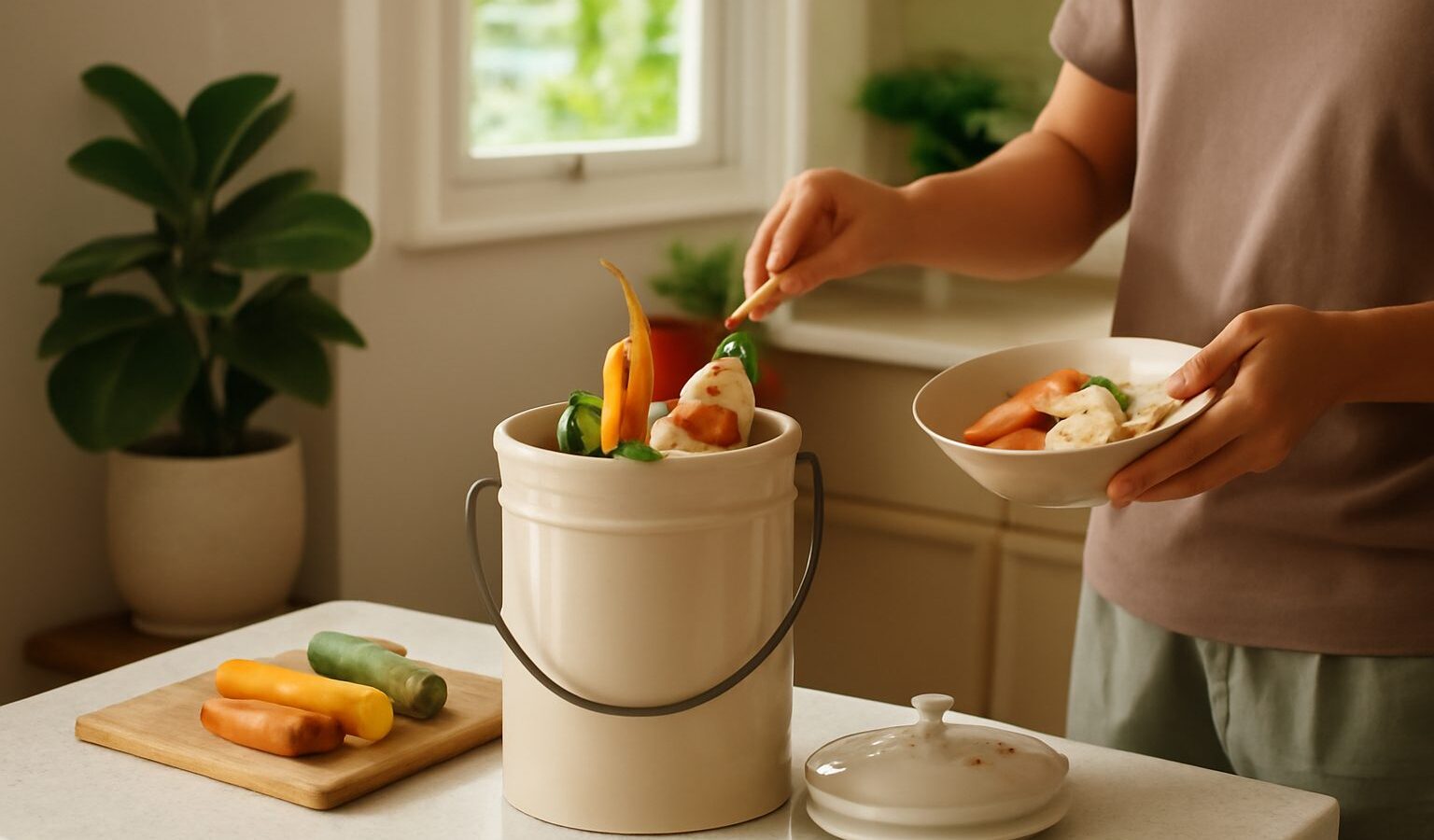
Whether you live in a high-rise condo or a terrace house with a small garden, there is a way to keep food scraps out of the general waste chute. The right choice depends less on how keen you are and more on your space, your building rules and how much time you have. Some households sign up for a composting service that collects scraps for them, others run a bin on the balcony, and landed homes can often handle everything in the garden.
This guide compares the practical options by home type, so you can pick one that fits your routine rather than one that ends up abandoned in a corner.
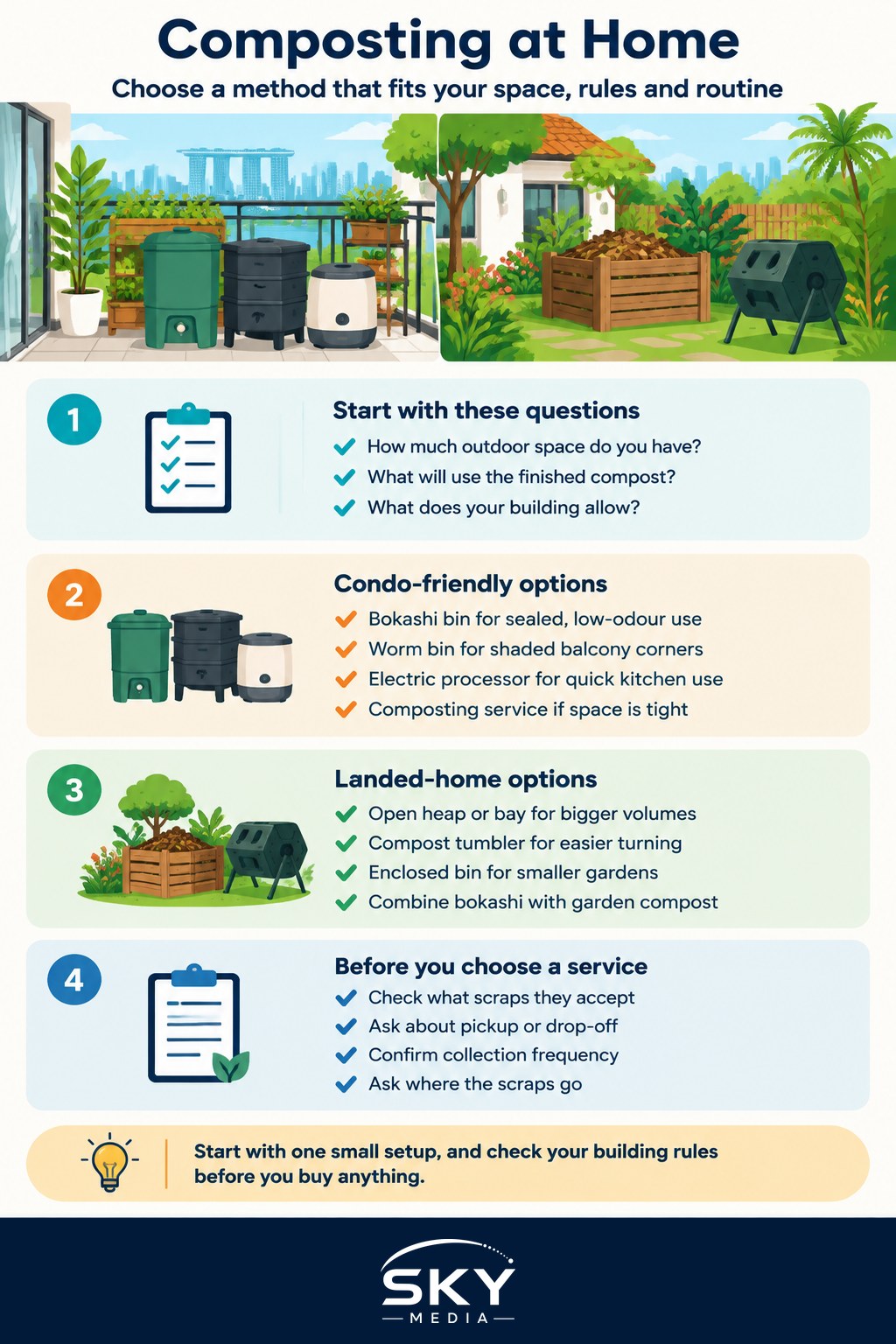
Start With Three Questions About Your Home
Before buying any equipment, answer these honestly:
- How much outdoor space do you have? A condo balcony or service yard is very different from a back garden with soil.
- What do you plan to do with the finished compost? If you have plants or a garden bed, homemade compost has an obvious use. If you only have a few pots, you may produce more than you can use.
- What does your building allow? Condo residents should check the house rules set by the MCST (Management Corporation Strata Title, the body that manages common property in a strata development). Some estates have views on smells, pests or items left in common corridors.
Your answers usually point clearly to one or two of the options below.
Options That Work in a Condo or Apartment
Condo living means limited space, shared walls and neighbours close by, so low odour and small footprint matter most.
Bokashi bins. Bokashi is a fermentation method that uses a bran inoculated with microbes. You layer food scraps with the bran in a sealed bucket, drain off the liquid every few days, and after fermentation the contents need to be buried in soil or added to a compost heap to finish breaking down. It handles cooked food and small amounts of meat better than most methods, and a sealed bin keeps smells contained. The catch is that you need somewhere for the fermented material to go, such as large planters, a friend’s garden or a community garden. Our guide to bokashi composting at home covers the method step by step.
Worm bins. A worm farm (vermicomposting) can sit in a shaded corner of a balcony or service yard. Worms process fruit and vegetable scraps into rich castings that potted plants love. They dislike heat, so keep the bin out of direct sun, and avoid citrus, onions, oily food and meat. If you are curious, read about starting worm composting at home before you buy a kit.
Electric food waste processors. These countertop machines dry and grind scraps into a reduced, odour-controlled material. They are convenient and quick, but they use electricity, take up kitchen counter space, and the output is not always the same as mature compost, so read the manufacturer’s guidance on how to use it in soil. Compare noise levels and cycle times before buying.
A composting service. If you have no space or simply do not want to manage a bin, some providers in Singapore offer scheduled collection of food scraps or a drop-off point where you leave sealed containers. Service models, coverage areas and pricing vary, so ask each provider what they accept, how often they collect and where the scraps go after collection.
Options That Suit Landed Homes
Landed homes (terraces, semi-detached and bungalows) usually have more room, more garden waste and soil to use the compost on.
Open heap or bay. A simple heap in a shaded corner, or a bay built from timber or bricks, handles large volumes of leaves, grass clippings and vegetable scraps. Turn it regularly, keep it moist but not soggy, and balance green material (fresh scraps, clippings) with brown material (dry leaves, shredded cardboard).
Compost tumblers. A rotating drum on a stand is easier to turn than a heap and keeps scraps off the ground, which helps with rodents. It suits households with a moderate amount of kitchen waste.
Enclosed compost bins. Plastic or wooden bins with lids sit directly on soil, letting worms and microbes move in from below. They are tidy and good for smaller gardens.
Combining methods. Many landed households run a bokashi bin indoors for cooked food, then bury the fermented contents in the garden heap. This covers almost all kitchen waste without attracting pests.
If you are planning a renovation, it is worth thinking about where a compost area will sit before the landscaping is finalised. Our guide to additions and alterations to landed homes explains the approval side of bigger works.
Comparing the Main Options
| Option | Best for | Space needed | Handles cooked food? | Main effort |
|---|---|---|---|---|
| Bokashi bin | Condos and landed homes | Small, indoors | Yes, in small amounts | Draining liquid, burying output |
| Worm bin | Balconies, service yards | Small, shaded | No | Feeding carefully, keeping cool |
| Electric processor | Busy households with no garden | Kitchen counter | Check the model | Emptying, cleaning, power use |
| Garden heap or bay | Landed homes with gardens | Large, outdoors | Not recommended | Turning and balancing |
| Compost tumbler | Landed homes, moderate waste | Medium, outdoors | Not recommended | Turning the drum |
| Composting service | Anyone short on space or time | Just a container | Ask the provider | Sorting and handover |
How to Choose a Composting Service
If collection or drop-off sounds easier than running a bin, compare providers on these points:
- What they accept. Some take only raw fruit and vegetable scraps, while others accept cooked food, bones or compostable packaging. Clarify before you sign up.
- Collection format. Doorstep pickup, a building-level bin arranged with your MCST, or a drop-off point you visit yourself.
- Frequency and containers. How often scraps are collected and whether sealed containers are supplied. In Singapore’s heat, scraps left for days can smell, so frequency matters.
- Where the scraps go. Ask whether they are composted locally, used in farms or community gardens, or processed another way. A good provider will be open about this.
- Contract terms. Check minimum periods, pauses for holidays and how to cancel.
For condos, it can be more efficient for residents to approach the MCST together about a building-wide arrangement rather than each household signing up separately.
Practical Tips Whatever Method You Pick
- Collect scraps in a small lidded caddy in the kitchen and empty it daily into your bin or service container.
- Chop scraps smaller so they break down faster.
- Keep fruit flies down by covering fresh scraps with a layer of brown material or bran.
- Watch moisture. Singapore’s humidity means bins can turn soggy. Add dry leaves or shredded paper if things get wet and smelly.
- Start small. Try one method for a few weeks before investing in more equipment.
For the basics of how compost forms and what to put in it, see how to make compost at home.
Common Mistakes to Avoid
- Putting a bin in full sun. Heat kills worms and can make bokashi and heaps smell.
- Adding meat or oily food to open heaps. This attracts rodents and flies. Keep such scraps for bokashi or a service that accepts them.
- Ignoring neighbours. In condos especially, any smell or pest problem affects others. Seal bins well and deal with issues quickly.
- Producing compost with nowhere to use it. Plan an outlet first, whether your own plants, a community garden or friends who grow vegetables.
Composting at home is very achievable in Singapore, whether you live twenty floors up or have a garden. Match the method to your space, check your building’s rules, and choose a composting service if you would rather hand the work to someone else. Even diverting part of your kitchen scraps makes a real difference over a year.
Official sources: National Environment Agency (NEA)
Further reading: Black Soldier Fly Composting at Home in Singapore