

If you have tried worm bins or bokashi and want something that eats food scraps even faster, black soldier fly composting is worth a look. Black soldier fly larvae, often shortened to BSF larvae, can work through a surprising amount of kitchen waste, including some items that worms struggle with, and leave behind a crumbly residue called frass that you can use in the garden. Singapore’s warm, humid climate suits them well all year round.
This guide focuses on how to set up and run a BSF larvae bin at home: how the life cycle works, what to feed, how to harvest, and how to keep things clean and neighbour-friendly. For other methods, see our guides to worm composting and bokashi composting.
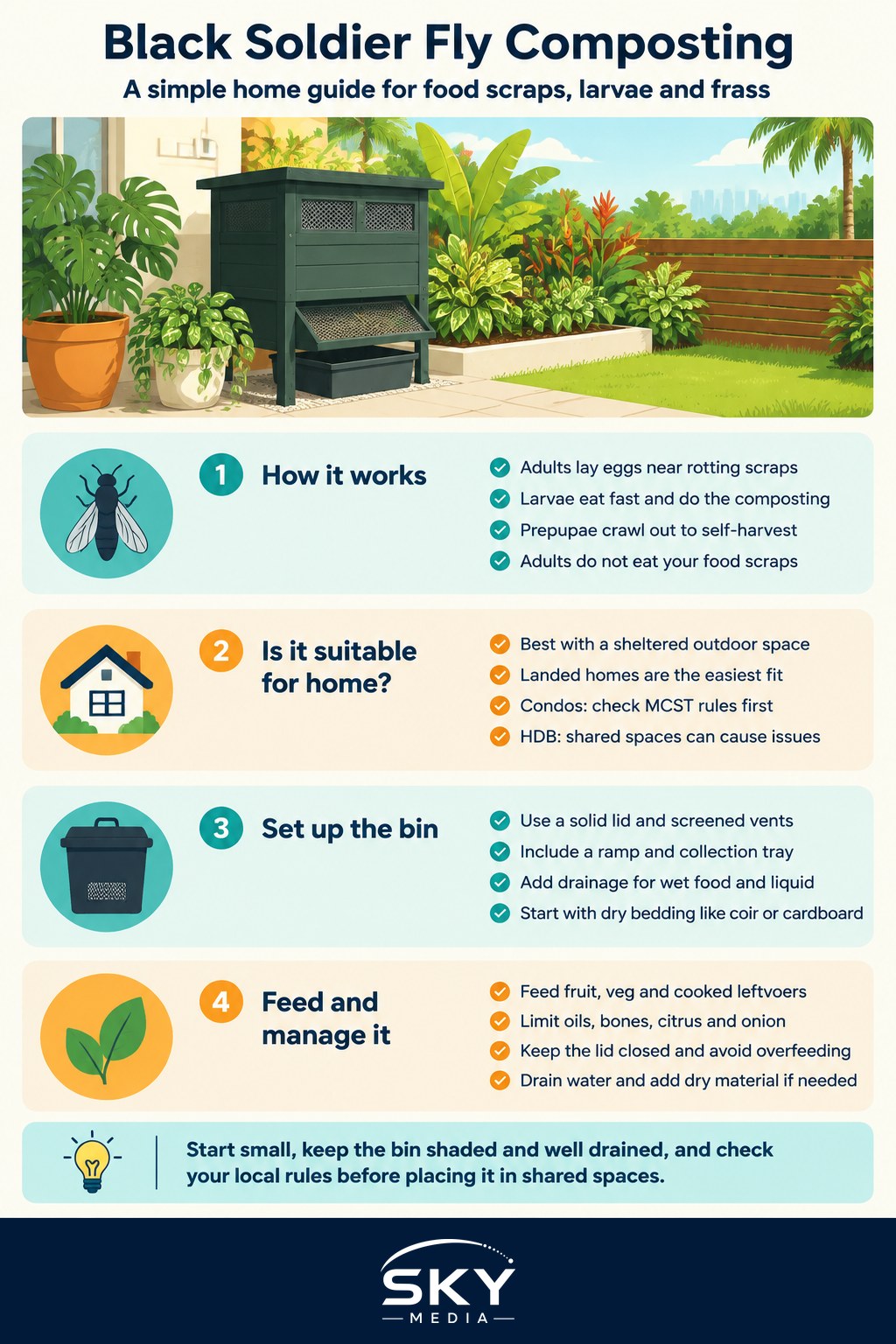
How Black Soldier Fly Composting Works
The black soldier fly is a common tropical insect. It looks a bit like a slim black wasp, but it does not sting or bite. The key to composting with it is the life cycle:
- Eggs. Adult females lay clusters of eggs in dry crevices close to rotting organic matter.
- Larvae. The larvae hatch and start feeding heavily. This is the stage that does the composting. They grow quickly and can eat a large share of their body weight in food each day when conditions are right.
- Prepupae. When fully grown, the larvae turn dark brown, stop eating and instinctively crawl upwards and away from the food to find a dry place to pupate. A good bin uses this behaviour to “self-harvest” them.
- Adults. Adult flies live for a short time, do not eat food scraps, and focus on mating and laying eggs.
Because adults do not feed on your food or rubbish, they are generally not the same nuisance as houseflies. A healthy BSF colony also tends to crowd out housefly larvae, though good management still matters.
Is a BSF Bin Right for Your Home?
BSF bins work best where you have a sheltered outdoor or semi-outdoor space and a steady supply of food scraps.
Landed homes with a garden or backyard are the easiest fit. You can place the bin in a shaded spot out of heavy rain.
Condos may allow a bin on a private balcony or in a garden plot, but check the rules with your management, known as the MCST (Management Corporation Strata Title), especially for shared areas. See our guide to composting options for condos and landed homes.
HDB flats are trickier. Common corridors should be kept clear, and anything that could cause smells, flies or water pooling may lead to complaints from neighbours. If you are in an HDB flat, a small, well-sealed indoor setup or a community garden bin is usually more practical. Check with your Town Council before placing anything in shared spaces.
Setting Up a BSF Larvae Bin
You can buy a purpose-made BSF bin or build a simple one. Either way, a good design includes:
- A solid container with a lid that keeps out rain and pests but has screened ventilation holes, so the bin does not overheat or become airless.
- A ramp or sloped side leading up to an exit hole, with a collection container underneath. Mature prepupae crawl up the ramp and drop into it, which saves you sorting them by hand.
- Drainage. BSF bins produce liquid if food is wet. A drain tap or a layer of dry bedding at the base helps, and liquid should be collected rather than left standing.
- A bedding layer. Start with a dry, absorbent base such as coconut coir, shredded cardboard or dry leaves.
Getting larvae. There are two common ways to start. You can buy starter larvae from local suppliers who sell them for composting or animal feed, or you can leave a bait of moist food scraps in the bin and wait for wild females to lay eggs nearby. Starting with purchased larvae is faster and more predictable.
Placement. Choose a shaded, sheltered spot. Direct afternoon sun can overheat the bin, and driving rain will flood it.
What to Feed and What to Avoid
BSF larvae have broad appetites, which is a big part of their appeal.
Generally good to feed:
- Fruit and vegetable peels, cores and trimmings
- Leftover rice, noodles, bread and cooked vegetables
- Coffee grounds and used tea leaves in moderation
- Small amounts of cooked meat or fish scraps, if your bin is well managed and sealed
Best to limit or avoid:
- Large bones and hard shells, which they cannot break down
- Heavy oils and very salty food in large amounts
- Lots of citrus peel or onion at once, which some colonies dislike
- Anything non-food, such as plastic, packaging, tissue with chemicals or pet waste
Chop scraps small and add only what the larvae can finish within a day or two. Overfeeding is the most common cause of smells.
Managing Smells, Moisture and Pests
A well-run BSF bin should smell earthy or mildly fermented, not rotten. Here is what to watch:
- Too wet. If the bin is sloppy or smells sour, stop adding wet food, drain any liquid, and mix in dry material such as coir or shredded cardboard.
- Too dry. If larvae are sluggish and food is drying out, add a little moist food. Do not pour in water.
- Mosquitoes. Never leave standing water in the bin, drain tap or collection tray. In Singapore, the National Environment Agency (NEA) enforces rules on mosquito breeding, so empty and clean any container that collects water.
- Houseflies and fruit flies. Keep the lid closed, bury fresh food under existing material, and do not overfeed.
- Mites, ants and rodents. Use a secure container, keep the area tidy, and place the bin off the ground on a stand if ants are a problem.
| Method | Speed | What it handles | Space and upkeep |
|---|---|---|---|
| Black soldier fly larvae | Very fast when the colony is active | Most food scraps, including small amounts of cooked food | Outdoor or sheltered spot, regular feeding and draining |
| Worm composting | Moderate | Mainly raw fruit and vegetable scraps | Indoors or outdoors, keep cool and moist |
| Bokashi | Fermentation in weeks, then needs burying or a soil bin | Most food scraps, including cooked food | Small indoor bucket, needs bran and a place to finish it |
| General compost heap | Slow | Garden waste and raw scraps | Needs garden space and turning |
Harvesting Frass and Larvae
Frass. Over time, the bin fills with a dark, crumbly mix of larval droppings, shed skins and leftover food. Every few weeks, or when the bin is getting full, scoop out the older material from the bottom, leaving active larvae behind. Let the frass dry or rest for a while before use. It can be mixed into potting soil or garden beds in modest amounts. Our guide on how to make compost at home covers how to blend it into a wider compost system.
Prepupae. The dark larvae that collect in the harvest container can be:
- Fed to pet birds, reptiles or fish that suit live or dried insect food, after checking with a vet or pet specialist about how much is appropriate
- Returned to a sheltered spot to pupate and become adults, which keeps your colony going
- Frozen and disposed of if you have more than you need
If you want your bin to keep running without buying new larvae, allow some prepupae to pupate nearby so adults can lay eggs back near the bin.
Getting Started This Week
- Decide whether you have a suitable sheltered space and check any condo or Town Council rules.
- Get a bin with a lid, ventilation, drainage and a harvest ramp.
- Add dry bedding and a starter batch of larvae.
- Feed small amounts of chopped scraps daily and watch moisture.
- Drain liquid, check for standing water, and harvest frass every few weeks.
Start small, learn how quickly your colony eats, and scale up from there.
Frequently Asked Questions
Can I keep a black soldier fly bin in an HDB flat? It is trickier than with a landed home. Common corridors should stay clear, and smells, flies or pooling water can lead to complaints. A small, well-sealed indoor setup or a community garden bin is usually more practical, so check with your Town Council before using shared spaces.
Do adult black soldier flies bite, sting or spread disease like houseflies? No, they do not sting or bite. Adults live briefly, do not feed on your food or rubbish, and mainly mate and lay eggs. A healthy colony also tends to crowd out housefly larvae, though good bin management still matters.
What do I do with the harvested larvae and frass? Frass can go into potting soil or garden beds in modest amounts after resting or drying for a while. Prepupae can be fed to suitable pets after checking with a vet, left to pupate to keep the colony going, or frozen and disposed of.
Why does my BSF bin smell, and how do I fix it? Overfeeding is the most common cause. Stop adding wet food, drain any liquid, mix in dry coir or shredded cardboard, and chop scraps smaller so larvae finish them within a day or two. A healthy bin smells earthy or mildly fermented.
How do I stop mosquitoes breeding in my compost bin in Singapore? Never leave standing water in the bin, drain tap or collection tray, and empty and clean any container that collects liquid. NEA enforces rules on mosquito breeding, so check drainage regularly and keep the lid closed.