
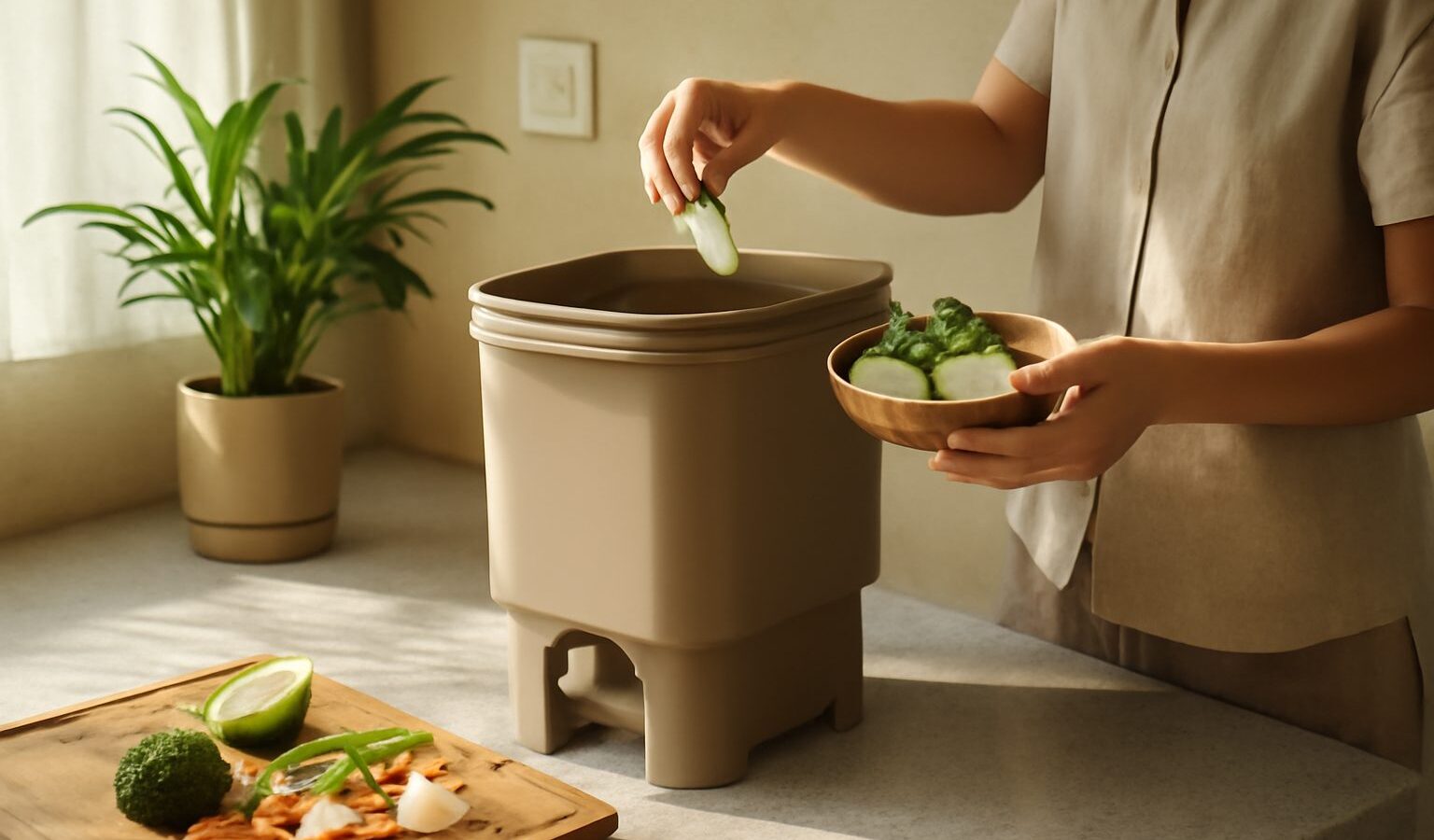
If you want to turn kitchen scraps into food for your plants but you live in a flat with no garden, bokashi composting singapore style is one of the tidiest options around. Bokashi is not the same as an open compost heap or a worm bin. It is a fermentation method: you seal your scraps in an airtight bucket with a bran that is coated in helpful microbes, and the microbes pickle the waste rather than rotting it. That makes it a great fit for small tropical homes, where an open pile in our heat and damp would quickly turn smelly and attract pests.

How bokashi works and why it suits small flats
A bokashi system is just two things: an airtight bucket with a tap at the bottom, and a bag of bokashi bran. You add a layer of scraps, sprinkle a handful of bran, press it down to squeeze out air, and close the lid tightly. The microbes on the bran work without oxygen, so keeping air out is the whole trick. Over one to two weeks the contents ferment. They do not look like finished compost at the end; they look pickled, holding their shape, with a sour, slightly sweet smell a little like vinegar. That sour smell is the sign it is working. A rotten or foul smell means air got in or it went wrong, and you should start again.
The big advantage for us is that bokashi is closed and compact. A single bucket tucks under the kitchen sink or sits on a service balcony, and because it is sealed there is no open food waste on show. That matters in an HDB flat where space is tight and where you do not want to invite ants, cockroaches, or flies. Unlike an open compost bin, a sealed bokashi bucket does not collect rainwater or become a mosquito risk, but if you keep any bucket or tray outdoors, still check that nothing holds standing water and follow NParks and NEA guidance on preventing mosquito breeding.
Another plus: bokashi can take food that ordinary composting and worm bins struggle with. Because it ferments rather than rots, you can add cooked food, rice, and small amounts of dairy. Be sensible with meat and bones. If you plan to bury the finished ferment in an open planter or shared garden bed, skip meat and fish, since buried animal scraps can still draw rats and other pests before they break down. Keep to fruit and vegetable trimmings, cooked grains, coffee grounds, and tea if the open-pile end worries you.
Setting up your bokashi bucket
You can buy a ready made bokashi bin or improvise one from two stacking pails, as long as the setup is airtight and lets you drain off liquid. Here is a simple routine:
- Add scraps in thin layers. Chop bulky items so they pack down.
- Sprinkle a handful of bokashi bran over each layer, more for wet or sugary waste.
- Press everything down firmly to remove air pockets. A plate or bag of water on top helps.
- Close the lid straight away and only open it to add more.
- Every day or two, drain the liquid from the tap.
That liquid, often called bokashi tea, is strong. Dilute it heavily with water before pouring it around plants, following the ratio on your bran packet or starting very weak and watching how plants respond. Undiluted, it can burn roots. It also works poured neat down drains to help keep them fresh. Do not drink it and do not use it on anything you are about to eat without proper dilution and washing.
Turning ferment into soil food
When a bucket is full, seal it and let it ferment for about two weeks before you deal with the contents. The pickled result is acidic and not yet ready to touch plant roots directly. In a landed garden you would bury it in a trench or empty bed and wait two to four weeks for the soil life to finish the job. In a flat, mix it into a tub of soil or spent potting mix, keep it in a covered container, and let it break down before using that soil for planting.
Once finished, this bokashi soil is a rich amendment you can blend into pots or a raised bed. It pairs well with other home methods; you might run bokashi alongside a worm bin or a regular compost setup so different scraps go to the best home. If you are just starting out, our guides to making compost at home, vermicomposting with worms, and turning kitchen waste into organic fertiliser sit neatly beside this one.
Bokashi rewards a steady, simple routine more than any fancy kit. Keep it airtight, drain it often, dilute the tea, and give the ferment time to mellow into soil. Do that and you will close the loop on your kitchen waste while feeding the plants on your windowsill or balcony, all from one quiet bucket under the sink.