

For anyone moving from the mainland, the china vs singapore cost of living question is rarely a simple “cheaper or dearer”. The honest answer is that Singapore is a high-cost city by most measures, but it pairs those costs with high salaries, low taxes and strong public services, which changes the picture once you look at what you actually keep and spend. This guide is a general overview of how the two compare across the categories that matter most, and it deliberately avoids fixed figures, because rents, tariffs and fees move constantly. Always check current prices and official rates before you budget, since what is true this quarter may shift by the time you arrive.
Your starting point in China matters too. Someone relocating from central Shanghai or Shenzhen will feel the jump differently from someone coming from a smaller provincial city, where costs and salaries are both far lower. Keep your own baseline in mind as you read.
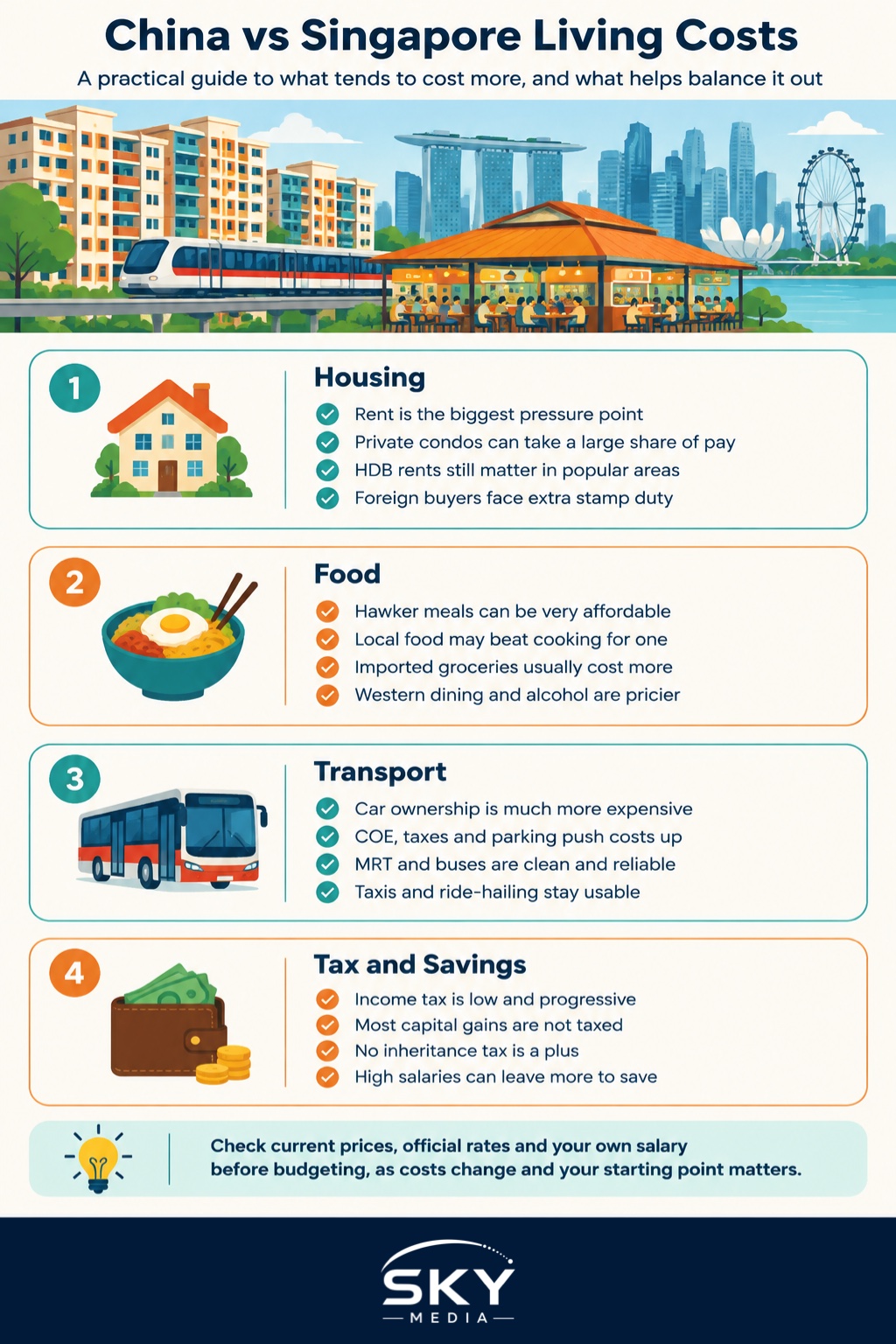
Housing: The Biggest Single Difference
Housing is where most newcomers feel the sharpest change. Singapore is a small, land-scarce island, and property here, whether rented or bought, sits among the most expensive in the region relative to income. Renting a private condominium in a central area can absorb a very large share of a single salary, and even public HDB flats, which house most residents, command meaningful rents in popular districts.
Compared with China’s Tier-1 cities, Singapore rents are broadly high, though the gap narrows against the priciest pockets of Beijing or Shanghai. What drives the cost is scarcity of land, strong demand from a large foreign workforce, and quality of build and maintenance. Buying property is a separate matter, since foreigners face significant Additional Buyer’s Stamp Duty, which pushes most newcomers toward renting first. The upside is that Singapore housing tends to be well managed, safe and close to reliable transport, so you pay more but generally get consistency.
Food: Cheap Options Exist, Convenience Costs More
Food is where Singapore surprises people in a good way. Thanks to the hawker centre system, a cooked meal can be genuinely affordable, often comparable to eating out modestly in China, and sometimes cheaper than cooking at home for one person. Everyday local food keeps the cost of living manageable even on a tight budget.
The picture changes with imported and Western groceries, alcohol, and restaurant dining, all of which run noticeably higher than in most Chinese cities. Imported fruit, dairy and familiar mainland brands carry a premium because so much is shipped in. Practical newcomers eat local, shop at wet markets and value supermarkets, and save Western dining for occasions. Do that, and food need not be a stretch.
Transport: Lower Ownership, Excellent Public Transit
Getting around is a study in contrasts. Owning a car in Singapore is extremely expensive, driven by the Certificate of Entitlement (COE), high taxes and costly parking, so car ownership costs far more than in China, where private cars are increasingly common and affordable. For most people this is not a burden, because public transport here is clean, punctual and reasonably priced. The MRT and bus network covers the island well, and many residents never feel the need to drive.
Ride-hailing and taxis are convenient and cost more than the metro but remain reasonable. If you factor out car ownership, day-to-day transport in Singapore is a comfortable, moderate expense.
Healthcare: High Quality, Shared Cost
Healthcare in Singapore is regarded as world class, and the system is built on shared responsibility rather than being free at the point of use. Residents contribute through MediSave and can insure through MediShield and private plans, while foreigners on work passes usually rely on employer or private cover. Out-of-pocket costs at private clinics and hospitals can be high, though subsidised public options exist for citizens and permanent residents.
Compared with China, routine care in Singapore is more expensive at the counter but generally more predictable in quality and access. The key for newcomers is insurance. Arrive with proper cover, understand what your employer provides, and you avoid the large bills that catch people out.
Education: Public, Private and International Tracks
Schooling costs vary enormously by route. Foreign children in local MOE schools pay tuition fees that, while modest by international-school standards, are higher than what citizens pay. International schools, which many mainland families consider, are a major expense and sit well above typical private schooling in China. Preschool and childcare are also a real monthly cost.
Set against China, where competition drives heavy spending on tutoring and top schools, Singapore’s structured system can feel more transparent, but the international route in particular is a serious line in any family budget. Weigh which track fits your plans before you commit.
Tax and Take-Home: Where Singapore Pulls Ahead
Here Singapore shifts the balance decisively. Personal income tax is low and progressive, with no tax on most capital gains and no inheritance tax, so a given salary leaves far more in your pocket than the headline number suggests. For higher earners especially, the difference in take-home pay against China’s system can be substantial. This is the single biggest reason the cost of living picture is not as punishing as raw prices imply.
Lifestyle and Savings: What It Adds Up To
Lifestyle spending, from gyms and entertainment to travel and dining out, tends to run higher in Singapore, though the city’s compact size and cheap regional flights make holidays easy. The real question for newcomers is savings capacity: whether the higher salary and low tax outpace the higher rent and lifestyle costs.
For skilled professionals the answer is often yes, with disciplined budgeting leaving healthy savings, especially for those who rent sensibly and eat local. For lower earners the maths is tighter, since housing eats a large share regardless of income. Below is a relative snapshot to guide your own planning.
| Category | Singapore (relative to China Tier-1) | Main driver |
|---|---|---|
| Housing (rent) | Higher | Land scarcity, strong demand |
| Local food | Similar or cheaper | Hawker centre system |
| Imported food and dining | Higher | Reliance on imports |
| Car ownership | Much higher | COE and heavy taxes |
| Public transport | Comparable, reliable | Subsidised, well planned |
| Healthcare (out of pocket) | Higher, high quality | Shared-cost model |
| International schooling | Higher | Premium fees |
| Income tax | Lower | Low progressive rates |
| Savings potential (skilled) | Often higher | Low tax, high salaries |
The Balanced Takeaway
Singapore costs more to live in day to day, but it hands much of that back through low tax, high wages and dependable services. Housing is the pressure point, food and transport are manageable, and healthcare and schooling reward planning. For most mainland newcomers with a solid job offer, the trade is a higher-cost, higher-quality, higher-saving life. Run your own numbers against current prices before you decide, because your salary, family size and neighbourhood will shape the outcome far more than any average.
Explore more: Cost of Living in Singapore · Moving to Singapore from China · Singapore vs China Tier-1 Cities
Frequently Asked Questions
Is Singapore more expensive than Shanghai or Shenzhen? In general, Singapore is a high-cost city, especially for housing, and many newcomers find it dearer than mainland Tier-1 cities. Salaries and taxes also differ, so the real comparison is what you keep. Check current rents and prices before deciding, as they change often.
How should I budget before moving from China? List the big categories first: housing, food, transport, healthcare, insurance, schooling and a settling-in cushion. Look up current rents and fees from official or listing sources, and add a buffer for deposits and one-off costs. Revise the budget after your first few months.
Will a Singapore salary cover the higher costs? It may, but it depends on your pass, your job and your housing choice. Salaries are often higher and income tax is relatively moderate, though not everything is. Compare your likely take-home pay with realistic local costs, and check IRAS for current tax rules.
Which costs surprise newcomers most? Housing usually tops the list, followed by upfront rental deposits and agent fees, international school fees, private health insurance and air-conditioning bills. Costs not in your home-country budget, such as car ownership, can also add up. Plan for one-off settling-in expenses.