

For those relocating to Singapore, comparing its cost of living with other cities is a common and important consideration. This guide covers how to compare meaningfully, key factors, and what to consider. This is a general overview.
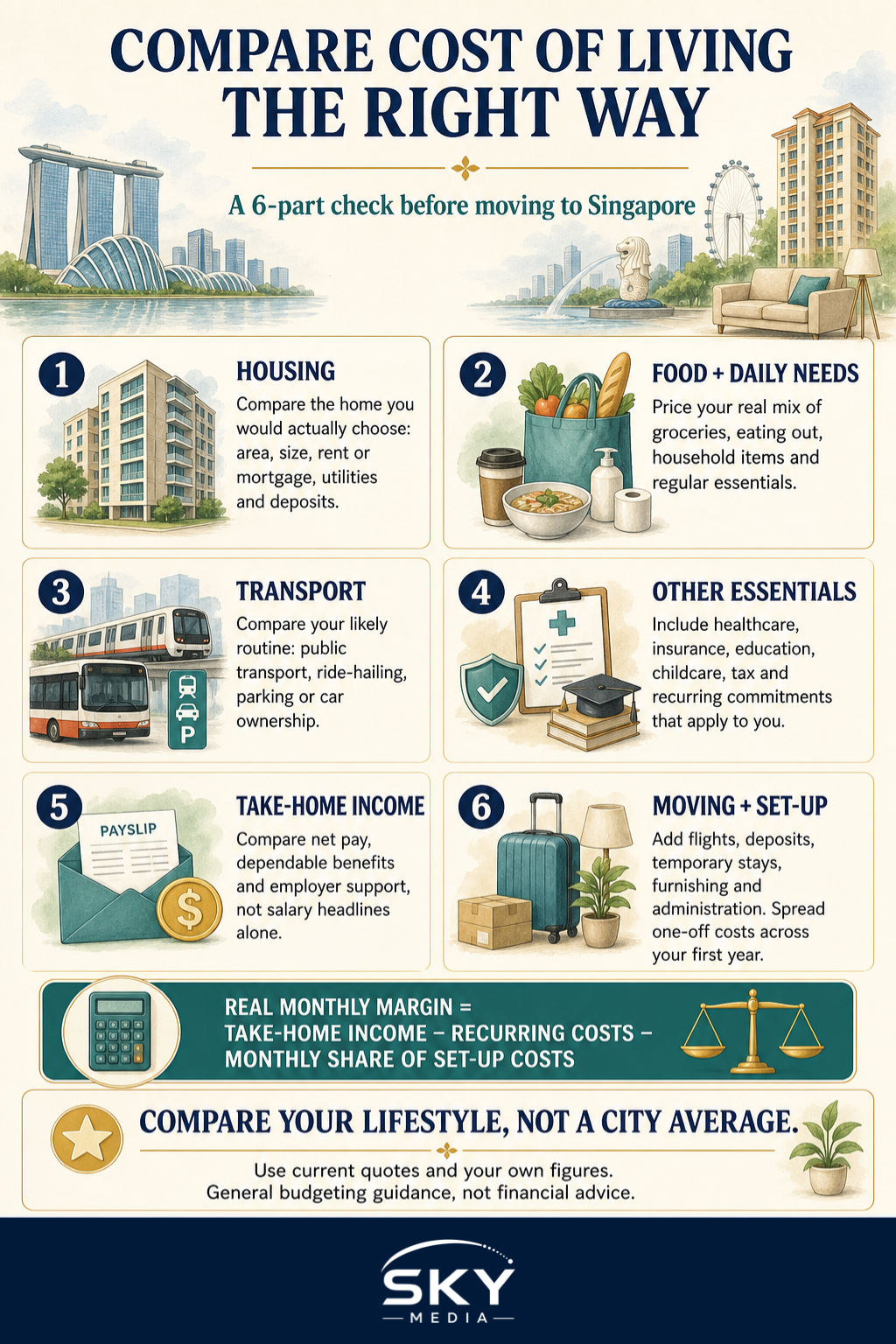
Comparing cost of living
For those relocating to or considering Singapore, comparing its cost of living with other cities, such as their home city or other options, is a common and important consideration for planning and decision-making. Singapore is often noted as a relatively expensive city, particularly in certain areas of spending, though comparisons depend on many factors and individual circumstances. Comparing cost of living meaningfully involves looking beyond headline impressions to the specific factors and spending relevant to your situation, and considering cost of living alongside factors like income and lifestyle. A thoughtful comparison helps you plan realistically and make informed decisions about relocating. Understanding the importance of comparing cost of living meaningfully, beyond headlines and in the context of your situation, helps you approach the comparison well, so you can compare Singapore’s cost of living with other cities in a meaningful, informed way, looking at the specific factors and spending relevant to your circumstances and considering cost of living alongside income and lifestyle, to plan realistically and make sound decisions about relocating to or living in Singapore.
Key factors in cost of living
| Factor | Broadly |
|---|---|
| Housing | Often a major expense |
| Daily expenses | Food, transport and essentials |
| Lifestyle costs | Discretionary and lifestyle spending |
| Individual circumstances | Personal spending patterns |
Cost of living comparisons involve several key factors that vary by city and situation. Housing is often a major factor and expense, and can be significant in Singapore, so it is a key element of any comparison. Daily expenses, such as food, transport and essentials, form another important part of cost of living, with some varying notably between cities. Lifestyle and discretionary costs, such as entertainment, leisure and non-essentials, vary with individual choices and can significantly affect overall cost of living. And individual circumstances and spending patterns greatly affect how cost of living compares for a particular person. Because these factors vary, cost of living comparisons are highly situation-dependent. Understanding the key factors, housing, daily expenses, lifestyle costs, and individual circumstances, helps you compare meaningfully, so you can compare Singapore’s cost of living with other cities by considering the key factors, especially housing, daily expenses, lifestyle costs and your own spending patterns, recognising that these vary by city and situation and that meaningful comparison depends on the specific factors and circumstances relevant to you rather than headline figures alone.
Comparing meaningfully
To compare cost of living meaningfully, go beyond headline impressions and consider your specific situation, spending and priorities. Focus on the categories and factors most relevant to you, such as housing, daily expenses and lifestyle, and how they compare between cities for your circumstances. Consider cost of living alongside income, as pay differences between cities are as important as cost differences, so comparing both together gives a realistic picture. Account for lifestyle and personal spending patterns, which greatly affect individual cost of living. Use reputable information and, ideally, realistic budgeting for your situation. A meaningful, situation-specific comparison is far more useful than general impressions. Understanding how to compare meaningfully, by focusing on your specific situation, considering income alongside costs, and accounting for lifestyle and spending, helps you compare realistically, so you can compare Singapore’s cost of living with other cities meaningfully by focusing on the factors and spending relevant to your circumstances, considering cost of living together with income, and accounting for your lifestyle and spending patterns, forming a realistic, situation-specific comparison that supports sound planning and relocation decisions.
What to consider when relocating
When relocating, comparing cost of living is part of a broader assessment of the financial and lifestyle implications of the move. Consider not just the cost of living but also likely income, so you can assess your realistic financial situation in Singapore versus elsewhere. Factor in one-off relocation costs alongside ongoing living costs. Consider lifestyle, priorities and what quality of life a given budget affords in each city. Recognise that cost of living is one factor among many, career, opportunities, quality of life and personal factors, in a relocation decision. A holistic assessment, with cost of living considered in context, supports a sound decision. Understanding what to consider when relocating, cost of living alongside income, relocation costs, lifestyle, and the broader picture, helps you assess the move well, so you can consider Singapore’s cost of living as part of a broader, holistic assessment when relocating, weighing it alongside likely income, relocation costs, lifestyle and the many other factors in the decision, to realistically assess the financial and lifestyle implications and make a sound, well-rounded relocation decision.
Planning your budget
A practical outcome of comparing cost of living is planning a realistic budget for life in Singapore. Using your understanding of the cost of living and likely income, budget realistically for housing, daily expenses, lifestyle and other costs, so you can live within your means and plan your finances. Account for the specific factors relevant to your situation and lifestyle, and be realistic given Singapore’s costs, particularly in areas like housing. Building a realistic budget based on informed comparison and your circumstances helps you manage your finances and enjoy life in Singapore without financial strain. Sound budgeting turns cost-of-living understanding into practical financial planning. Understanding how to plan your budget, using informed cost-of-living understanding and likely income to budget realistically, helps you manage your finances, so you can plan a realistic budget for life in Singapore based on your understanding of the cost of living and your income, accounting for housing, daily expenses, lifestyle and your circumstances, enabling you to live within your means, manage your finances soundly and enjoy life in Singapore, turning cost-of-living comparison into practical, realistic financial planning.
The takeaway
For those relocating to or considering Singapore, comparing its cost of living with other cities is a common, important consideration, and Singapore is often relatively expensive in certain areas, though comparisons depend on many factors and individual circumstances. Meaningful comparison involves considering key factors, especially housing, daily expenses, lifestyle costs and your own spending, and crucially considering cost of living alongside income for a realistic picture. When relocating, cost of living should be part of a broader, holistic assessment alongside income, relocation costs, lifestyle and other factors. A practical outcome is planning a realistic budget for life in Singapore. This is a general overview; research your specific situation and use realistic budgeting for meaningful, situation-specific comparisons and planning.
Explore more: Cost of living in Singapore · Salary expectations in Singapore · Cost of moving to Singapore