
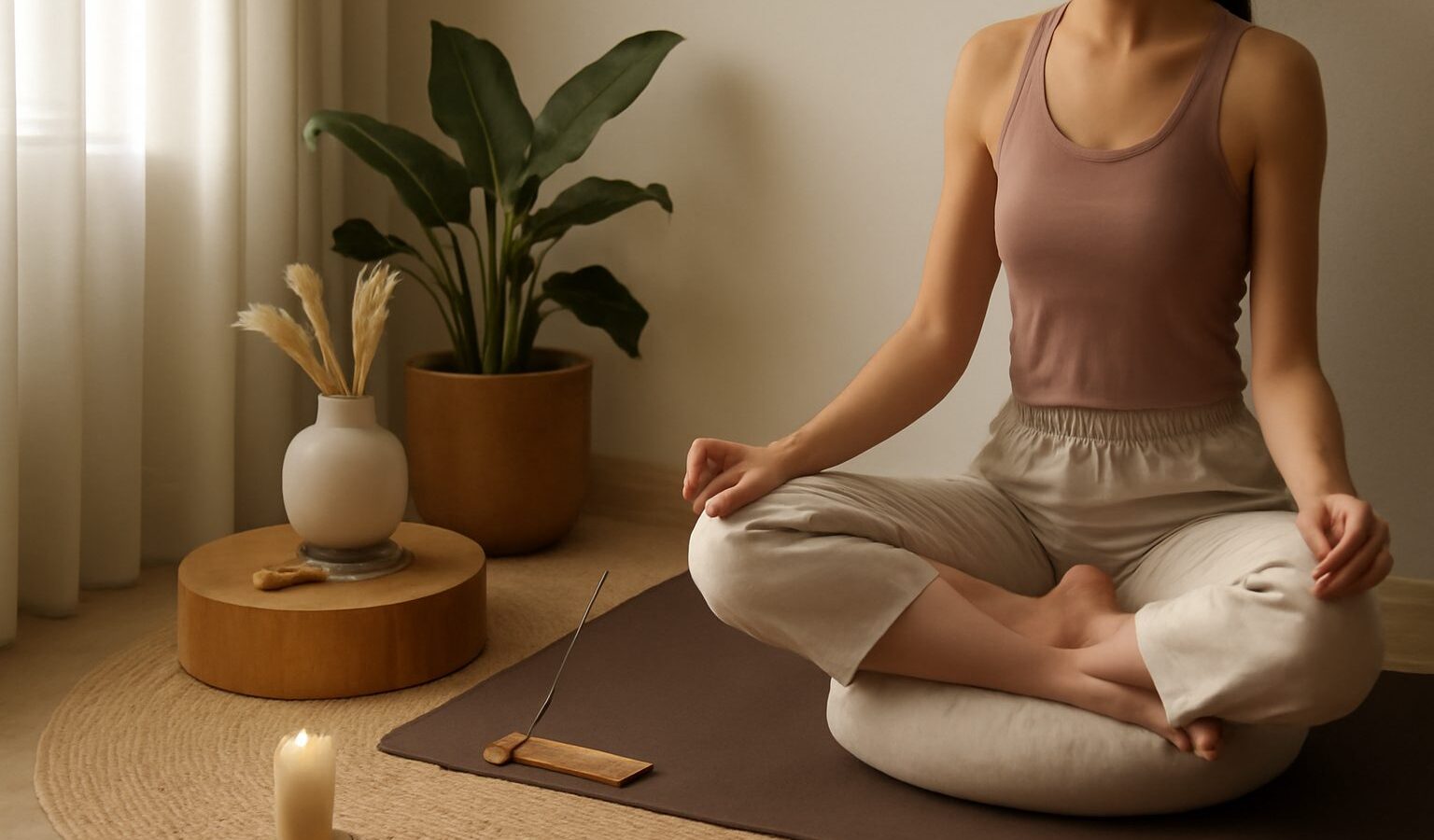
You do not need a studio or a spare room to build a daily practice. A small, calm corner that is always ready invites you to sit, breathe or move, and that readiness is what keeps a habit alive. In a Singapore flat, a meditation corner singapore setup is usually about claiming a quiet nook, dressing it simply and keeping it clutter free. This guide covers choosing the spot, layout, lighting, storage, furniture, budget and how to adapt a corner when there is no room to give.
Choosing a calm and quiet spot
Look for the quietest, least busy part of your home. A corner of the bedroom, the end of a hallway, a section of the living room away from the television, or the space beside a window all work. If you have a balcony or a spot that catches gentle morning light, that can be lovely for early practice, though our sun can be strong by mid morning, so a little shade helps.
Face the corner away from clutter and screens if you can, since the eye finds it easier to settle when there is nothing demanding attention. A blank or plain wall in front of you is calming. If you practise yoga, make sure you have enough clear floor to stretch out fully in every direction, roughly the length of your mat plus room to reach your arms wide.
The key is consistency of place. When the same corner is always ready, you sit down without friction. If your flat is short on space, even a folded mat and a cushion tucked beside a wardrobe, brought out each morning, can become a reliable ritual.
Layout, flooring and furniture
Keep the setup minimal. A cushion or a small meditation stool, a yoga mat, and perhaps a light blanket are all you truly need. A low bench or a floor cushion gives you a defined seat. Natural materials like a cotton mat, a rattan stool or a wooden tray feel grounding and suit the calm mood.
Flooring matters for comfort. Hard tiles get uncomfortable quickly, so a soft rug or a good mat cushions your knees, ankles and spine. A rug also visibly marks the corner as its own zone, which helps the space feel separate even in an open plan flat.
Storage should be quiet and out of sight. A single basket or a small closed box holds your mat, blanket, blocks and any props, so the corner packs down neatly and stays uncluttered between sessions. In a shared room, a slim shelf or a bench with storage inside keeps everything to hand without taking floor space. For small flats, the ideas in maximising storage in a small HDB help you find room for props without crowding.
Lighting and atmosphere
Soft, warm light does more for the mood than almost anything else. Harsh overhead lighting feels clinical, so lean on a dimmable lamp, a warm toned bulb, or gentle natural light from a nearby window. Morning light is especially pleasant for practice. If you sit in the evening, a low warm glow signals to your body that it is time to wind down. Our guide on how to plan lighting for every room covers how to layer this so the corner suits any time of day.
Keep the palette calm. Muted, natural colours, a plant or two, and one or two meaningful objects are enough. Resist the urge to over decorate, because a busy corner works against the whole point of the space. A single plant adds life and helps the corner feel fresh, and many easy indoor plants cope well with our humid climate.
Sound, comfort and our climate
Quiet is precious in a dense city, and full silence is rare in a flat. A small fan hum, a soft playlist or gentle nature sounds can mask background noise and help you settle. If noise from neighbours or traffic is a real issue, soft furnishings like a rug, curtains and cushions absorb sound and take the edge off, and our guide on soundproofing your home has more practical steps.
Comfort in our heat is worth planning. A poorly ventilated corner gets stuffy fast, so keep a window open or a fan moving, or position the corner where the air conditioning reaches during warmer practice. Humidity can also make mats and cushions musty over time, so air them out, keep them off a damp floor when stored, and let the corner breathe.
Budget and adapting when there is no room
This is one of the most affordable spaces you can create. A cushion, a mat and a calm patch of floor cost very little, and much of the effect comes from clearing clutter rather than buying things. Start with what you own and add slowly.
When there is genuinely no spare corner, borrow one temporarily. Roll out the mat in the same spot each day, face the same quiet wall, and pack it away after. The corner does not have to be permanent to be consistent. If you enjoy the idea of a small, tucked away retreat that serves more than one purpose, our guide on how to set up a reading or hobby nook shows how to carve out a personal spot in a busy home. Keep it simple, keep it ready, and the practice will follow.