
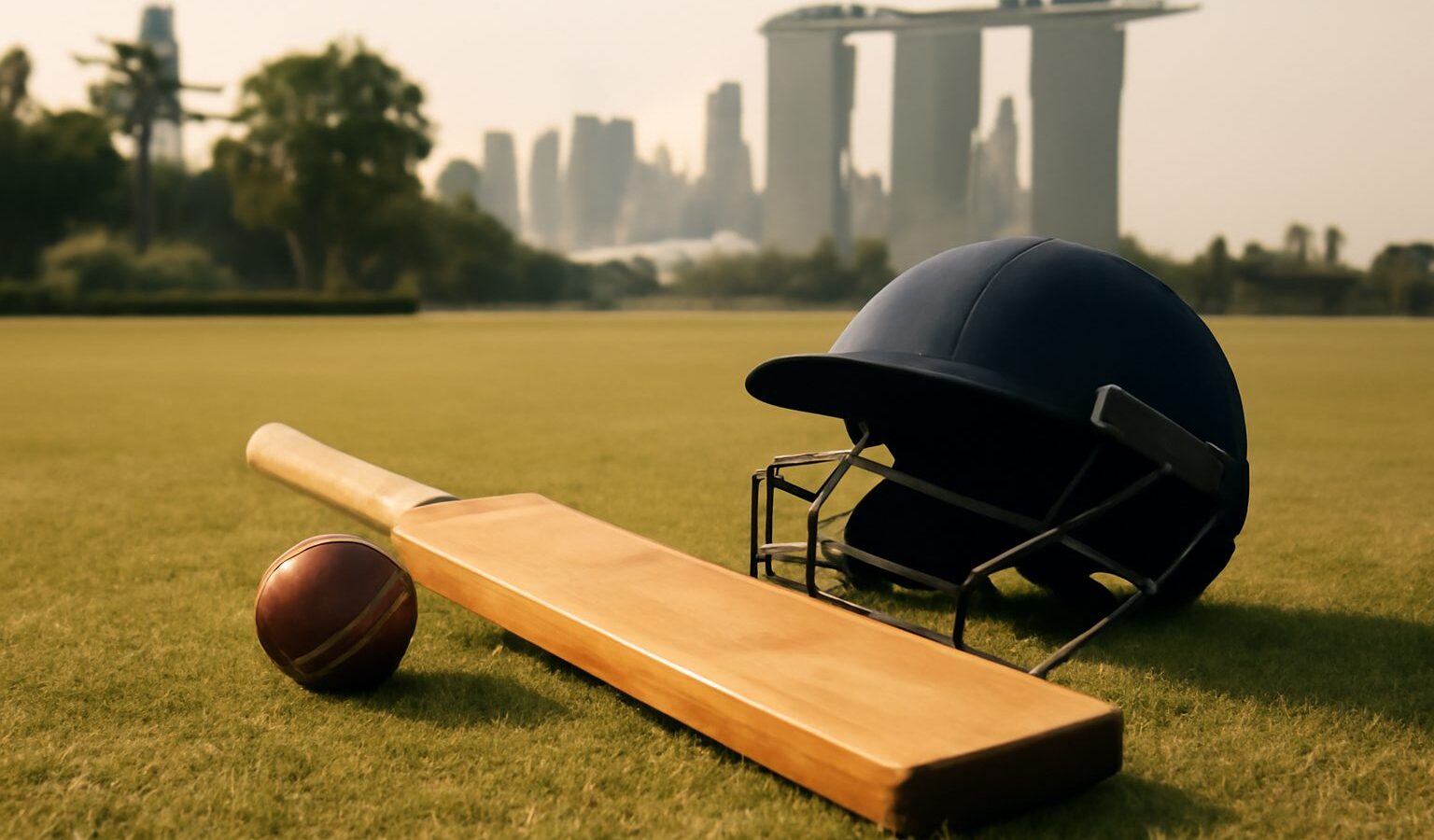
Cricket in Singapore has a much longer history than most people realise. The game was played on the Padang in the colonial era, and today it has a lively community of club teams, weekend social leagues, school and youth programmes, and casual groups who play with a taped tennis ball in open fields. Whether you grew up with the sport in India, Sri Lanka, Pakistan, Australia, the UK or South Africa, or you are a Singaporean curious to try it, there is usually a way in.
This guide explains how the local cricket scene is organised, where games tend to happen, what kit and costs to expect, and how to find a team that suits your level. We do not list specific clubs because teams, fees and fixtures change from season to season. Instead, we show you how to find and judge them yourself.

How Cricket Is Organised in Singapore
The national governing body is the Singapore Cricket Association (SCA). It runs the national teams, organises domestic league competitions and supports coaching and youth development. Its website is the most reliable starting point for current league structures, affiliated clubs and coaching courses.
Below the national level, the scene broadly falls into four groups:
- Established clubs. Some of Singapore’s oldest sports clubs have cricket sections, and several community and alumni associations field teams too. These usually play in the SCA leagues and may have their own grounds or nets.
- League-affiliated teams. Many teams are formed by groups of friends, workplaces or community networks and register to play in organised divisions. Standards range from competitive to relaxed.
- Social and corporate leagues. Shorter formats, often T20 or fewer overs, played on weekends. These tend to welcome players who want a game without heavy training commitments.
- Casual groups. Tape-ball and soft-ball cricket played informally in open fields and school fields where permitted, often organised through messaging groups and social media.
Where Cricket Is Played
Singapore is short on land, so proper cricket grounds are limited and shared. Matches and training generally take place in a few types of venue:
- Club grounds. A handful of clubs maintain turf or artificial pitches. Access is usually for members or teams with a booking.
- Public sports fields. Some ActiveSG and community fields are used for matches when booked. Check the venue rules, since not every field is suitable or allowed for hard-ball cricket.
- School fields. Some schools and tertiary institutions run cricket for students, and fields may be hired out for weekend fixtures.
- Indoor and net facilities. Indoor cricket and practice nets offer a covered option when the weather turns. These are handy for batting practice and fitness during the monsoon months.
The table below compares the main ways to play so you can pick a starting point.
| Way to play | Ball and format | Commitment | Best for |
|---|---|---|---|
| Club team in an organised league | Hard ball, longer or T20 matches | Regular training and weekend fixtures | Experienced players who want competitive cricket |
| Social or corporate league | Hard or soft ball, short formats | A season of weekend games, light training | Returning players and colleagues who want fun matches |
| Casual tape-ball group | Taped tennis ball, informal overs | Turn up when you can | Beginners and anyone without kit |
| Indoor cricket or nets | Indoor ball or hard ball in nets | Flexible sessions | Practice, fitness and wet-weather play |
What You Need to Start
The kit depends on the format.
For tape-ball or soft-ball cricket, you need little more than sports shoes, comfortable clothing, a cap and water. Bats and balls are usually shared within the group.
For hard-ball club cricket, expect to need:
- A bat suited to your height and strength
- Batting pads, gloves and a helmet
- A protective box (abdominal guard)
- White clothing or team kit for formal fixtures
- Spikes or rubber-soled cricket shoes depending on the surface
Most clubs have shared kit for newcomers to borrow, so do not buy everything on your first week. Ask the team what they recommend and try borrowed equipment first.
Costs. Expect some combination of club membership or team subscription, match fees to cover ground hire and balls, and your own kit. These vary widely between clubs and leagues, so ask for a clear breakdown before you commit.
Playing Safely in Singapore’s Climate
Heat is the biggest practical issue. A day in the field can be long and exposed, so:
- Drink water regularly and bring electrolytes for full-day matches.
- Wear a hat, sunscreen and breathable clothing.
- Watch for lightning warnings. Teams and venues generally stop play when lightning is nearby, and you should follow that call.
- Always wear a helmet when batting or keeping against a hard ball, even in friendly games.
- Warm up properly, especially for fast bowling, which is hard on the back and shoulders.
How to Find a Team and Join
- Start with the Singapore Cricket Association. Look for lists of affiliated clubs, league divisions and coaching or umpiring courses on its official website.
- Ask your community. Many teams grow through word of mouth, so workplace colleagues, alumni associations, places of worship and community groups are often the quickest route to a game.
- Search social platforms. Casual and social groups often advertise for extra players for weekend matches, especially when they are short.
- Go to a training session first. Most clubs welcome trial sessions. Watch how the team trains and whether the standard matches yours.
- Ask the right questions. What level does the team play at, how often do they train, what are the fees and what does the season look like?
Questions to ask before signing up
- Do beginners get to bat and bowl, or mostly field?
- Is there coaching, or is it match play only?
- How are selection decisions made?
- Is there a women’s or junior section?
- What happens if you miss games for work or travel?
Women’s, Youth and Junior Cricket
Women’s cricket has been growing, with national squads and opportunities for adults new to the game. If you are interested, ask the SCA or clubs directly whether they run women’s sessions or teams.
For children, look for clubs or academies running youth programmes, and check whether your child’s school offers cricket as a co-curricular activity. When choosing a youth programme, check coach qualifications, safety equipment, supervision ratios and how sessions are adapted for younger players.
Getting the Most Out of the Game
Cricket is as much a social sport as a competitive one. Many teams share food after games, travel to tournaments together and welcome players from different backgrounds. That makes it a good way for newcomers to meet people, and for long-time residents to find a community outside work.
If team sports appeal, also see our guides to playing netball in Singapore and playing floorball in Singapore. Prefer fitness with less equipment? Try running clubs in Singapore.
Frequently Asked Questions
Do I need to buy all the cricket kit before joining a team? No. Most clubs have shared kit for newcomers to borrow, so do not buy everything in your first week. Ask the team what they recommend and try borrowed equipment first. Tape-ball cricket needs little more than sports shoes, a cap and water.
Can beginners join a club team or only social cricket? Beginners are usually welcome in casual tape-ball groups and social leagues, while organised club leagues suit experienced players. Many clubs welcome trial sessions, so watch how the team trains and whether the standard matches yours before signing up.
Where can I get cricket coaching in Singapore? The Singapore Cricket Association’s website lists affiliated clubs and coaching or umpiring courses. Ask any team whether they offer coaching or only match play. For children, check coach qualifications, safety equipment and supervision.
How do I handle the heat and rain when playing cricket here? Drink water regularly, wear a hat and sunscreen, and bring electrolytes for full-day matches. Teams generally stop play when lightning is nearby, and you should follow that call. Indoor cricket and nets offer a covered option in wet weather.
Is there women’s or junior cricket in Singapore? Women’s cricket has been growing, with national squads and opportunities for adults new to the game. Ask the SCA or clubs whether they run women’s sessions or teams. Many also run youth programmes, and some schools offer cricket as a co-curricular activity.
Further reading: Field Hockey in Singapore: Clubs and Where to Play