
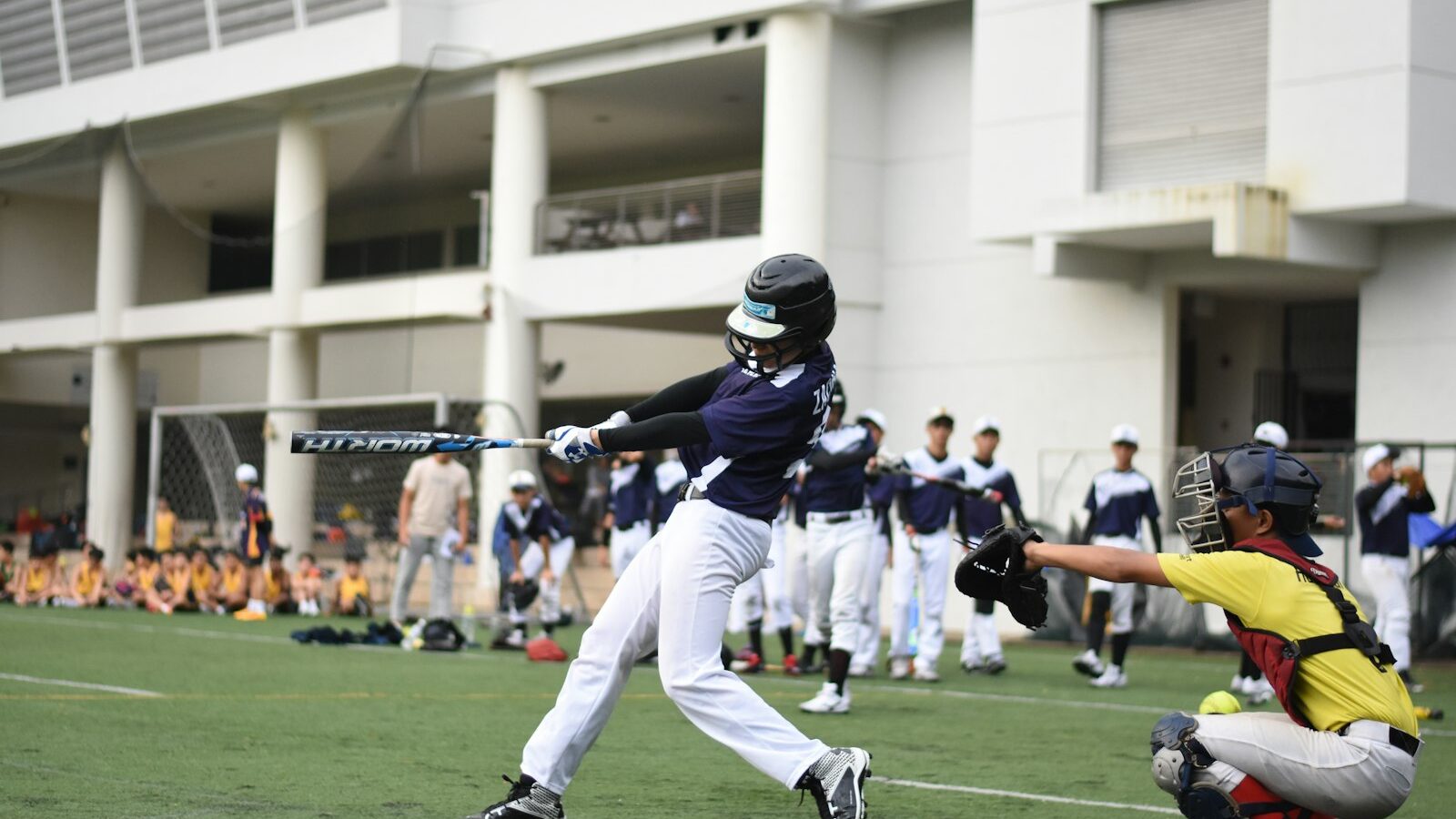
Baseball in Singapore is a small but friendly scene. You will not find a big stadium or a professional league, but you will find clubs, school teams, social softball leagues and weekend pickup games that welcome newcomers. Whether you grew up playing Little League in the US, followed the game in Japan, Korea or Taiwan, or simply want to try a bat-and-ball sport that is not cricket, there is a way in.
This guide explains how the local scene is organised, where games tend to be played, how to get batting practice, and how to pick a team that suits your level.
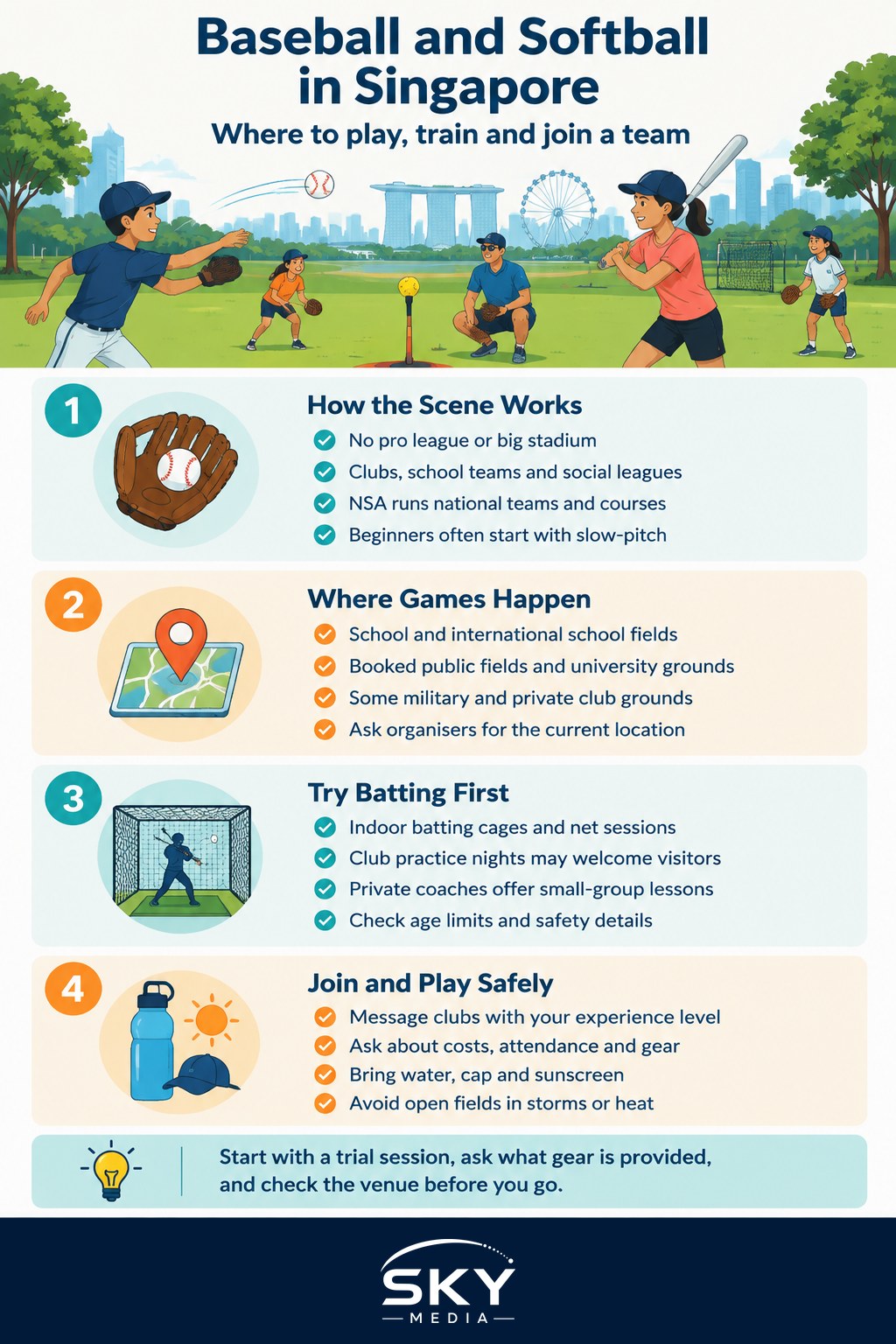
How the Baseball and Softball Scene Is Organised
Both sports have a national sports association (NSA) recognised by Sport Singapore, the government agency for sport. The NSA typically runs national teams, coaching courses, umpire training and some competitions. Below that level, most of the action happens through:
- Community and expatriate clubs. Adult teams that train on weekends and play in local leagues or friendly series. Many have a mix of Singaporeans, permanent residents and foreigners.
- Social softball leagues. Usually slow-pitch or modified fast-pitch, often co-ed, with teams formed by companies, friend groups or community clubs. These are the easiest entry point for adults.
- Youth programmes. Junior baseball and softball for children, often run by clubs or linked to international schools, with seasons that follow the school calendar.
- School and university teams. Softball is a co-curricular activity (CCA) in some secondary schools and junior colleges, and universities and polytechnics often have baseball or softball clubs that compete in inter-varsity games.
To find current clubs, start with the NSA’s website and social media, then search Facebook groups and Meetup for “baseball Singapore” or “softball Singapore”. Expatriate community groups for Americans, Japanese, Koreans and Taiwanese residents are also good places to ask, as baseball culture is strong in those communities.
Baseball vs Softball: Which Should You Try?
If you are deciding where to start, this comparison helps:
| Option | What to expect | Best for |
|---|---|---|
| Baseball (hardball) | Smaller, harder ball, overhand pitching, larger field, more protective gear | Players with prior experience or teens and adults keen on a competitive game |
| Fast-pitch softball | Larger ball, underhand pitching that can still be very fast, smaller diamond | Students, women’s teams and players who want competitive play on a compact field |
| Slow-pitch softball | Lobbed underhand pitches, emphasis on hitting and fielding, often co-ed | Beginners, office teams and anyone after a social, low-pressure game |
| Batting practice only | Cage or net sessions without joining a team | Trying the sport out or keeping your swing sharp between seasons |
Slow-pitch softball is the most common doorway for adult newcomers. You can usually turn up to a social game with basic sports shoes and borrow a glove for your first session.
Where Games and Training Happen
Singapore has very few purpose-built baseball diamonds, so teams make clever use of what exists. Games and training are usually held at:
- School fields and international school grounds, which may have a backstop or a diamond marked out. Access is normally through a club that has booked the facility, not for walk-in public use.
- Large public playing fields managed by ActiveSG and other agencies, which can be booked for organised activities. Check the booking platform for what is allowed, as hard-ball sports may have restrictions to protect other park users.
- University sports grounds, used by campus clubs and sometimes by community teams through arrangements.
- Military and private club grounds, used by some long-running teams.
Because venues are shared and bookings change, clubs rarely publish a fixed address for every session. Ask the team organiser for the current location before you go. Never practise hard-ball hitting or pitching in an open park area where passers-by, children or pets could be hit.
Getting Batting Practice
If you want to swing a bat without committing to a team, you have a few options:
- Indoor sports and entertainment venues. Some have batting cages with pitching machines, sometimes alongside other activities. Search for “batting cage Singapore” and check what speeds and ball types are offered.
- Club practice nights. Many clubs hold open batting and fielding sessions that visitors can join for a small fee or as a trial.
- Private coaching. Former players and coaches offer one-to-one or small-group sessions, especially for children and teens.
- Overseas trips. If you visit Japan, Taiwan or South Korea, batting centres are common and a fun way to keep in practice.
Before booking anything, check the session’s age limits, whether helmets and bats are provided, the cancellation terms and what safety briefing is given.
How to Join a Team
Joining is usually straightforward:
- Find two or three clubs through the NSA, social media groups and word of mouth.
- Message the organiser with your experience level, preferred position if you have one, and whether you want competitive or social play.
- Attend a trial or open session. Most clubs let you train a few times before asking you to commit.
- Ask about costs and commitments. Clubs commonly charge membership or seasonal fees to cover field bookings, balls, umpires and league entry. Ask what is included and how often you are expected to attend.
- Sort out your gear gradually. Start with a borrowed glove and club bats, then buy your own glove once you know the sport sticks. Fielders need a glove, and batters need a helmet, which clubs often supply.
For children, ask about coaches’ experience, whether they hold any recognised coaching certification, the coach-to-player ratio and how they handle safety on hot days.
Playing Safely in Singapore’s Heat
Training and weekend games are often in the open sun. Keep yourself and your team safe:
- Drink water before, during and after play, and bring more than you think you need.
- Wear a cap, sunscreen and light, breathable clothing.
- Prefer early morning or late afternoon sessions, and take shade breaks between innings.
- Watch for signs of heat injury such as dizziness, headache or nausea, and stop playing if they appear.
- Check the weather for lightning warnings. Open fields are risky during thunderstorms, and games should pause until the storm passes.
- Warm up properly, especially your throwing arm, and build up gradually if you are returning after years away.
Making the Most of a Small Scene
The upside of a small community is that people know each other and newcomers are noticed and welcomed. Volunteer to help with field set-up, learn to keep score, or take an umpiring course through the NSA if you want to stay involved even when you are not playing. Many players say the post-game makan with teammates is half the fun.
Explore more: If you enjoy team activities, see our guides to university clubs you can join and senior exercise classes for older family members who want to stay active too.
Frequently Asked Questions
How much does it cost to join a baseball or softball club? Costs differ from club to club. Clubs commonly charge membership or seasonal fees to cover field bookings, balls, umpires and league entry, and gear is a separate expense. Ask each organiser exactly what the fee includes and how often you are expected to turn up before you commit.
Can foreigners and PRs join adult baseball and softball teams? Yes, many community and expatriate clubs have a mix of Singaporeans, permanent residents and foreigners. Expatriate groups for Americans, Japanese, Koreans and Taiwanese residents are good places to ask. Message the organiser with your experience level and whether you prefer social or competitive play.
Is it too late to start baseball as an adult beginner? Not at all. Slow-pitch softball is built for newcomers, with lobbed pitches, a social mood and often co-ed teams. Hardball is tougher to pick up without experience, so start with softball or a batting cage and move on once your confidence grows.
At what age can children start playing baseball or softball? Junior programmes exist, often run by clubs or linked to international schools, but entry ages vary by programme. Ask about the minimum age, the coach’s experience and recognised coaching certification, the coach-to-player ratio and how safety is handled on hot days.
What should I bring to my first softball trial session? Bring sports shoes, a cap, sunscreen and plenty of water. You can usually borrow a glove and club bats for the first few sessions, and clubs often supply helmets. Confirm the location with the organiser beforehand, since venues are shared and bookings change.