
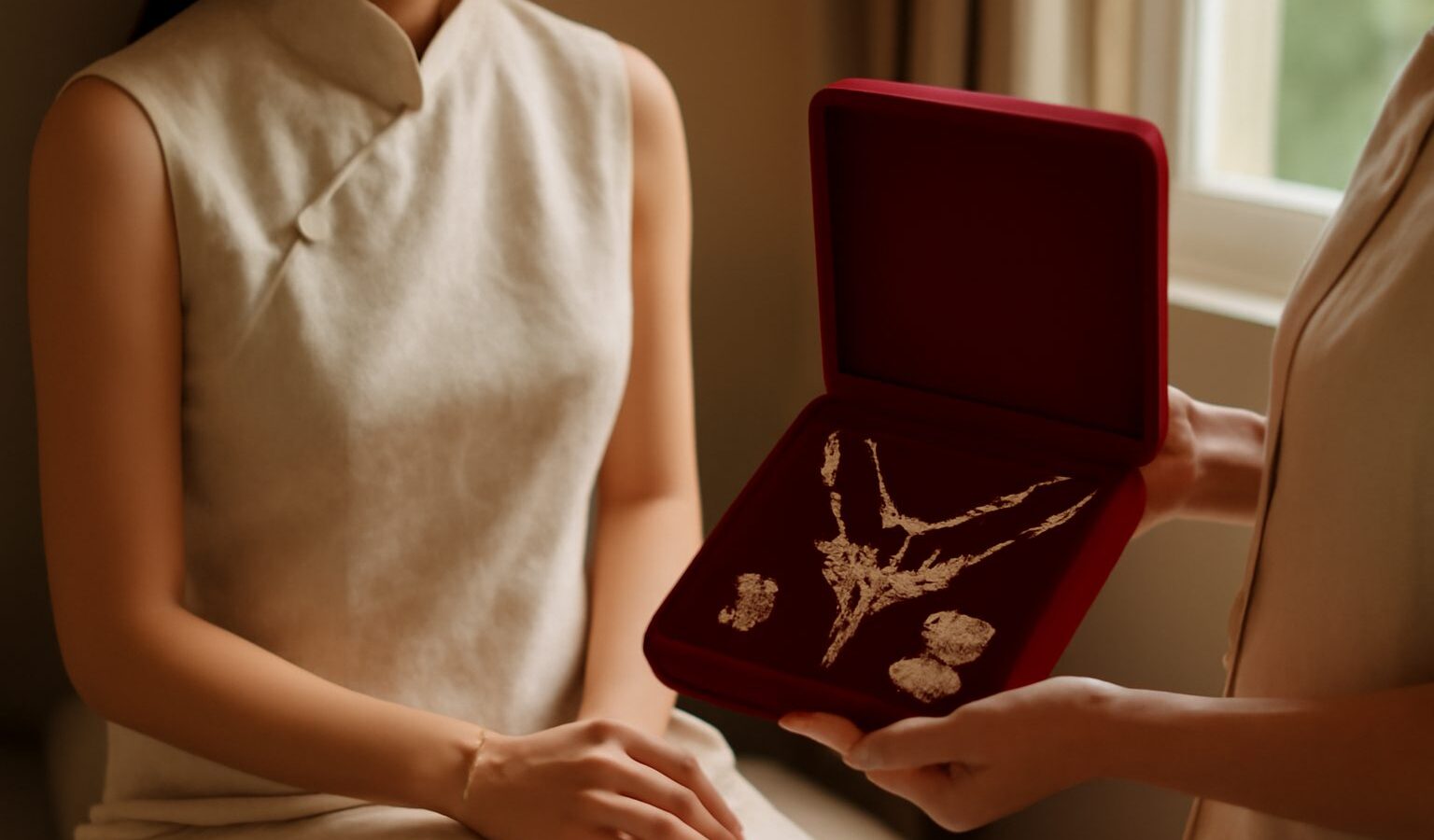
If you have been to a Chinese wedding in Singapore, you may have seen the bride glittering with gold at the tea ceremony and wondered what it all means. Much of it is si dian jin, a term from Mandarin meaning “four pieces of gold”, a set of gold jewellery traditionally given to the bride by the groom’s family. Far more than adornment, si dian jin is a heartfelt gift that welcomes the bride, blesses the marriage and, historically, offered her a measure of security. Customs around it vary by family and dialect group, so here is a clear, respectful explanation of what it is and how couples in Singapore handle it today.
What Si Dian Jin Is and What It Symbolises
Si dian jin literally refers to four pieces of gold jewellery, though the exact items and number vary between families. In the traditional understanding, these are pure gold ornaments, prized for being close to 24-carat, given by the groom’s mother or family to the bride as part of the betrothal.
The gift carries several layers of meaning. It is a warm welcome from the groom’s family, formally embracing the bride as one of their own. It is a blessing for prosperity and a happy, lasting marriage, gold being an enduring symbol of wealth and good fortune. Historically, it also gave the bride personal assets that remained hers, a quiet form of security within the marriage. In many families the gold is meant to be kept, not sold, and sometimes passed down, which adds a sentimental weight beyond its material value.
The Four Pieces and When They Are Worn
Classically, si dian jin comprises four types of gold jewellery: a necklace, a pair of earrings, a bracelet or bangle, and a ring. Some families give a pendant instead of one item, or add extra pieces, so the “four” is a guideline rather than a strict count. Designs often feature auspicious motifs such as the dragon and phoenix, symbolising the harmonious union of husband and wife.
The jewellery is usually presented during the guo da li, Mandarin for the formal betrothal gift exchange in which the groom’s family sends gifts to the bride’s family before the wedding. The bride then wears the si dian jin on her wedding day, most visibly at the tea ceremony, where the couple serve tea to elders. Wearing the gold there is a public sign that she has been welcomed and blessed by her new family. If the betrothal customs are new to you, our guide to dialect wedding customs in Singapore explains how these exchanges differ across communities.
How the Custom Varies by Dialect and Family
Chinese Singapore is made up of several dialect groups, including Hokkien, Teochew, Cantonese, Hakka and Hainanese, and each carries its own wedding customs. Si dian jin is common across many of them, but the specifics, who gives what, how many pieces, and how the gold interacts with the betrothal gifts and the pin jin, or bride price, differ. Families also observe the custom to very different degrees, and some modern couples simplify or skip it entirely.
The table below sketches how the practice commonly appears, as a general picture rather than a rule for any one family or dialect group.
| Aspect | Common traditional practice | How families adapt today |
|---|---|---|
| Giver | The groom’s mother or family | Same, sometimes shared between families |
| Number of pieces | Four gold items | Fewer or more, by budget and taste |
| Gold purity | Close to 24-carat pure gold | Sometimes lighter or with gemstones |
| When presented | During guo da li betrothal | At betrothal or nearer the wedding |
| When worn | At the tea ceremony | Tea ceremony, or kept as heirloom |
Because the custom touches on money and family expectations, it is best approached with open, gentle conversation between both sides. There is no single correct amount or design, and the spirit of welcome matters far more than the weight of the gold. Families should feel free to scale the tradition to what is comfortable, and no couple should take on unhealthy debt to meet an imagined standard.
Choosing, Wearing and Keeping Si Dian Jin
For couples navigating si dian jin today, a few practical thoughts help. Start with a relaxed talk between families about expectations, so the gift is a joy rather than a source of pressure. Set a comfortable budget, remembering that gold prices move and that sentiment outweighs size. When buying, established jewellers can advise on purity, hallmarking and designs, and many offer sets marketed for this purpose; compare a few and choose pieces the bride will genuinely treasure.
Consider wearability too. Very ornate traditional pieces look stunning at the tea ceremony but may sit in a safe afterwards, so some brides choose designs they can wear again. Others deliberately keep the gold as an heirloom or a small nest egg, honouring the custom’s old protective purpose. Storing the pieces safely and keeping any certificates is simply sensible.
Si dian jin rarely stands alone. It usually sits within a fuller sweep of Chinese wedding customs, from the betrothal to the rituals of the wedding morning. Readers can explore the wider picture in our guides to the an chuang bed setting ceremony, which prepares the marital bed for blessings, and the Chinese hair combing ceremony, the tender eve-of-wedding rite marking the passage into adulthood. Building a home together also brings its own list, and our guide to preparing a bridal trousseau rounds out the practical side.
Above all, remember what the gold is for. Si dian jin is a family saying, with warmth and hope, that a beloved new member is now one of us. Kept in that spirit, whatever its size or design, the tradition does exactly what it was always meant to do.