
If your dog has ever dragged its bottom across your living room floor, you have probably wondered what is going on. In many cases the answer is the dog anal gland, a small but surprisingly troublesome part of canine anatomy. Anal gland problems are one of the most common reasons dogs visit the vet, yet many owners have never heard of them until the scooting starts.
This guide explains what anal glands are, why they cause trouble, what the signs look like, and when a vet visit is needed. It is general information, not veterinary advice. If you are worried about your dog, contact a vet.
What Anal Glands Are and What They Do
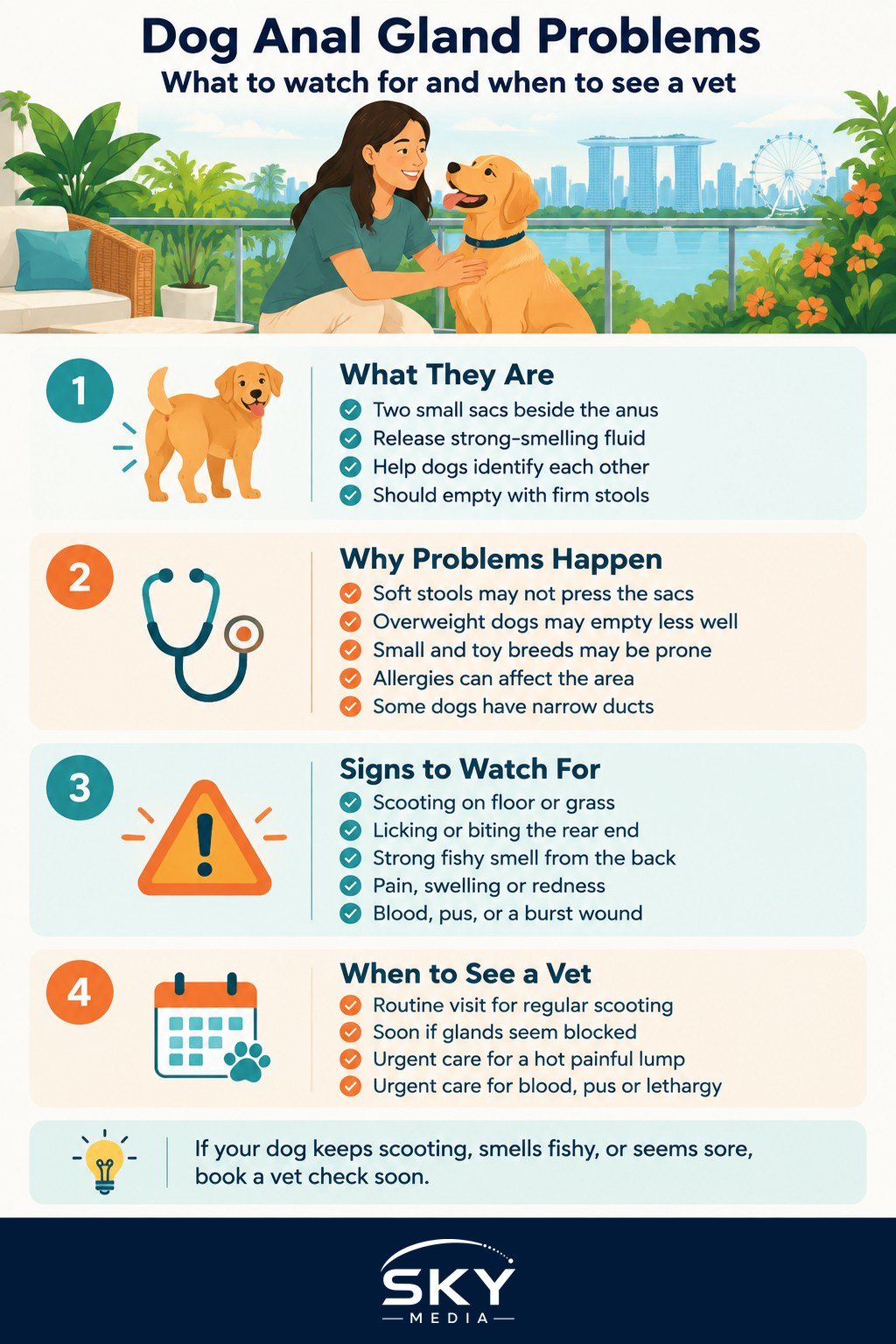
Dogs have two small sacs, called anal sacs or anal glands, sitting just inside the anus, roughly at the four and eight o’clock positions. They fill with a strong smelling, oily fluid that is unique to each dog. This scent is why dogs sniff each other’s rear ends when they meet: it is a kind of chemical name tag.
Normally, the sacs empty a little each time your dog passes a firm stool, because the pressure squeezes the fluid out through tiny ducts. Problems begin when the sacs do not empty properly and the fluid builds up, thickens or becomes infected.
Why Anal Gland Problems Happen
There is rarely a single cause, but common contributing factors include:
- Soft or loose stools. If stools are not firm enough, they may not press on the sacs and empty them.
- Body weight. Overweight dogs may have less effective natural emptying.
- Size and breed. Small and toy breeds are often said to be more prone, though any dog can be affected.
- Allergies and skin conditions. Inflammation of the skin, including around the bottom, can affect the glands. Singapore’s heat and humidity can make skin problems more noticeable in some dogs.
- Narrow ducts or individual anatomy. Some dogs simply seem to have glands that do not drain well.
Your vet can help work out which factors apply to your own dog.
Signs Your Dog Has an Anal Gland Problem
Watch for these common signs:
- Scooting. Dragging the bottom along the floor or grass, the classic giveaway.
- Licking or biting at the rear end or the base of the tail.
- A strong fishy smell from the back end, sometimes noticed when your dog is startled or sitting on your sofa.
- Discomfort sitting down or suddenly turning to look at their rear.
- Straining or pain when passing stools.
- Swelling, redness or a lump beside the anus.
- Blood or pus around the anus, or a wound that appears to have burst.
Scooting is not always caused by anal glands. Worms, skin allergies, or something stuck in the fur can cause similar behaviour, which is why a vet check is worthwhile rather than guessing.
From Full to Impacted to Abscess: How Problems Progress
Anal gland trouble tends to follow a sequence. The table below shows the usual stages and what to do. Only a vet can confirm which stage your dog is at.
| Stage | What is happening | What you might notice | What to do |
|---|---|---|---|
| Full glands | Sacs have not emptied properly | Occasional scooting, mild smell | Book a routine vet visit to check |
| Impaction | Fluid has thickened and blocked the ducts | Frequent scooting, licking, discomfort sitting | See a vet soon, glands usually need emptying |
| Infection (sacculitis) | Bacteria in the blocked sac cause inflammation | Pain, redness, bad smell, reluctance to sit | See a vet promptly, treatment may be needed |
| Abscess or rupture | A pocket of pus forms and may burst through the skin | Swelling, a hot painful lump, blood or pus, lethargy | Contact a vet urgently |
The earlier the problem is caught, the simpler it tends to be to manage. An abscess is painful and needs proper veterinary care, so do not wait to see if it settles.
What Anal Gland Expression Involves
Expression simply means manually emptying the sacs. Vets do this regularly, and some groomers offer it as part of a grooming session.
Vets may express the glands externally, by pressing from the outside, or internally, using a gloved finger inside the rectum, which is often more thorough. A vet can also check the fluid’s colour and consistency, which gives clues about infection, and feel for any unusual lumps.
A few points to keep in mind:
- Routine expression is not needed for every dog. Many dogs never have a problem. Regularly squeezing healthy glands that empty normally may cause irritation, so follow your vet’s advice on whether and how often it is needed.
- Groomer expression is usually external. It can help some dogs, but a groomer cannot diagnose infection or lumps. If your dog keeps scooting after grooming, see a vet.
- Learning to do it at home. Some owners of dogs with recurring problems ask their vet to show them how. Do not attempt it without guidance, as squeezing an infected or abscessed gland can be very painful and may make things worse.
If problems keep coming back, your vet may discuss other options, such as investigating allergies, diet changes, medication, flushing the glands, or in persistent cases surgery to remove them. These are decisions to make with your vet.
Helping Prevent Anal Gland Problems
You cannot prevent every case, but these habits may help:
- Aim for firm, healthy stools. A balanced diet suited to your dog matters. Some vets recommend added fibre for certain dogs, but ask before changing food or adding supplements.
- Keep your dog at a healthy weight. Regular walks also support healthy digestion. In Singapore, walk early in the morning or in the evening to avoid the worst of the heat.
- Stay on top of parasite prevention. Follow your vet’s advice on deworming and flea control, as these can cause itching and scooting too.
- Manage allergies. If your dog has itchy skin or ear problems as well, mention them to your vet, as allergies are often linked.
- Check the area during grooming. A quick look for swelling, redness or matted fur makes problems easier to spot early.
When to See a Vet in Singapore
Book a routine appointment if your dog scoots more than occasionally, licks its rear repeatedly, or has a persistent fishy smell. If you do not yet have a regular clinic, our guide to choosing a vet in Singapore explains what to look for.
Seek urgent care if you notice:
- A swollen, hot or painful lump beside the anus
- Blood or pus coming from the area, or a wound that looks like it has burst
- Your dog crying out, refusing to sit, or straining badly
- Fever signs such as lethargy, hiding or loss of appetite alongside rear end symptoms
Outside clinic hours, our guide to emergency vet care in Singapore covers what to do and how to prepare. When you go, tell the vet how long the symptoms have lasted, any recent grooming, diet changes or diarrhoea, and whether this has happened before. That history helps the vet decide on the right next step, and with prompt care most dogs recover well and are back to normal quickly.