
Your older dog stands in the corner staring at the wall, forgets the way out of the kitchen, or paces and whines at 3am. It is easy to put this down to “just getting old”, but these can be signs of dog dementia, known by vets as canine cognitive dysfunction (CCD). It is a gradual, age-related decline in brain function, broadly similar in some ways to dementia in people.
CCD cannot be cured, but it can often be managed, and the right routines can keep a senior dog comfortable and engaged for longer. This guide explains the signs, how a diagnosis is made, the treatment options your vet may discuss, and the daily adjustments that help. It is general information, not veterinary advice. Always speak to a licensed vet about your own dog.
What Canine Cognitive Dysfunction Is
As dogs age, changes in the brain can affect memory, learning, awareness and sleep. In dogs with CCD, these changes go beyond normal slowing down and start to affect daily behaviour.
It is most often seen in older dogs, and the chance of signs appearing rises as dogs get older. Smaller breeds, which tend to live longer, may show it at later ages than larger breeds simply because they reach those ages. Many cases go unnoticed for a long time because owners assume the changes are normal ageing.
Early recognition matters. Some treatments and lifestyle changes appear to work best when started early, and other conditions that look similar can be treated if they are caught.
The Signs to Watch For
Vets often group the signs of CCD using the memory aid DISHAA. You do not need every sign for CCD to be a possibility.
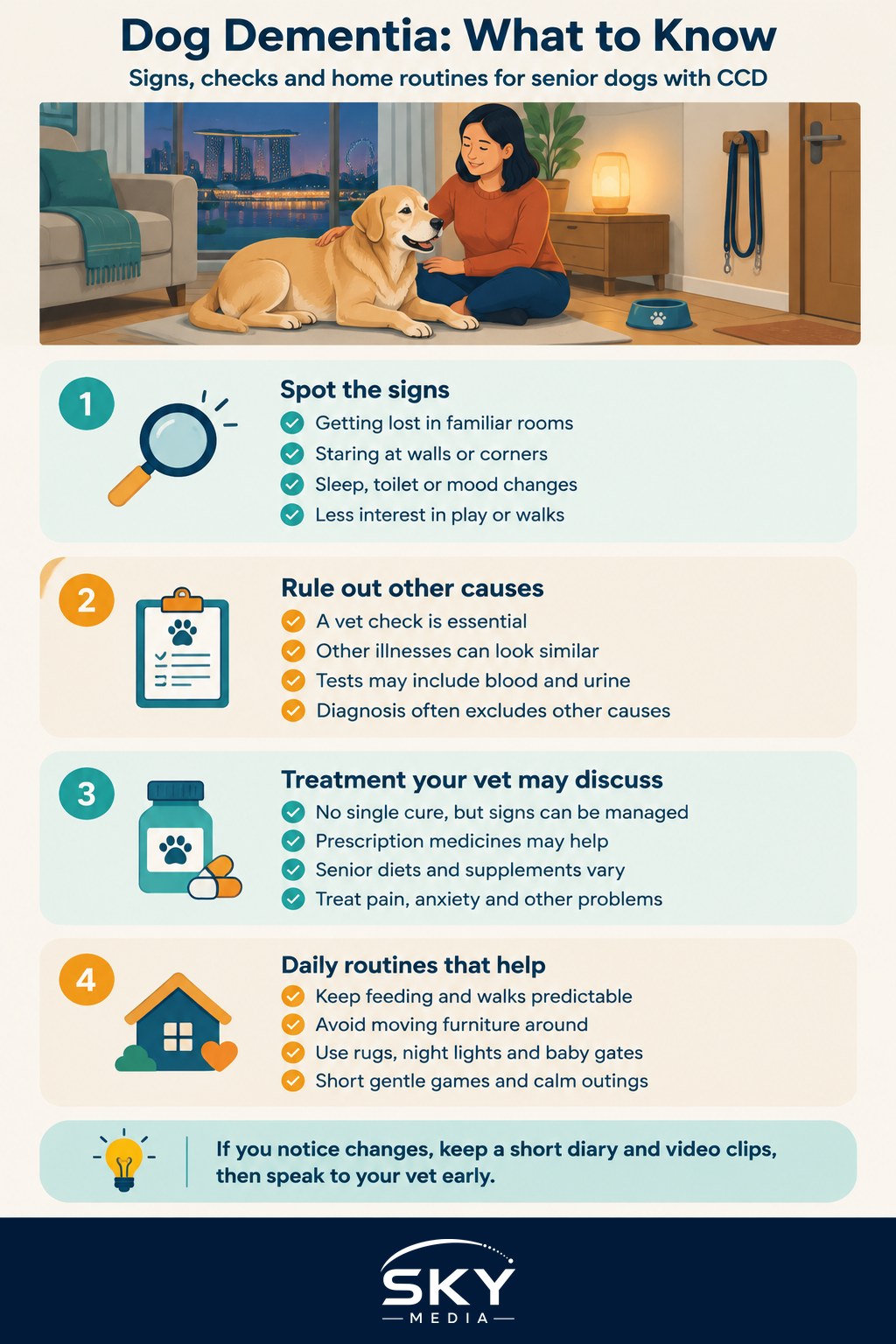
- Disorientation. Getting lost in familiar rooms, staring at walls, getting stuck behind furniture or in corners, standing at the hinge side of a door waiting for it to open.
- Interactions change. Less interest in greeting family, or sometimes becoming clingy. Some dogs become irritable with people or other pets they used to enjoy.
- Sleep-wake cycle changes. Sleeping more in the day, restless at night, pacing, vocalising or waking the household.
- House soiling and forgetting training. Toilet accidents indoors in a previously trained dog, forgetting cues like “sit”, or not responding to their name.
- Activity changes. Aimless wandering or pacing, repetitive behaviour, or less interest in play, toys and walks.
- Anxiety. New fearfulness, being more upset when left alone, or reacting to noises that never bothered them before.
Keep a simple diary of what you see, when it happens and how often. Short video clips on your phone are very helpful for your vet, because dogs often behave normally in the clinic.
Ruling Out Other Causes
Many signs of CCD can also come from other medical problems, which is why a vet check is essential before assuming dementia.
| Sign you notice | Could be CCD | Other possible causes your vet may check |
|---|---|---|
| Accidents indoors | Forgetting house training | Urinary infection, kidney disease, hormonal conditions, mobility pain |
| Night-time restlessness | Disrupted sleep-wake cycle | Pain, needing to urinate more often, heat discomfort |
| Not responding to name | Reduced awareness | Hearing loss |
| Bumping into things, getting stuck | Disorientation | Vision loss, balance problems |
| Irritability when touched | Changed social behaviour | Arthritis, dental pain |
Your vet will usually take a detailed history, examine your dog and may suggest blood and urine tests or other investigations. CCD is generally diagnosed by excluding other causes and matching the pattern of behaviour. Some vets use questionnaires to score the signs and track changes over time.
Treatment Options Your Vet May Discuss
There is no single cure, but vets have several tools. Which ones suit your dog depends on its health, other conditions and medicines, so never start a supplement or medicine without your vet’s guidance.
- Prescription medicines. Some medicines are licensed in certain countries for managing cognitive decline in dogs. Your vet will decide whether one is suitable and available, and will set the dose.
- Therapeutic diets. Some senior diets are formulated with antioxidants, certain fatty acids and other nutrients intended to support brain function. If you change food, do it gradually. Our guide on feeding your dog in Singapore covers how to switch diets safely.
- Supplements. Various supplements are marketed for brain health. Evidence varies, and some interact with medicines. Ask your vet before buying.
- Treating pain and other conditions. Arthritis, dental disease and sensory loss can all make confusion and anxiety worse. Managing them often improves behaviour.
- Help with sleep and anxiety. If night-time distress is severe, your vet may suggest options to support sleep. Do not give human sleep aids or medicines; some are toxic to dogs.
Expect regular follow-up visits so your vet can see whether the plan is working and adjust it.
Daily Routines That Help a Confused Dog
Home adjustments are a big part of caring for a dog with CCD, and they cost little.
Keep a predictable schedule. Feed, walk and settle your dog at the same times each day. Predictability reduces anxiety.
Keep the layout familiar. Avoid rearranging furniture. Block off spaces where your dog tends to get stuck, such as behind the sofa, and use baby gates to keep it away from stairs or the balcony.
Use your senses as signposts. Rugs or mats with different textures can help a dog find its bed or water bowl. A night light can help dogs with poorer vision at night.
Gentle mental exercise. Short, easy training sessions, sniffing games, food puzzles and new walking routes give the brain work to do. Keep sessions brief and positive; stop before your dog gets frustrated.
Daily walks at the right time. In Singapore, walk early in the morning or in the evening to avoid heat. Senior dogs overheat more easily, and confusion can worsen when they are uncomfortable. Many dogs sleep better at night after a calm outing in the evening.
Protect sleep. Give your dog a quiet, comfortable bed away from foot traffic. Daytime light exposure and evening calm may help regulate sleep.
Plan for toilet accidents. Take your dog out more often, praise successes and use washable pads or mats in its sleeping area. Never punish accidents; your dog is not doing it on purpose.
Keep social contact gentle. Familiar people and calm dogs can be good company, but busy dog runs may now be overwhelming. Our article on socialising your dog has tips on reading body language, which helps you spot when an older dog has had enough.
Looking After Yourself and Planning Ahead
Caring for a dog with dementia can be tiring, especially when nights are disrupted. Share duties with household members, and ask your vet about pet-sitters or daycare that are experienced with seniors if you need breaks.
CCD is progressive, so it helps to talk to your vet early about quality of life: appetite, comfort, sleep, toileting and whether your dog still enjoys its days. Some families keep a simple “good day, bad day” calendar to see trends. When the time comes, your vet can guide you through decisions with compassion.
Many owners notice that a confused senior dog, much like a person with dementia, can become more restless in the late afternoon and evening. Recognising that pattern, and planning calm, quiet evenings around it, is one of the kindest things you can do.
Further reading: Cushing’s Disease in Dogs: Symptoms, Testing and Treatment Costs · Hydrotherapy and Rehabilitation for Dogs in Singapore