

A dog that suddenly goes quiet, skips meals and seems to tire on a short walk might just be having an off day. But in Singapore, where ticks thrive in the warm, humid climate all year, it could also be tick fever. Knowing the warning signs of tick fever dog Singapore owners commonly see helps you get your dog to a vet early, when treatment tends to work best.
This guide explains the main tick-borne diseases, how they show up and how vets diagnose and treat them. It is general information, not veterinary advice. Prevention is covered in our separate guide to tick, flea and heartworm prevention for dogs.
What “Tick Fever” Actually Means
“Tick fever” is a catch-all term owners and some vets use for illnesses passed to dogs through tick bites. The tick feeds on blood and, in doing so, can transmit tiny organisms that infect the dog’s blood cells. In Singapore, the brown dog tick is a common culprit. It is well suited to living around homes, kennels and grassy areas, and can even complete its life cycle indoors.
The main conditions grouped under tick fever include:
- Ehrlichiosis, caused by bacteria that infect white blood cells
- Babesiosis, caused by parasites that infect and destroy red blood cells
- Anaplasmosis, caused by bacteria that can affect platelets, the cells that help blood clot
- Hepatozoonosis, a less common parasite infection spread when a dog swallows an infected tick
A dog can be infected with more than one of these at the same time, which can make the illness more severe and the diagnosis more complicated.
Comparing the Main Tick-borne Diseases
| Disease | What it attacks | Common warning signs |
|---|---|---|
| Ehrlichiosis | White blood cells and bone marrow over time | Fever, lethargy, poor appetite, nosebleeds, bruising, weight loss |
| Babesiosis | Red blood cells | Pale gums, weakness, dark or reddish urine, yellowing of gums or eyes, fast breathing |
| Anaplasmosis | Platelets | Bruising, small red spots on gums or belly, bleeding, lethargy |
| Hepatozoonosis | Muscles and various tissues | Fever, muscle pain, stiffness, reluctance to move, weight loss |
These signs overlap heavily, so you cannot tell which disease a dog has from symptoms alone. Only a vet’s tests can do that.
Warning Signs Owners Should Not Ignore
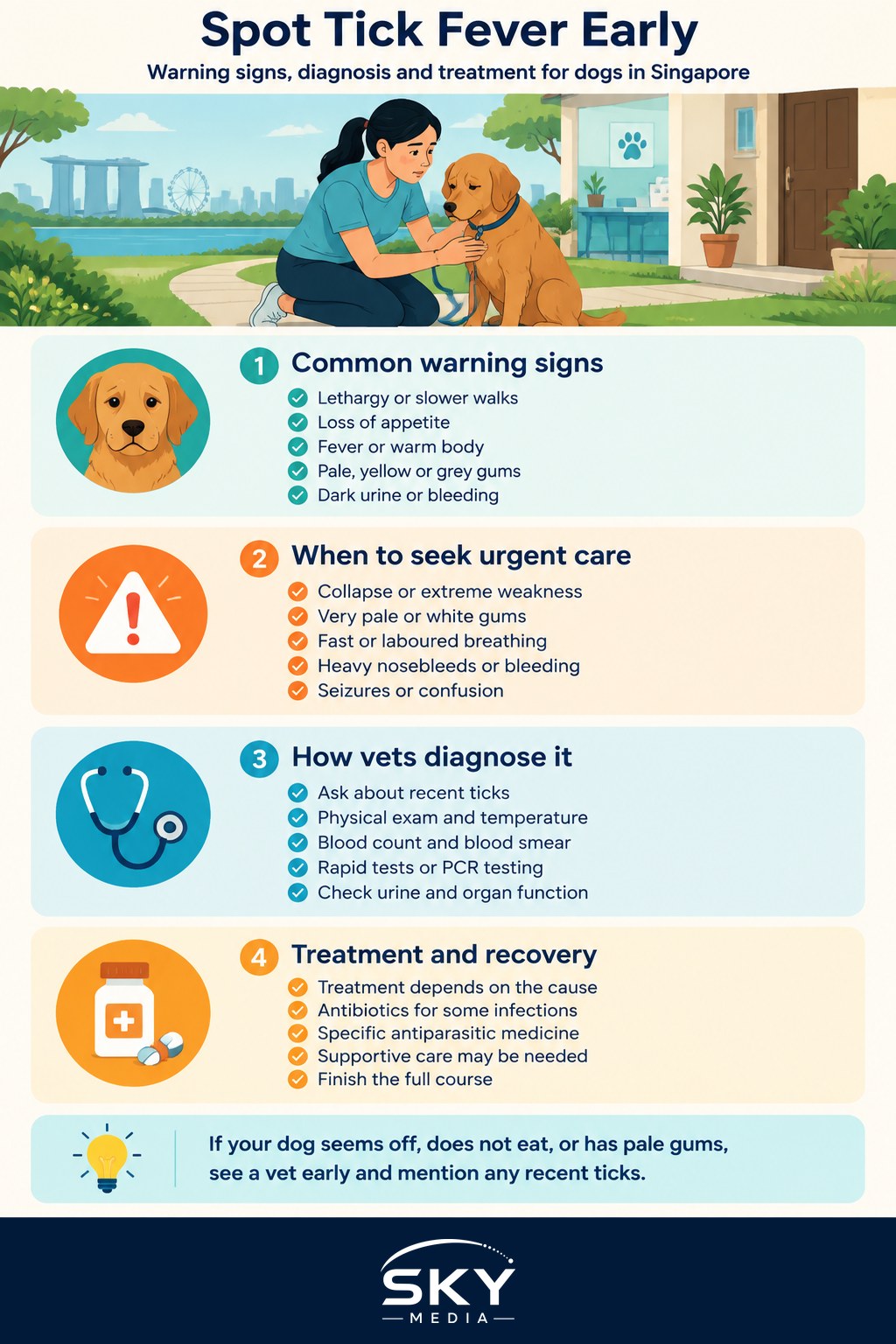
Tick fever often starts subtly. Watch for:
- Lethargy. Your dog sleeps more, lags on walks or does not greet you as usual.
- Loss of appetite. Refusing meals or treats for more than a day is a red flag.
- Fever. The dog may feel warm, pant more or seek cool floors.
- Pale gums. Healthy gums are usually pink. Pale, white or greyish gums can signal anaemia, a shortage of red blood cells.
- Yellow gums or eyes. Yellowing, called jaundice, can follow when red blood cells break down.
- Dark urine. Brown or reddish urine is a concern, especially with babesiosis.
- Bleeding or bruising. Nosebleeds, blood in stool or urine, and tiny red or purple spots on the skin or gums point to low platelets.
- Swollen lymph nodes, felt as lumps under the jaw or behind the knees.
- Limping or stiffness without an obvious injury.
- Eye changes such as redness or cloudiness.
Get into the habit of lifting your dog’s lip to check gum colour when they are well, so you know what normal looks like.
When It Is an Emergency
Seek urgent veterinary care, including an after-hours clinic if needed, if your dog shows:
- Collapse or extreme weakness
- Very pale or white gums
- Rapid or laboured breathing
- Heavy nosebleeds or other uncontrolled bleeding
- Dark urine combined with weakness
- Seizures or confusion
Severe anaemia and bleeding can become life-threatening quickly, and some dogs need hospital care or a blood transfusion.
How Vets Diagnose Tick Fever
When you visit the vet, mention any recent ticks you have found, where your dog has been walking, and when symptoms started. The vet may then:
- Examine your dog, checking temperature, gums, lymph nodes and the abdomen.
- Run a complete blood count to look at red cells, white cells and platelets. Low platelets are a common finding in tick fever.
- Look at a blood smear under the microscope, which can sometimes show the parasites or bacteria directly.
- Use rapid test kits that detect antibodies to some tick-borne organisms.
- Send blood for PCR testing, a laboratory test that detects the organism’s genetic material and can identify which species is present.
- Check organ function and urine to see how the kidneys and liver are coping.
Tests can occasionally come back negative early in an infection, so your vet may recommend repeating them or treating based on strong clinical suspicion.
How Tick Fever Is Treated
Treatment depends on which organism is involved and how sick the dog is. Your vet will decide the medicine, dose and duration, so never give human medication or leftover pet medicine at home.
- Ehrlichiosis and anaplasmosis are bacterial and are usually treated with a course of antibiotics, commonly from the tetracycline family such as doxycycline. Courses often run for several weeks.
- Babesiosis needs specific antiparasitic medicines, sometimes in combination, and some forms of babesia can be difficult to clear completely.
- Supportive care may include fluids, anti-nausea medicine, nutritional support and, in severe anaemia, blood transfusions.
Many dogs start to improve within days of treatment, but finishing the full course is essential. Stopping early can allow the infection to return.
Chronic Infection and Follow-up
Some tick-borne infections, ehrlichiosis in particular, can move into a chronic phase where a dog looks fine for months before problems such as bleeding or bone marrow suppression appear. Your vet may schedule repeat blood tests after treatment to confirm counts are recovering. Dogs that have had babesiosis can sometimes remain carriers, so tell any new vet about your dog’s history.
Living With a Dog After Tick Fever
Recovery is a good time to tighten your prevention routine. Practical habits include:
- Checking your dog after walks, especially between toes, inside ears, under the collar and around the tail
- Removing ticks promptly with a tick tool, gripping close to the skin
- Using vet-recommended tick prevention consistently, with no gaps
- Washing bedding and vacuuming where your dog rests
- Asking your vet about treating the home environment if ticks keep appearing
Infected dogs should not donate blood, and if you have several dogs, ask your vet whether the others should be checked. For general guidance on keeping pets healthy and licensed, the Animal & Veterinary Service (AVS) website is the official reference.
If your dog has been unwell and stressed by repeated vet visits, our guide to dog separation anxiety has tips for helping an anxious dog settle back into routine.
Official sources: Animal & Veterinary Service
Further reading: Mange in Dogs: Demodectic vs Sarcoptic · Leptospirosis in Dogs: Risks After Rain and Puddles · Pancreatitis in Dogs: Causes, Signs and Recovery