

If your dog suddenly starts making a harsh, honking cough a few days after boarding, grooming or a playdate at the dog run, kennel cough is one of the first things a vet will consider. Kennel cough in dogs is common, usually mild and often clears up on its own, but it spreads easily and can turn serious in puppies, senior dogs and dogs with other health problems. This guide explains the signs, what the vet may do, what boarding facilities in Singapore commonly ask for, and how to help your dog recover.
This is general information for pet owners, not veterinary advice. If your dog is unwell, speak to a licensed veterinarian.
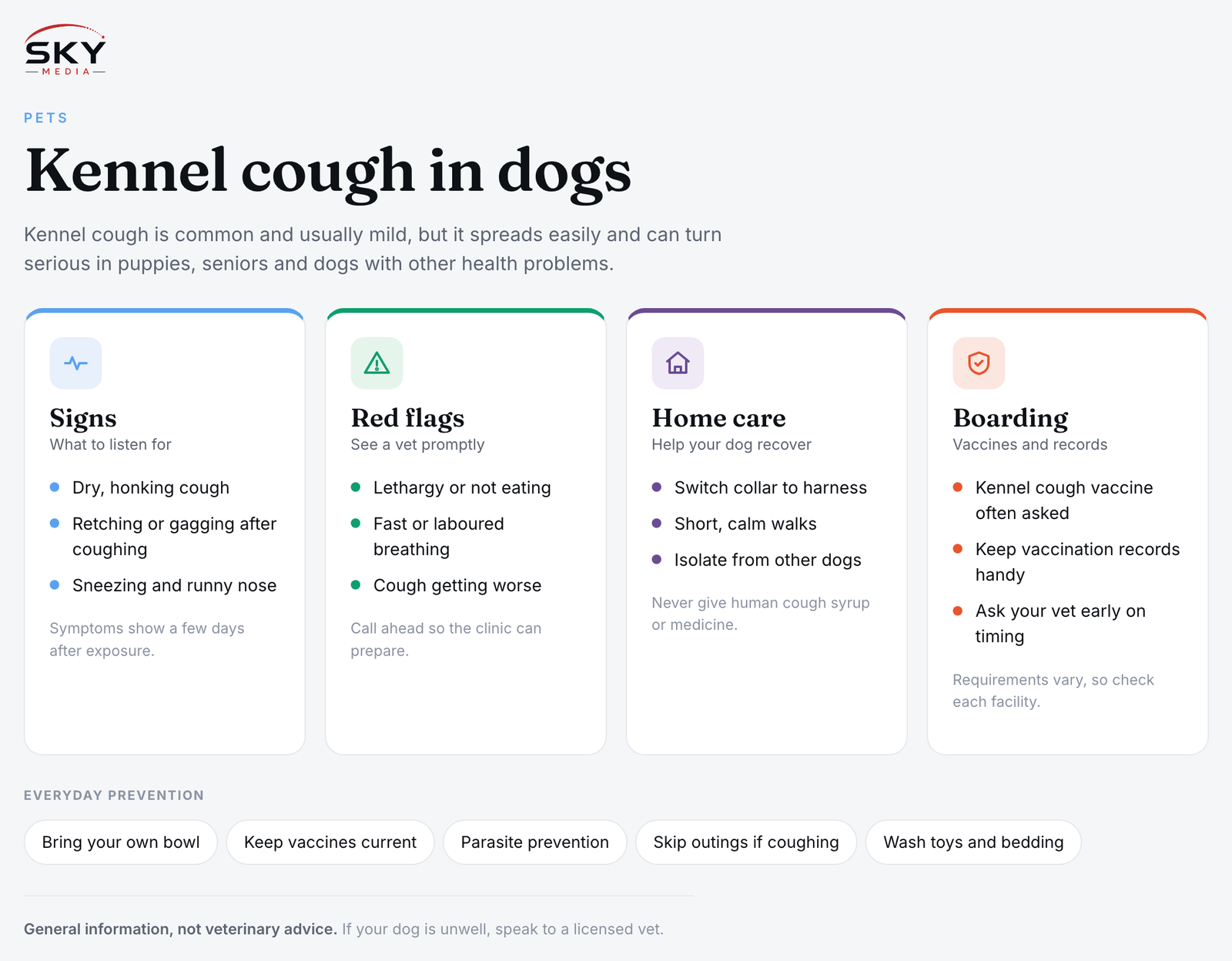
What Kennel Cough Actually Is
“Kennel cough” is an everyday name for an infection of a dog’s windpipe and airways. Vets may call it infectious tracheobronchitis or canine infectious respiratory disease complex, because several germs can cause it, often together. Commonly involved organisms include the bacterium Bordetella bronchiseptica and viruses such as canine parainfluenza virus, among others.
It spreads quickly wherever dogs gather, such as boarding kennels, daycare, grooming salons and busy dog runs, through:
- Droplets in the air when an infected dog coughs or sneezes
- Direct contact, such as sniffing and play
- Shared items such as water bowls, toys and leads
A dog can spread the infection before showing obvious signs, and for a time after it seems better. That is why even well-run facilities see cases.
Signs to Watch For
Symptoms usually appear a few days after exposure. Look out for:
- A dry, honking cough, often described as sounding like a goose. Many owners think something is stuck in the throat.
- Retching or gagging after coughing, sometimes bringing up a little white foam
- Coughing triggered by pressure on the neck, such as pulling against a collar, or by excitement and exercise
- Sneezing and a runny nose
- Mild watery eyes
Many dogs with mild kennel cough stay bright, eat normally and want to play. That is a reassuring sign, but they still need rest and should be kept away from other dogs.
Red flags that need a vet promptly
Take your dog to a vet quickly, and call ahead so the clinic can keep other patients safe, if you notice:
- Lethargy, weakness or not wanting to get up
- Loss of appetite or refusing water
- Fever (a vet can check this properly)
- Fast, laboured or noisy breathing
- Thick yellow or green nasal discharge
- A cough that is getting worse rather than better
- Any coughing in a young puppy, an elderly dog, a flat-faced breed or a dog with heart or lung disease
These can suggest the infection has spread deeper into the lungs, such as pneumonia, or that something other than kennel cough is going on. Coughing can also be caused by heart disease, collapsing trachea in small breeds, heartworm and other conditions, so a vet’s examination matters.
How Vets Diagnose and Treat It
Diagnosis is often based on the history (recent boarding or contact with other dogs) and a physical examination. If your dog is very unwell, not improving, or at higher risk, the vet may suggest further tests, such as chest X-rays, blood tests or swabs.
Treatment depends on how sick your dog is and is decided by your vet. In general:
- Mild cases are often managed with rest, isolation from other dogs and supportive care at home, as the immune system clears the infection.
- Some dogs may be given medication to ease the cough or reduce inflammation, at the vet’s discretion.
- Antibiotics may be prescribed if the vet suspects a bacterial infection or complications. Use them exactly as directed and finish the course.
- Severe cases with pneumonia may need hospital care.
Never give your dog human cough syrup, painkillers or leftover medicine. Many common human medicines are dangerous to dogs. Only use what your vet prescribes, at the dose they give.
Caring for Your Dog at Home During Recovery
Most dogs with uncomplicated kennel cough improve within a few weeks. You can make them more comfortable with a few simple steps:
- Switch from collar to harness. Pressure on the throat triggers coughing.
- Keep walks short and calm. Toilet breaks and gentle strolls are enough. Avoid hot midday walks, as heat and humidity can make breathing harder.
- Keep the air clean. Avoid smoking, incense, strong air fresheners and cleaning sprays around your dog. On hazy days, keep your dog indoors with windows closed.
- Ask about humidity. Some owners find a rest in a steamy bathroom eases the cough; ask your vet whether this suits your dog.
- Encourage drinking. Fresh water should always be available. Soft or slightly warmed food may be easier to eat.
- Isolate your dog. Skip dog runs, daycare, grooming and playdates until your vet says your dog is no longer contagious. Let neighbours with dogs know, especially in shared lift lobbies.
- Clean shared items. Wash bowls, bedding, toys and leads regularly.
If the cough is getting worse after the first few days, or any red flags appear, go back to the vet.
Vaccination and Boarding Requirements in Singapore
Vaccines are available that target some of the common causes of kennel cough, including Bordetella and canine parainfluenza. Depending on the product, they may be given by injection, into the nose or by mouth. Vaccination does not guarantee a dog will never catch kennel cough, because several organisms are involved, but it can reduce the risk and often makes illness milder.
Many boarding kennels, daycare centres and some groomers in Singapore ask for proof of vaccination before accepting a dog. Requirements vary by facility, so always check directly. This is how the main vaccine types commonly line up:
| Vaccine or protection | What it targets | How boarding facilities commonly treat it |
|---|---|---|
| Core vaccinations | Serious diseases such as distemper, parvovirus and canine hepatitis, as recommended by your vet | Commonly required and checked against your dog’s vaccination record |
| Kennel cough vaccine | Some causes of kennel cough, such as Bordetella and parainfluenza | Often required or strongly recommended; some facilities set a minimum time between the vaccine and the stay |
| Parasite prevention | Ticks, fleas and, with some products, heartworm | Often asked about, as close contact spreads parasites |
| Health check on arrival | General wellbeing, signs of illness | Many facilities turn away a dog that is coughing or unwell on the day |
Practical tips if you are planning to board your dog:
- Ask your vet early. If a facility wants the kennel cough vaccine, your vet can advise the right product and timing, since protection takes time to build.
- Keep records handy. Bring your dog’s vaccination card or digital record, and check expiry dates before booking.
- Ask about hygiene. Good facilities clean and ventilate well, separate dogs by size and temperament, and have a plan for sick dogs.
- Watch after pickup. Mild coughing can appear a few days later. Keep your dog away from other dogs and call your vet if it develops.
Dog boarding and daycare businesses in Singapore may be subject to licensing by the Animal & Veterinary Service (AVS), part of NParks. Check the AVS website for current rules and for general advice on pet health.
Reducing the Risk Day to Day
Beyond vaccination, simple habits help keep your dog healthy:
- Keep up with your vet’s recommended vaccination and health check schedule.
- Avoid letting your dog share water bowls at crowded dog runs. Bring your own.
- Skip social outings if your dog, or a dog you know, is coughing.
- Keep parasite prevention up to date. Our guide to tick, flea and heartworm prevention for dogs explains the options.
- Know other illnesses that can look like a general “off day”, such as tick fever in dogs.
Kennel cough in dogs is usually more alarming to hear than it is dangerous, but it deserves attention. Spot the cough early, rest and isolate your dog, and work with your vet, and most dogs are back to normal within a few weeks.
Official sources: Animal & Veterinary Service
Further reading: Reverse Sneezing in Dogs: Is It Dangerous? · Cushing’s Disease in Dogs: Symptoms, Testing and Treatment Costs · Feline Panleukopenia in Cats: Signs and Prevention