
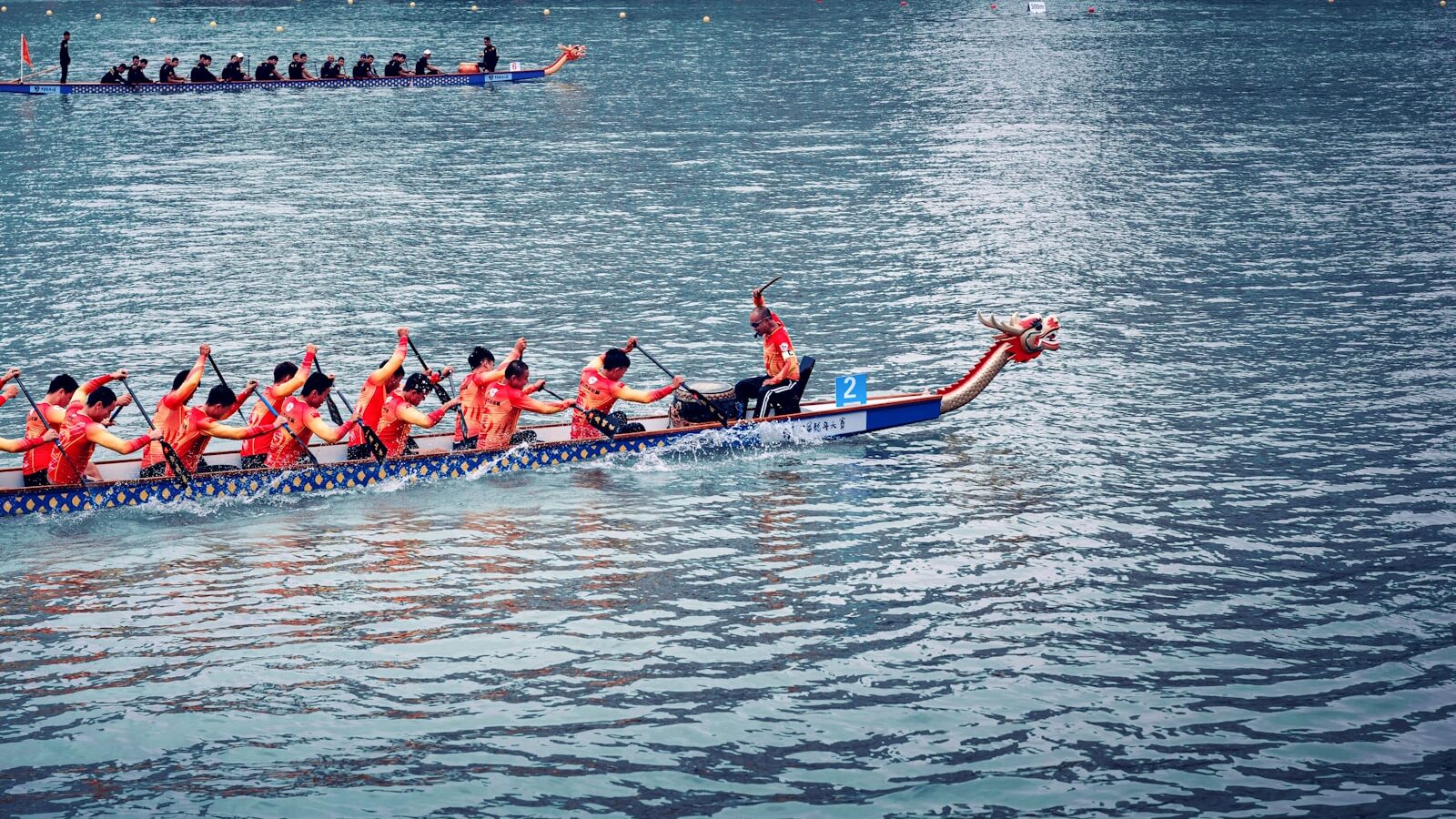
Few sports capture the spirit of teamwork quite like dragon boating. Twenty or so paddlers moving as one, a drummer setting the beat, and a long, colourful boat slicing across the water: it is dramatic to watch and even more rewarding to do. In Singapore, with our calm reservoirs and long paddling tradition, it is also surprisingly accessible. This guide walks a complete beginner through what the sport involves, what to expect at a first session, and how to get on the water sensibly.
This is general information, not medical or coaching advice. Dragon boating is physically demanding and takes place on open water, so if you are older, sedentary, pregnant or living with a heart, back or shoulder condition, check with a doctor before starting, and always learn under qualified supervision.
What Dragon Boating Actually Involves
A dragon boat is a long, narrow craft seated by a team of paddlers arranged in pairs, guided by a helm at the back who steers, and often paced by a drummer at the front. Everyone paddles on one side, and the magic of the sport lies in synchronisation: a crew that times its strokes together moves far faster than a stronger crew paddling out of sync.
The paddling stroke is a full-body movement. It draws on your legs and hips for power, your core to transfer that power, and your back, shoulders and arms to move the paddle through the water. Contrary to first impressions, it is not mainly an arm sport; well-coached paddlers drive from the trunk and legs.
Sessions typically mix technique work, where the crew refines timing and the stroke, with conditioning pieces that build endurance and power. Because it is a team sport, there is a strong social and even competitive side, with local crews often training towards regattas held through the year.
The Fitness and Wellbeing Benefits
As a workout, dragon boating is genuinely well rounded, which is a big part of its appeal.
- Full-body strength and endurance. The repeated stroke works your back, core, shoulders and legs together, building both muscular endurance and cardiovascular fitness.
- Cardiovascular fitness. Sustained paddling and interval-style pieces raise your heart rate and, over time, your aerobic capacity.
- Core stability. Staying balanced and transferring power in a narrow, moving boat is constant work for your trunk.
- Teamwork and community. Few gym sessions offer the camaraderie of a crew pulling together. Many paddlers stay for the people as much as the fitness.
- Being outdoors. Time on the water, away from screens, is a welcome change of scene from indoor training.
Like any sport, it complements rather than replaces general fitness. Many paddlers do their own strength and conditioning on the side, and pairing crew sessions with a plan such as building your first workout routine helps you show up stronger and more resilient.
Where and How to Start in Singapore
Singapore is well suited to the sport, with several reservoirs offering calm, sheltered water. Bedok Reservoir and the Kallang basin are among the well-known spots where paddling communities gather, and clubs and teams operate across the island.
Here is a sensible path in:
- Find a club or team that welcomes beginners. Many crews run introductory or novice sessions and provide the boat and paddles, so you do not need your own equipment to try.
- Attend a taster or beginner session. Expect to spend time on land first, learning the basic stroke and safety briefing before getting on the water.
- Learn the stroke properly. Good technique protects your shoulders and back and makes you useful to the crew. Resist the urge to muscle it; timing and form come first.
- Build gradually. Your hands, back and shoulders need time to adapt. Early soreness is normal, but ramp up your involvement steadily.
You do not need to be a strong swimmer to begin at most beginner sessions, but you must be comfortable in water and follow all safety rules, including wearing the provided personal flotation device.
Staying Safe on the Water
Because dragon boating happens on open water in a hot climate, safety deserves real attention. None of it is complicated, but all of it matters.
- Always wear the personal flotation device provided, and follow the helm’s and coaches’ instructions without exception. They are responsible for the crew’s safety.
- Respect the water. Only paddle in organised, supervised settings on approved waters. Weather can change, and open water carries real risks.
- Manage the heat. Singapore’s sun is fierce on exposed water. Hydrate well before, during and after, wear sun protection and a hat where practical, and watch for dizziness, nausea or headache, which can signal heat exhaustion. Get to shade and cool down if they appear.
- Protect your shoulders and back. Warm up properly and prioritise clean technique, as detailed in our guide to warming up and cooling down properly. Stop for sharp pain, which is different from ordinary muscle soreness, and see a doctor or physiotherapist if it persists.
How does the sport compare with a couple of other water-based options many Singaporeans consider? The table gives a quick sense of the trade-offs.
| Feature | Dragon boating | Kayaking | Aqua aerobics |
|---|---|---|---|
| Team or solo | Team, highly social | Solo or small group | Group class |
| Main fitness gain | Full-body power and endurance | Upper body and core | Gentle whole-body |
| Impact on joints | Low to moderate | Low | Very low |
| Beginner friendliness | Moderate, needs coaching | Moderate | High |
| Water safety demand | Higher, open water | Higher, open water | Low, in a pool |
If a gentler introduction to water fitness appeals first, our guide to aqua aerobics and water workouts is a softer entry point that still builds confidence in the water.
Making It a Lasting Part of Your Routine
What keeps most paddlers coming back is the crew. A committed team gives you fixed session times, encouragement on the tough days, and a shared goal to train towards, all of which quietly solve the hardest part of fitness, which is turning up. If you have struggled with staying consistent with exercise, the accountability of a crew can be a genuine game changer.
Start with realistic expectations. Your first few sessions will focus on learning, not performance, and it takes time before the stroke feels natural and the crew moves as one. That gradual mastery is part of the reward. Given the physical demands, listen to your body, rest when you need to, and build your involvement over weeks rather than forcing it.
For anyone drawn to teamwork, the outdoors and a full-body challenge, dragon boating is one of Singapore’s most distinctive ways to get fit. Find a welcoming crew, respect the water, and let the rhythm of the paddle do the rest.
Explore more: Aqua aerobics and water workouts · Warming up and cooling down properly · Building your first workout routine · Staying consistent with exercise