
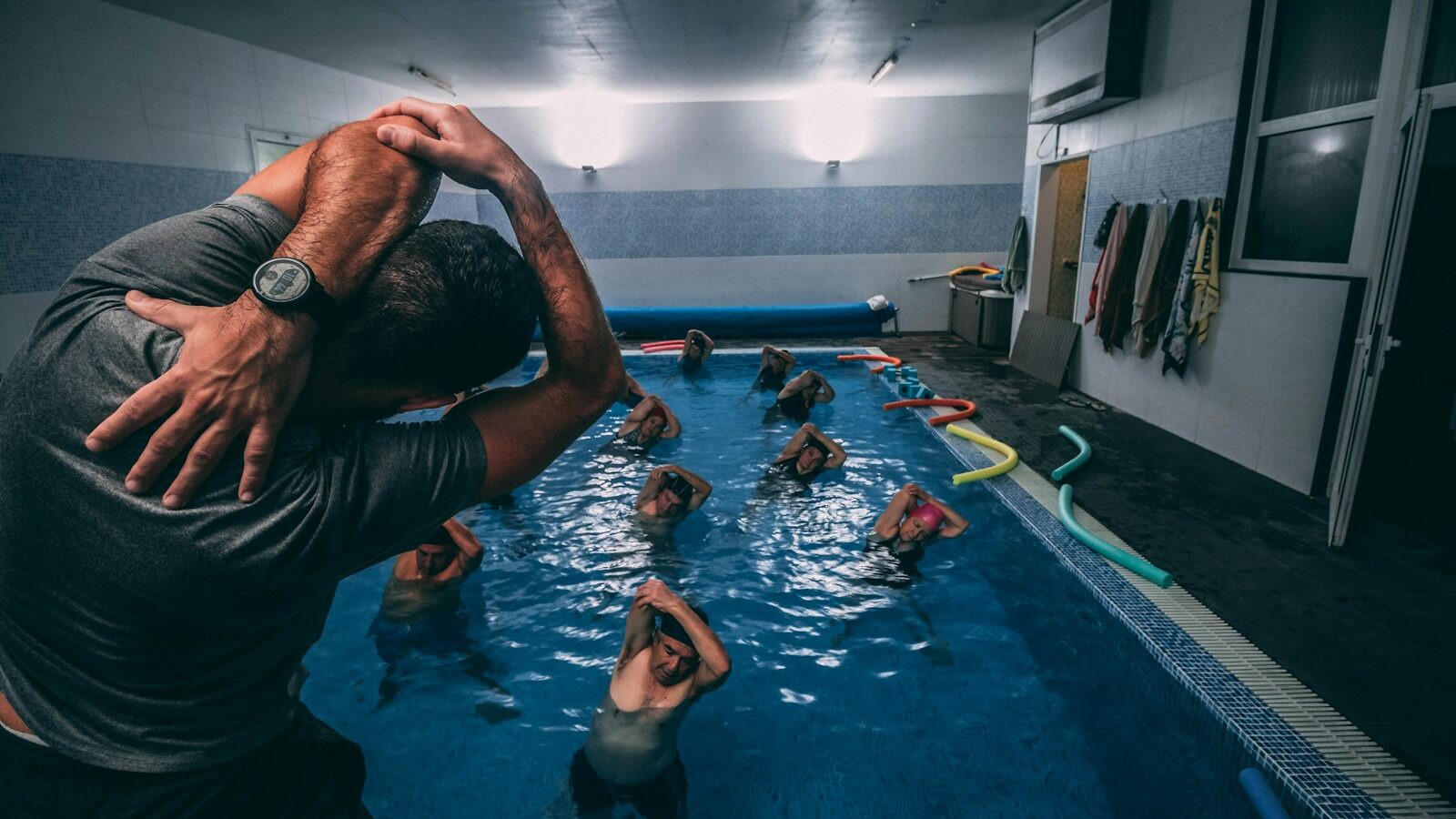
There is a reason you often see lively classes bobbing in the shallow end of public pools. Aqua aerobics takes the sting out of exercise by letting water do some of the work, cushioning your joints while still challenging your muscles and heart. In a hot country like Singapore, working out while staying cool is an added bonus. This guide explains how water workouts help, who they suit, and how to get started safely at pools across the island.
This is general wellbeing information, not medical advice. Water workouts are gentle, but if you are older, pregnant, recovering from surgery or an injury, or living with a heart condition or other illness, check with a doctor or physiotherapist before starting, and always exercise where lifeguards are present.
Why Water Changes Everything
Water has two properties that make it a remarkable place to exercise, and understanding them shows why it can suit almost anyone.
The first is buoyancy. When you stand chest-deep, the water supports much of your body weight, dramatically reducing the load on your knees, hips and spine. Movements that hurt on land, like jogging or jumping, often feel comfortable in the pool. This is why water workouts are so widely recommended for people with joint pain, arthritis or those returning from injury, and for anyone staying active with limited mobility.
The second is resistance. Water is far denser than air, so every movement meets gentle resistance in all directions. Pushing your arms and legs through it strengthens your muscles without any weights, and because the resistance grows the harder you push, the workout naturally scales to your effort. You get muscle work and cardiovascular exercise in one, cushioned package.
Together these mean water workouts are simultaneously gentle and genuinely effective, a rare combination that lets a wide range of ages and abilities train side by side.
What a Typical Session Looks Like
Aqua aerobics is usually a group class held in the shallow end, led by an instructor on the poolside. You do not swim; you stand and move, so being a strong swimmer is not required, though you must be comfortable in water at a safe depth.
A session commonly flows through several phases:
- A gentle warm-up, walking or marching in the water to raise your temperature and loosen up.
- A cardiovascular section, with movements like water jogging, jumping jacks or kicks that get your heart rate up while the water absorbs the impact.
- Strength and toning, pushing and pulling your arms and legs against the water’s resistance, sometimes with foam floats or webbed gloves for extra work.
- A cool-down and stretch, easing your body back down gently.
Beyond structured classes, you can also do your own water workouts: walking lengths in the shallow end, gentle water jogging, or simple resistance movements. The variety keeps things interesting and lets you match the effort to your day.
Who Water Workouts Suit and the Trade-offs
Part of the charm of aqua aerobics is how broad its appeal is, but it helps to be honest about where it shines and where it does not.
It suits an unusually wide range of people:
- Older adults and beginners, thanks to the low impact and supportive environment.
- Those with joint pain or arthritis, who often move far more freely in water.
- People recovering from certain injuries, as part of a plan guided by a professional.
- Anyone wanting variety, including regular gym-goers looking for a gentle, refreshing session.
The trade-offs are worth noting too. Because water supports your weight, aqua aerobics is not weight-bearing, so it does not build bone density the way walking does, and the gentle nature means it may not push cardiovascular fitness as hard as high-intensity land training. For many people that gentleness is exactly the point, but it is best seen as one valuable piece of a rounded routine rather than the whole of it. Pairing it with some land-based work and habits like balance and stability training gives you the best of both.
Here is how water workouts compare with two other gentle, joint-friendly options.
| Feature | Aqua aerobics | Walking | Stationary cycling |
|---|---|---|---|
| Impact on joints | Very low | Low to moderate | Low |
| Keeps you cool | Yes, in water | No | Only indoors |
| Builds strength | Moderate, all directions | Light | Legs mainly |
| Weight-bearing benefit | No | Yes | No |
| Beginner friendliness | Very high | Very high | High |
Each has its place, and there is no reason to pick only one; variety keeps exercise enjoyable and works your body in different ways.
Getting Started at Singapore’s Pools
Singapore is well set up for this, with public ActiveSG pools dotted across the island, many offering affordable structured aqua fitness classes. Here is a sensible way in.
- Check your nearby ActiveSG pool for scheduled aqua aerobics or water fitness classes, which are an easy, guided way to learn the movements.
- Go at a comfortable time. Public pools can be busy after school and at weekends; a weekday morning is often quieter for beginners.
- Bring the basics. Swimwear, a towel, water to drink and, ideally, aqua shoes for grip. You will still sweat and lose fluid even in the pool, so hydrate before and after.
- Start gently. Begin with a beginner-friendly class or your own easy session, and build up as your confidence and fitness grow.
Staying Safe in the Water
Water workouts are gentle, but the pool still calls for sensible care.
- Always exercise where lifeguards are on duty, and stay within a depth where you can stand comfortably and keep your head above water.
- Do not overheat despite the cool feel. The water masks how hard you are working, so pace yourself, and keep sipping water, as you can still become dehydrated.
- Warm up and cool down, even in the pool, following the ideas in warming up and cooling down properly.
- Listen to your body. Mild effort and tiredness are fine, but stop for dizziness, chest pain, unusual breathlessness or sharp pain, and see a doctor if anything concerning persists.
If you enjoy the water and want a bolder challenge later, the same confidence can lead you towards team water sports like dragon boating, though those carry their own open-water safety demands.
For a huge number of Singaporeans, aqua aerobics hits a sweet spot: a workout that is easy on the body, cooling in the heat, sociable in a class, and effective enough to genuinely improve fitness. Find your nearest pool, start gently, respect the water, and let it become a refreshing regular fixture in your week.
Explore more: Staying active with limited mobility · Balance and stability training · Dragon boating in Singapore · Warming up and cooling down properly