
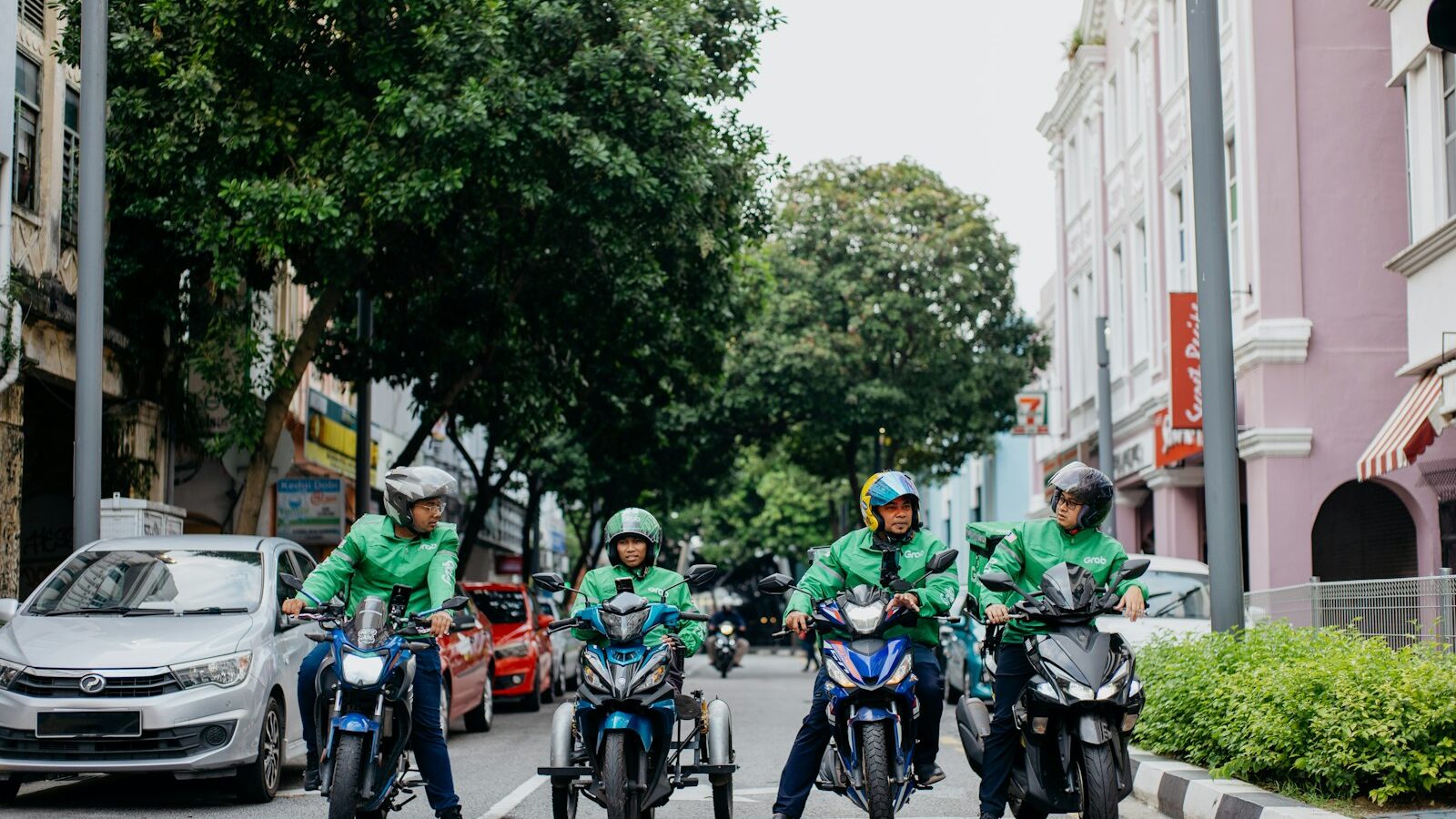
Electric motorcycles are a quiet but growing presence on Singapore roads, from delivery riders on compact e-scooters with number plates to commuters on full-size electric bikes. If you are weighing up an electric motorcycle in Singapore, the questions are a little different from those for a petrol bike or an electric car. You still need a licence, a Certificate of Entitlement (COE) and insurance, but charging, battery care and running costs work in their own way.
This guide walks through how e-motorcycles are approved and registered, which licence and COE category apply, how charging works when you live in an HDB flat or condo, and where the real costs sit. Rules and fees change, so confirm current details with the Land Transport Authority (LTA) before you commit.
How LTA Approves and Registers Electric Motorcycles
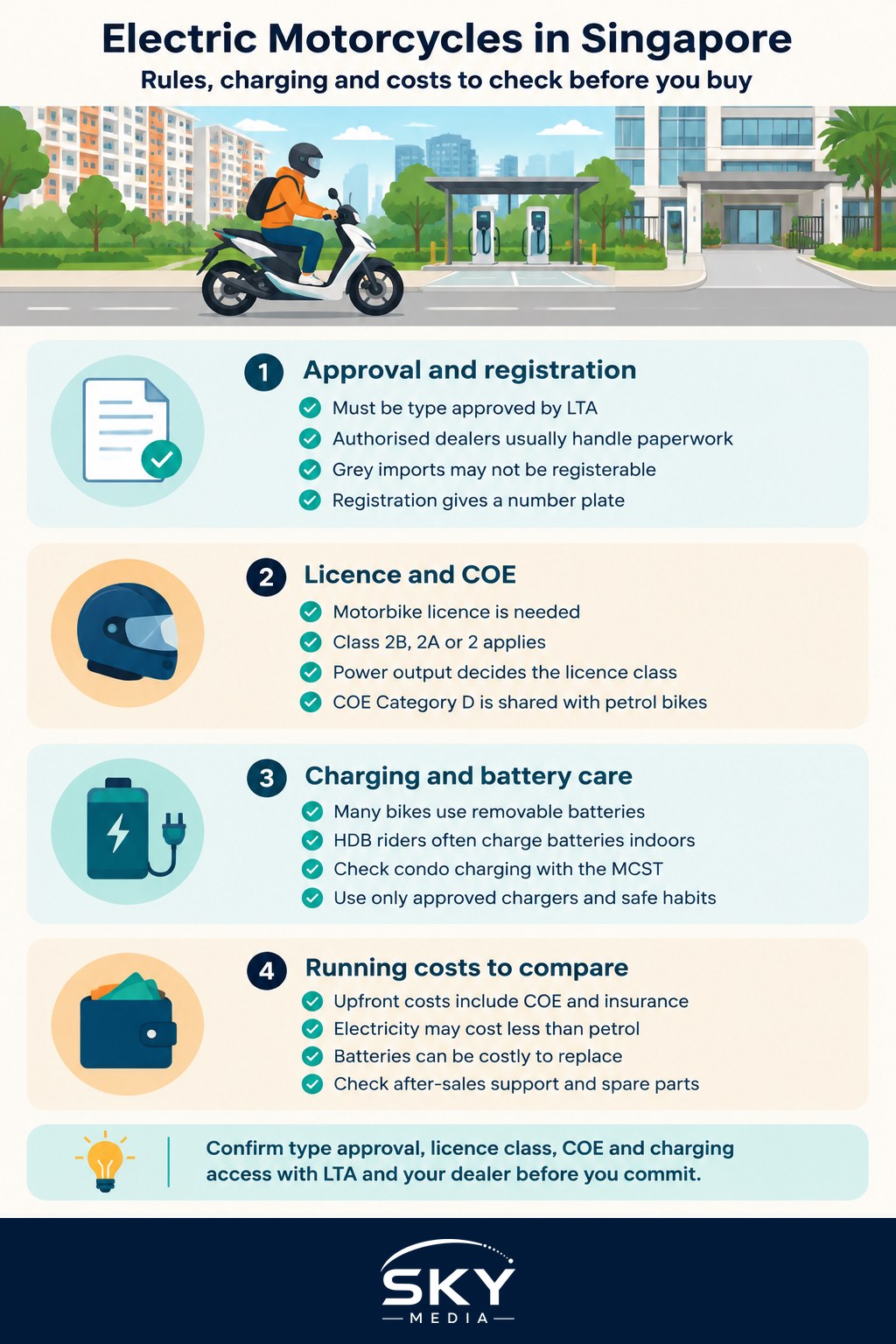
Every motorcycle sold for road use in Singapore must be type approved by LTA. Type approval means the model has been checked against Singapore’s technical and safety standards before it can be registered. For electric models this also covers matters such as the battery system, the motor’s rated power and the charger supplied with the bike.
If you buy from an authorised dealer, the dealer usually handles the paperwork. The risk sits mainly with grey imports and overseas online purchases. An e-motorcycle bought abroad that has not been type approved for Singapore cannot simply be registered here, and modifying a bike after approval (for example, swapping in a more powerful controller or a larger aftermarket battery) can make it non-compliant.
A few points to keep clear:
- An e-motorcycle is not a PMD or PAB. Power-assisted bicycles (PABs) and personal mobility devices (PMDs) such as e-scooters have their own separate LTA rules. A throttle-powered electric two-wheeler that is fast enough to keep pace with road traffic is normally treated as a motorcycle.
- Registration gives you a number plate. The bike is then subject to road tax, insurance and inspection rules like any other motorcycle.
- Check the model on LTA’s OneMotoring site. OneMotoring is LTA’s portal for vehicle matters, and it is the place to confirm type approval status, registration steps and current charges.
Licence Class and COE Category for E-Motorcycles
Riders need a motorcycle licence whether the bike is petrol or electric. Singapore’s motorcycle licences are tiered as Class 2B, Class 2A and Class 2. For petrol bikes the tiers follow engine capacity. For electric motorcycles, which have no engine capacity, LTA uses the motor’s power output to decide which licence class applies. Most new riders start on Class 2B and progress upwards after holding a licence for the required period. Our guide to riding a motorcycle in Singapore covers the licence path in more detail.
Electric motorcycles share COE Category D with petrol motorcycles. There is no separate COE category for electric bikes, so you bid in the same pool and pay the same prevailing premium. Category D premiums move with each bidding exercise, so check the latest results on OneMotoring rather than relying on older figures.
Before you buy, confirm three things with the dealer and with LTA:
- The rated power of the motor and the licence class it maps to.
- Whether the price quoted includes COE, registration and road tax, or only the bike itself.
- How road tax is computed for that model, since electric motorcycle road tax is based on power rating rather than engine capacity.
Comparing E-Motorcycles With Other Electric Two-Wheelers
People often lump all electric two-wheelers together, but the rules on where you can ride and what paperwork you need differ sharply. This comparison is a starting point only; check LTA’s current rules for each device type.
| Feature | Electric motorcycle | Power-assisted bicycle (PAB) | E-scooter (PMD) |
|---|---|---|---|
| Where you can ride | Roads only, like any motorcycle | Roads and cycling paths, not footpaths | Cycling paths and park connectors only, not roads or footpaths |
| Licence needed | Class 2B, 2A or 2 motorcycle licence | No driving licence, but rules on age and a theory test apply | No driving licence, but a theory test applies |
| Registration | Number plate, COE and road tax | LTA registration with a seal and plate | Registration with LTA |
| Insurance | Compulsory motor insurance | Not compulsory, though third-party cover is encouraged | Not compulsory, though third-party cover is encouraged |
| Typical use | Commuting and longer road trips | Short trips and deliveries | Short first and last mile trips |
For short trips mostly on park connectors, a PAB may fit better. For expressways and regular road riding, you need a registered e-motorcycle.
Charging an Electric Motorcycle at Home and in Public
Charging is where e-motorcycles differ most from electric cars. Many models use removable battery packs that you can carry upstairs and charge from a standard three-pin socket. Others have fixed batteries and need a socket or charger within reach of the parking spot.
If you live in an HDB flat, removable batteries are usually the practical choice, since motorcycle lots in multi-storey carparks rarely have power points. Bring the pack home and charge it indoors using the manufacturer’s charger only.
If you live in a condo or landed home, you may be able to charge a fixed-battery bike at a power point near your lot. In a condo this is a matter for the management corporation (MCST, the body that runs the estate), so ask before plugging into common property.
Public charging is mostly built for cars. Some e-motorcycles can use the same connectors found at public EV chargers, while many cannot. Check your model’s charging port and the charger operator’s terms. Our explainers on EV charging costs and owning an electric car and charging it explain how public charging is priced.
Battery safety habits
Lithium-ion battery fires are taken seriously in Singapore, and the Singapore Civil Defence Force (SCDF) regularly reminds residents about safe charging. Sensible habits include:
- Use only the original or manufacturer-approved charger.
- Do not charge overnight or while you are out of the house.
- Charge on a hard, non-flammable surface away from exits and soft furnishings.
- Stop using a battery that is swollen, damaged, hot to the touch or smells unusual.
- Never modify the battery or buy unverified replacement packs online.
Running Costs: Where the Money Goes
The big fixed costs of an electric motorcycle look much like those of a petrol bike: the purchase price, COE, registration, road tax and insurance. The savings, if any, come from running costs.
- Energy. Electricity per kilometre is usually cheaper than petrol, but the gap depends on your tariff, whether you charge at home or at paid public chargers, and how you ride.
- Maintenance. There is no engine oil, spark plug or clutch to service, so routine servicing tends to be simpler. Tyres, brakes, suspension and the chain or belt still wear normally.
- Battery replacement. This is the cost to plan for. Batteries lose capacity with age and charge cycles, and a replacement pack can be a significant expense. Ask the dealer about the battery warranty and what counts as a covered loss of capacity.
- Insurance. Some insurers price electric motorcycles differently. Get quotes before you commit, and read the policy wording on battery damage and fire.
- Spare parts. Newer brands may have fewer workshops able to repair them, so check local after-sales support.
To compare, multiply your monthly kilometres by each option’s energy cost per kilometre, then add servicing and a monthly sum set aside for battery replacement.
Is an Electric Motorcycle Right for You?
An e-motorcycle suits riders with a predictable daily route, a reliable place to charge and an interest in low running costs and a quieter ride. It is less convenient for long distances or trips into Malaysia. Range varies widely, so test ride the bike and ask for realistic range figures.
Before you sign, check type approval and registration on OneMotoring, confirm your licence class for the bike’s power rating, compare total cost including COE and battery replacement, and plan exactly where and how you will charge. If you are also weighing a four-wheeled option, read about switching to an electric vehicle in Singapore.
Official sources: Land Transport Authority (LTA) · OneMotoring
Further reading: Are Hoverboards and Electric Skateboards Legal in Singapore? · Motorcycle Parking in Singapore: Lots, Rates and Rules