
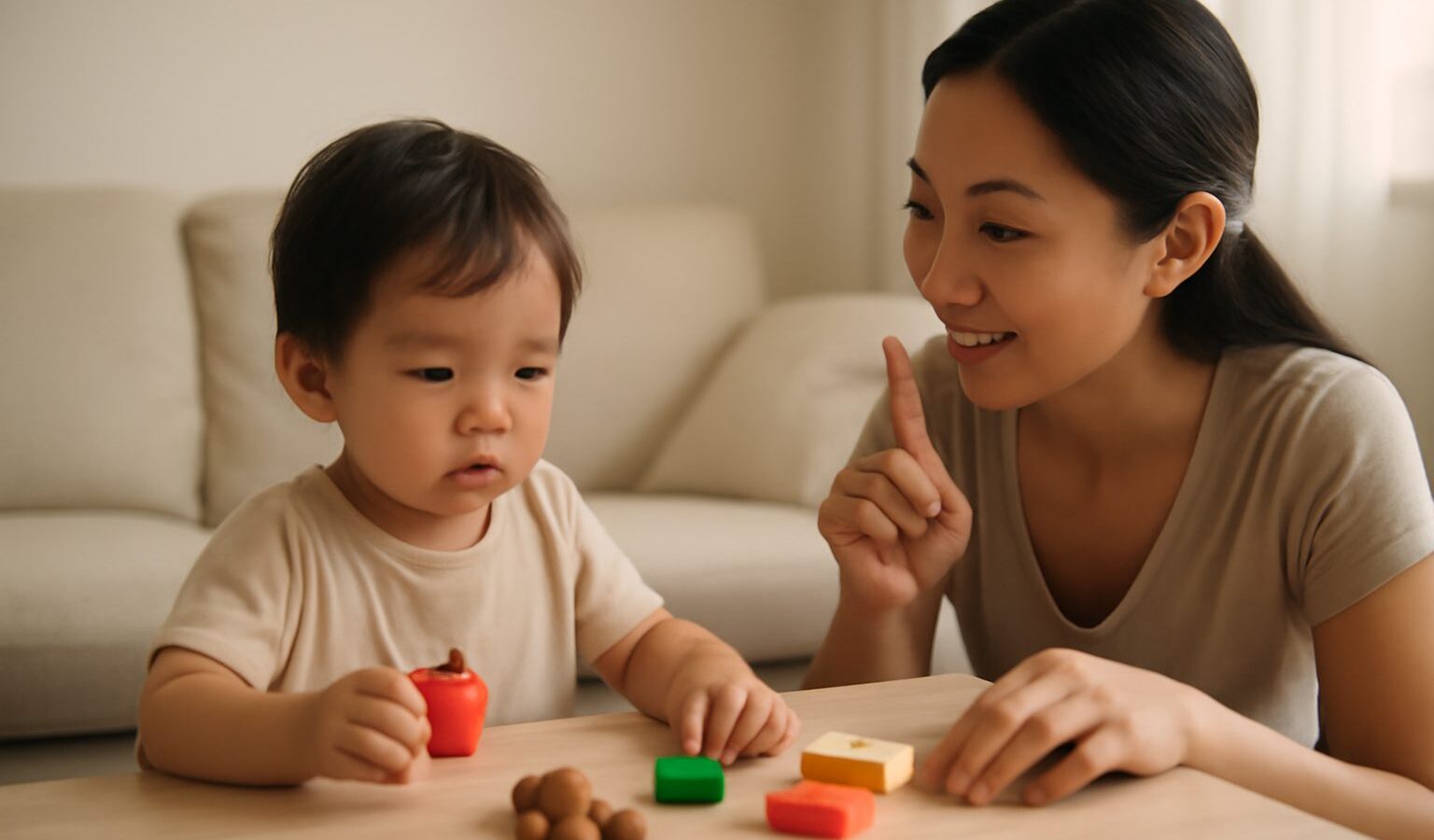
Few things melt a parent’s heart like a first clear word, and few things stir quiet worry like wondering whether it is coming soon enough. If you are thinking about toddler speech in Singapore, take a breath first: language blooms in its own time, and the everyday chatter of home does more for it than any app or flashcard. This guide walks through gentle, practical ways to help your little one find their words, with a warm nod to our bilingual, multi-generational households. It is general information, not a diagnosis, and every child grows on their own timeline.
How Toddler Speech Usually Unfolds
Talking is built long before the first word arrives. Babies coo, babble, point, and copy your sounds, and each of those is a step. Around the first birthday many toddlers have a word or two, and over the second year vocabulary often grows quickly, sometimes in surprising bursts after quiet stretches. By around two, many children start stringing two words together, like “more milk” or “Daddy go”.
These are rough patterns, not a scorecard. Some chatty toddlers talk early and walk late; some quiet observers say little, then suddenly speak in sentences. Comprehension usually runs ahead of speech, so your child understands far more than they can say. If your toddler follows simple instructions, points to show you things, and enjoys back-and-forth games, those are strong signs that language is developing under the surface, even when words are still few.
Everyday Ways to Grow Words at Home
The good news for tired parents is that the best speech practice is woven into ordinary moments. You do not need a special programme, just a habit of talking with your child rather than at them.
- Narrate the day. Describe what you are doing as you do it: “We are washing the rice now. Splash, splash.” Bath time, the lift ride down, hanging laundry on the rack, all become language lessons.
- Follow their lead. Notice what your toddler is looking at and name it. Interest is the engine of learning, so a gecko on the wall or a bus at the void deck is a better prompt than any worksheet.
- Pause and wait. After you ask something, count silently to five. That gap gives your child space to reach for a word or a sound instead of you filling the silence.
- Expand, do not correct. If your child says “car”, you can reply, “Yes, a red car, going fast.” This adds words gently without making them feel wrong.
- Read together daily. Board books, picture books, even the same one for the hundredth time. Point at pictures, ask “Where is the dog?”, and let them turn the pages.
- Sing and rhyme. Songs slow speech down and add rhythm, which helps sounds stick. Local nursery favourites and simple action songs are perfect.
Play is where much of this comes alive. Pretend cooking, feeding a soft toy, or stacking blocks all invite words like “hot”, “up”, “fall”, and “again”. Keep it light and let it be fun; a giggling child is a learning child.
Screens, Dummies, and Other Everyday Questions
Parents in Singapore often juggle busy schedules, and screens can feel like a lifeline. Passive screen time, where a child watches alone, does little for speech because language grows through two-way interaction. If you do use a screen, watching together and chatting about what you see turns it into shared time rather than solo viewing. The Health Promotion Board generally advises very limited screen use for the youngest children, so real faces and real voices should stay the main event.
Prolonged use of a dummy or bottle through the day can make it harder for a toddler to babble and practise sounds, so offer chances for a free, chatty mouth during play and mealtimes. And do have hearing checked if you ever wonder about it, because clear hearing sits at the heart of clear speech.
The Bilingual Question in Singapore Homes
Many local families speak English at home, Mandarin or a dialect with grandparents, and perhaps Malay or Tamil too. Parents sometimes worry that two or three languages will confuse a toddler or slow their speech. Reassuringly, children’s brains are wonderfully built for this, and growing up multilingual does not cause language delay.
You may notice a bilingual toddler mixing languages in one sentence, or having a slightly smaller vocabulary in each language while their total across both is right on track. This is normal and usually evens out. A simple, steady approach helps: let each person speak the language they are most natural and warm in, whether that is a parent, a grandparent, or a helper. Rich, loving conversation in any language builds the same core skills. What matters is the quantity and warmth of talk, not sticking to one tongue.
When to Check In With a Professional
Here is the honest, important part. Every child develops at their own pace, and a quiet toddler is very often simply taking their time. At the same time, you know your child best, and early support makes a real difference when it is needed. Trust your instinct: if something feels off, it is always reasonable to ask.
Speak to your doctor, a paediatrician, or a KKH or NUH clinic for an assessment if you notice signs like these, and never feel you are overreacting by asking:
- Little or no babbling, pointing, or gesturing by around the first year.
- No clear words by around 16 to 18 months, or a very small vocabulary that is not growing.
- Not putting two words together by around two years.
- Losing words or skills your child once had.
- Seeming not to hear you, not responding to their name, or frequent ear infections.
- Little interest in connecting, sharing attention, or copying you.
A polyclinic GP or your child’s routine developmental check is a good first stop, and referral to a speech therapist or audiologist can follow if useful. Early intervention is gentle, play-based, and genuinely helpful. Asking early is a sign of good parenting, not worry gone wrong.
What to Try Versus What to Ease Off
| Everyday moment | Lean into this | Gently ease off this |
|---|---|---|
| At mealtimes | Naming foods, offering choices, chatting face to face | Feeding in silence while everyone scrolls |
| During play | Following their interest and adding words | Quizzing or testing (“Say bus! Say it!”) |
| With screens | Watching together and talking about it | Long stretches of solo watching |
| When they mispronounce | Repeating the word correctly and warmly | Correcting sharply or making them repeat |
| If you feel unsure | Asking a doctor or paediatrician early | Waiting silently and worrying alone |
Keeping It Warm and Pressure-Free
Language grows best in a relaxed, loving home, so resist the urge to turn every moment into a lesson. Your toddler does not need a perfect parent narrating flawlessly all day; they need you, present and delighted by them. Celebrate the small wins, the new sound, the first “no”, the day they finally say your name. Let the slow days be slow. With steady, cheerful talk and a watchful, unworried eye, you are giving your child exactly what their speech needs most.
Explore more
Talking often blooms alongside other big toddler leaps, so you may find it helpful to read our guide on building a toddler daily routine for calmer, chattier days. For those tricky feelings that come out before the words do, see managing toddler meltdowns in public, and for mealtime chats that build language, try handling fussy eating in toddlers.
Related across Sky Media: Speech and Language Development in Singapore