
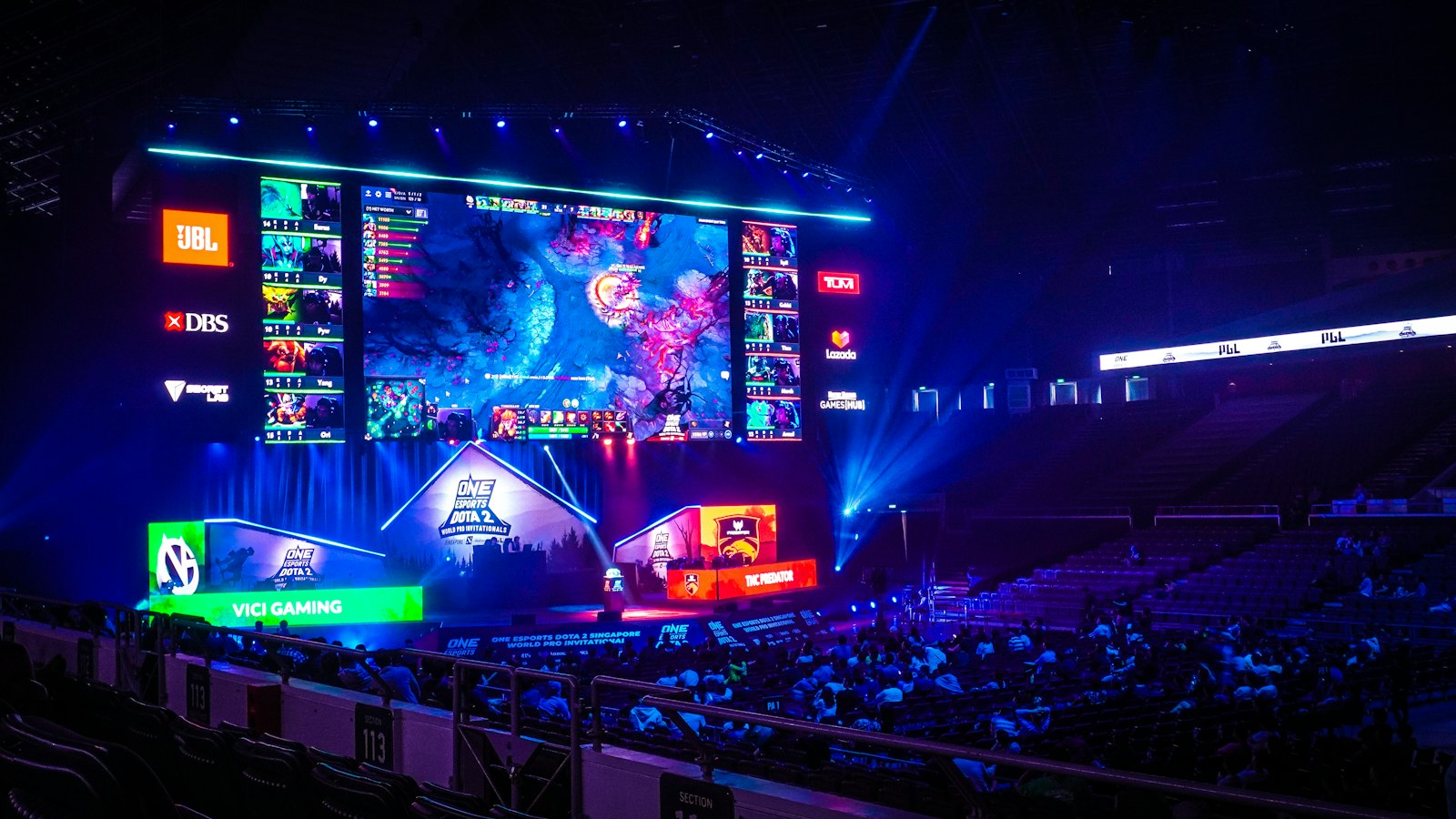
Esports has become one of the most watched parts of the Southeast Asian Games, and Singapore sends players to compete for medals alongside athletes in swimming, athletics and sailing. If you have searched for SEA Games esports Singapore because a friend is trying out, or you simply want to cheer on the national team, this guide explains which games tend to feature, how players end up wearing Team Singapore colours, and where you can watch the matches.
If you are new to competitive gaming in general, start with What Is Esports: A Beginner’s Guide. This article focuses only on the SEA Games side of things.
How Esports Became a SEA Games Medal Sport
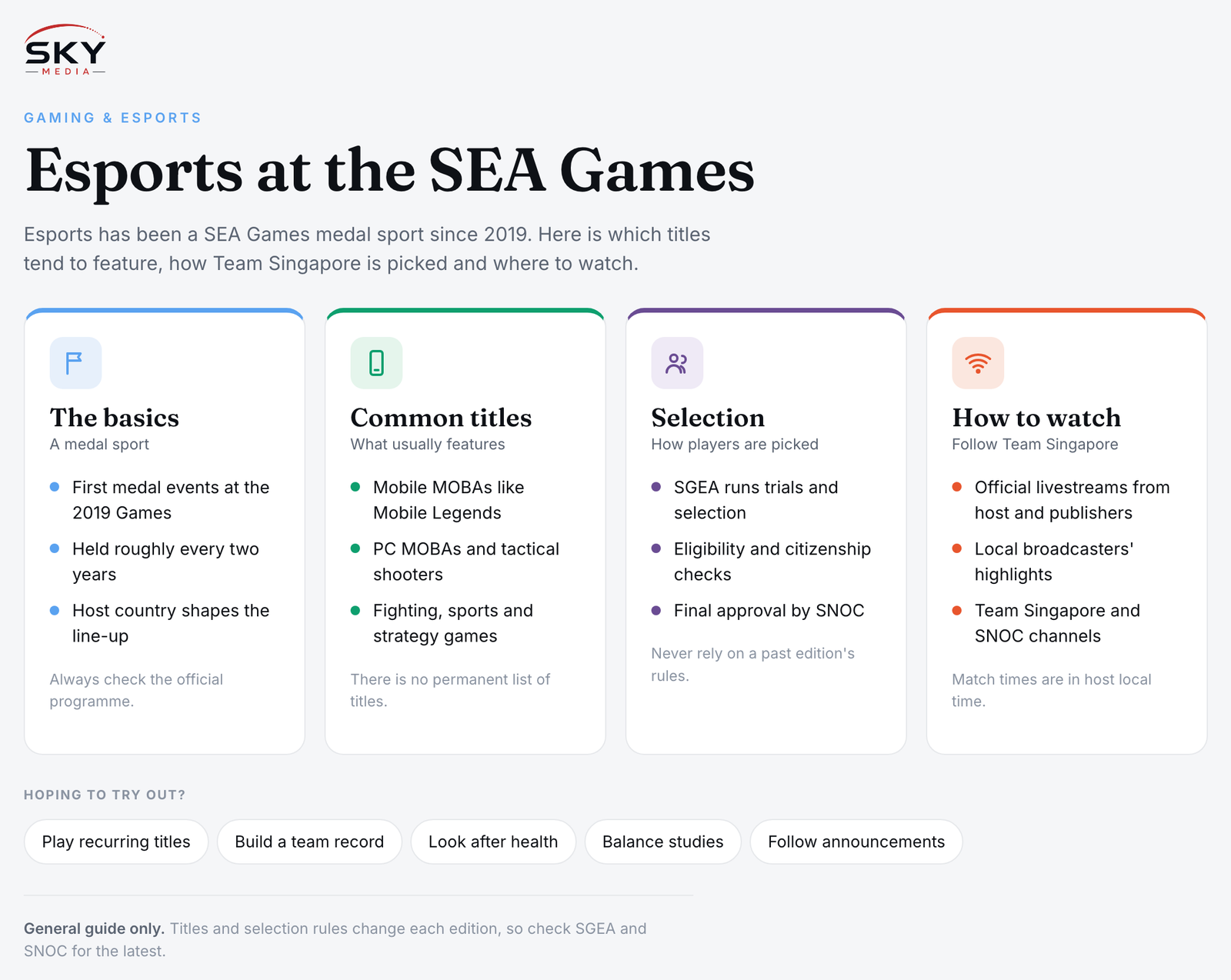
The SEA Games is a multi-sport event held roughly every two years among the 11 Southeast Asian nations. Esports was first contested for medals at the 2019 edition in the Philippines, which was a landmark moment: for the first time, gamers stood on the same podium as traditional athletes at a regional games recognised by the Olympic movement.
Since then, esports has appeared at subsequent editions, though the format changes each time. That is because the host country has a large say in the sports programme. A host may add titles that are popular locally, drop others, or change the number of medal events. This is the single most important thing to understand about SEA Games esports: the line-up is never fixed, so always check the official programme for the edition you are following.
Which Titles Usually Feature
There is no permanent list, but certain types of games appear again and again because they are hugely popular across the region. Broadly, you can expect a mix of the following.
- Mobile multiplayer battle arenas (MOBAs): Mobile Legends: Bang Bang has been a fixture and draws enormous crowds, especially from the Philippines and Indonesia. Other mobile MOBAs have also featured at times.
- PC MOBAs: Games such as Dota 2 and League of Legends have appeared at certain editions.
- Tactical shooters: PC titles like Valorant, and mobile battle royale games such as PUBG Mobile or Free Fire, have been included in some years.
- Fighting and sports games: Titles in the fighting genre and football simulations have appeared occasionally, giving individual players a route to a medal.
- Strategy and card games: Some early editions included real-time strategy and digital card games, which tend to be one-on-one events.
For a plain explanation of how each genre plays, see Popular Esports Titles Explained.
The table below shows how the main event formats compare from a spectator’s and player’s point of view.
| Event format | Team size | What makes it exciting | Singapore’s typical route in |
|---|---|---|---|
| Mobile MOBA | 5 players plus substitutes | Fast, high-pressure team fights, huge regional fan base | Team selection trials open to local players and squads |
| PC MOBA | 5 players plus substitutes | Long strategic games with deep drafting | Selection trials, often drawing on experienced club players |
| Tactical shooter | Usually 5 players | Round-by-round tension and clutch plays | Trials or nominated existing teams, depending on the edition |
| Fighting or sports game | Individual | One-on-one duels, quick matches | Individual qualifiers or rankings-based selection |
How Singapore Picks Its National Esports Teams
Singapore does not simply send whichever pro team is most famous. The national contingent for the SEA Games is put together through the national sports system, and esports follows the same broad principles as other sports.
The bodies involved
- Singapore Esports Association (SGEA): The national body for esports in Singapore. It typically organises or runs selection processes for the titles Singapore enters.
- Singapore National Olympic Council (SNOC): Responsible for the Team Singapore contingent at multi-sport games. Sports must meet SNOC’s selection criteria before athletes are confirmed.
What the selection process usually looks like
The exact process varies by edition and by title, but it often includes these steps:
- An open call or trial announcement. Keep an eye on the national association’s official website and social media for registration windows, which open months before the Games.
- Eligibility checks. National team members must be eligible to represent Singapore under the rules of the Games and the national bodies. Citizenship requirements apply, so check the official criteria rather than assuming.
- Qualifiers or trials. Players or squads compete in a bracket, scrims or a structured trial. Some editions select a whole existing team; others assemble a squad from the best individuals.
- Evaluation beyond raw skill. Selectors may look at teamwork, communication, discipline and availability for training camps.
- Confirmation by SNOC. The final contingent is submitted and approved through the Olympic council’s process.
Because the criteria and timelines change, never rely on a past edition’s rules. Always read the current announcement from the official body.
Life as a national player
Representing Singapore usually means committing to a structured training block, bootcamps and sometimes coaching support. Many players are students or working adults, so time management matters. If you want a sense of what structured training looks like, Understanding Esports Coaching explains how coaches work with players on review, drafting and mindset.
How to Watch SEA Games Esports
Following Team Singapore in esports is easier than following many traditional sports, because almost everything is streamed.
- Official livestreams. The host organising committee and the game publishers usually stream matches on major video platforms. Search the official SEA Games or game publisher channels when the Games are on.
- Local broadcasters. Singapore broadcasters sometimes carry SEA Games coverage, which may include esports highlights. Check their schedules during the Games period.
- Team Singapore and SNOC channels. Official national channels often post results, match times and highlights.
- The host venue. If you travel to the host country, esports arenas at the Games can be lively, with large crowds for popular titles. Ticketing details come from the organising committee only, so avoid unofficial resellers.
Tips for following matches
- Match times are listed in the host country’s local time. Most Southeast Asian countries are either in the same time zone as Singapore or one hour behind, so double-check before you set an alarm.
- Group stages can run over several days, with knockouts later. Bookmark the official bracket page.
- Watch with a friend who plays the title. Commentary can be fast and full of jargon, and someone who knows the game will help you follow drafts and strategies.
For general tips on platforms, streams and getting the most out of a broadcast, read How to Watch Esports.
What Esports at the SEA Games Means for Players in Singapore
For aspiring players, the SEA Games offers something pro leagues cannot: the chance to represent the country. That carries real weight with families who may be unsure about gaming as a pursuit, because it frames esports as a national sport with structure, discipline and recognition.
A few practical points if you are hoping to try out one day:
- Play the titles that recur. Mobile and PC MOBAs have the strongest track record at the Games, though nothing is guaranteed.
- Build a team track record. Taking part in local tournaments and university leagues gives selectors evidence of your teamwork and consistency.
- Look after your health. Long practice sessions take a toll. Regular breaks, sleep and physical activity help performance.
- Balance studies or work. Selection is competitive, and most national players juggle other commitments. Plan ahead for training camps.
- Follow official announcements. Trial windows can be short, so subscribe to updates from the national association.
Cheering On Team Singapore
SEA Games esports has grown from an experiment into one of the event’s most popular sports, and Singapore’s players are part of that story. The titles change with each host, the national team is selected through official trials and SNOC approval, and the matches are easy to stream from home. Next time the Games come around, check the official programme early, note the match times and get behind the team.